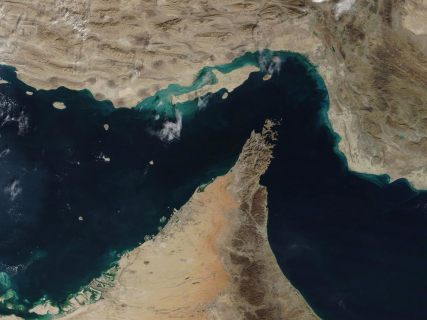

Iranian authorities reported this Thursday that they have already received a first payment corresponding to the fees applied to the transit of ships through the Strait of Hormuz. These fees are part of the restrictions decreed by Tehran in response to the surprise offensive launched on February 28 by Israel and the United States against the Asian country.
"The first income received from fees in the Strait of Hormuz has already been deposited into an account at the Central Bank," said the second vice president of the Iranian Parliament, Hayi Babaei, as reported by the Iranian news agency Mehr.
In reaction to said military operation, Iran restricted navigation in this strategic maritime passage, considered one of the main bottlenecks of the world economy. However, it clarified that ships without ties to the "enemies" could continue crossing the area as long as they made the established payments and coordinated their passage with the Iranian Armed Forces.
Tehran authorities announced on April 17 the lifting of these transit restrictions in the strait, after a temporary ceasefire was confirmed in Lebanon the day before. However, they announced that they were reactivating the restrictions following statements by United States President Donald Trump, who, after positively assessing the Iranian gesture, assured that US forces would maintain the blockade on this maritime route.
Trump himself made public on Tuesday that the temporary ceasefire, in effect since April 8 after a request from Pakistan —a country that acts as mediator in the diplomatic process—, will be extended. Even so, he reiterated that the blockade of the Strait of Hormuz will not be lifted. This closure, along with the recent boarding and seizure of Iranian ships in the area, has been one of the arguments used by Tehran to refuse to travel to Islamabad, considering that these actions violate the ceasefire and hinder the progress of the talks.