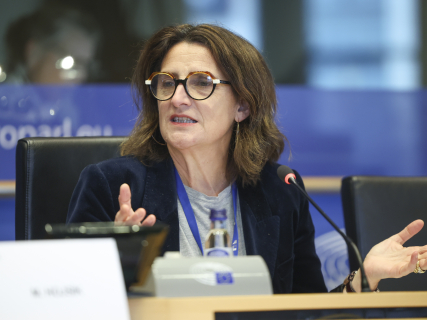

All governments look this Wednesday at the Berlaymont building. It is the headquarters of the European Commission in Brussels. Since President Ursula von der Leyen announced the presentation of a plan to alleviate the consequences of the war in Iran, drafts, proposals, leaks, off the record huddles of the members of the community executive have circulated in the community capital… All of them on the same strategic proposal “designed to free the Union from its energy vulnerabilities”.
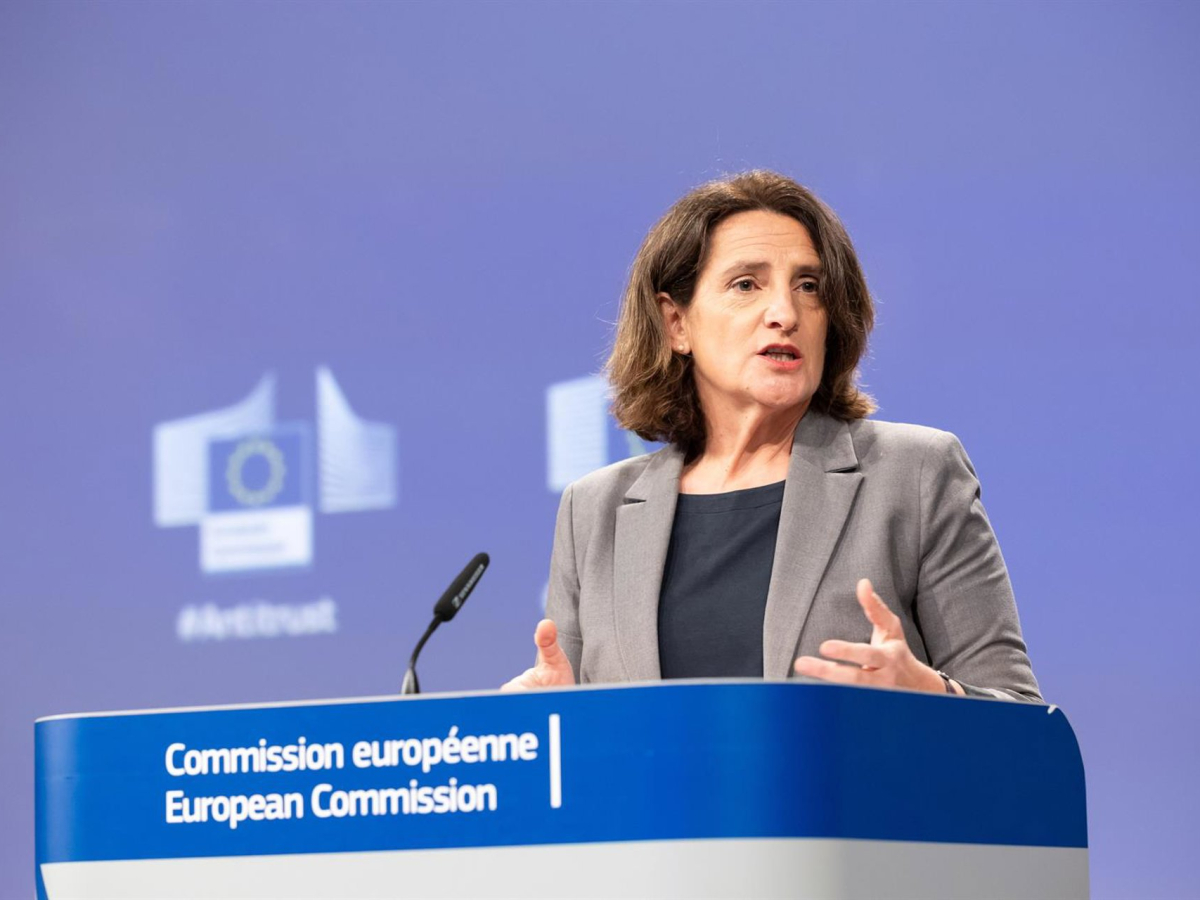
According to last drafts consulted by Demócrata, the plan that the executive vice president Teresa Ribera will announce this Wednesday is structured around five key action areas that seek to respond in two scenarios. On the one hand, in the short term, offer immediate relief to Member States; on the other, strengthen long-term energy resilience.
In the words of the top EU leader, it is a recipe that aims to be “specific, not general, timely, rapid, and temporary”. The intention is to act with precision in each of the identified scenarios, closely following the proposals of the International Energy Agency to ease the system.
Before Wednesday's announcement, Ribera had detailed in an informal meeting with journalists that it was a package of measures “quite balanced between strengthening structural proposals and extraordinary ones for emergency situations”. The message that is intended to be conveyed is, therefore, one of moderation, containment, savings, and efficiency. “To speed things up,” according to the Spaniard.
European Coordination: The Lesson of Previous Crises
One of the keys to the European Commission's new strategy is coordination among Member States, a lesson learned from previous crises, explain Community sources. Brussels wants to leverage the Union's weight as a single buyer and the strength of its internal market.
For this reason, the coordination of national actions related to the filling of gas storage facilities will be facilitated, as well as the possible release of oil reserves. A coordinated approach to international gas and oil suppliers will also be promoted, in an attempt to leverage the potential functioning of the Union's Energy and Raw Materials Platform.
Furthermore, the Commission will study European refining capacities to guarantee resilience in the supply of products such as jet fuel, whose availability the Community Executive defines as critical.
Protection for homes and businesses against price shock
Ribera's team seeks with this plan to protect households, especially the most vulnerable, as well as companies —small and medium-sized enterprises and electro-intensive industries— from price spikes caused by the escalation of tension in the Middle East.
Among the immediate relief measures that Brussels could present this Wednesday is support for those Member States that opt to activate income support schemes, energy vouchers, social tariffs, and VAT reductions for clean technologies such as heat pumps and solar plans.
The Twenty-Seven will also be able to introduce temporary bans on disconnecting the energy supply for vulnerable consumers. The Community Executive wants to complete all these measures with new legal proposals aimed at structurally reducing system costs through the reform of network charges and taxation.
The texts to which Demócrata has had access assure that the objective is for electricity to end up having a lower tax burden than fossil fuels, a reversal of the traditional scheme that seeks to accelerate the energy transition.
Replace imports with European clean energy
Furthermore, the College of Commissioners intends for the Union to replace imported gas and oil with clean energy produced domestically. On this path, the bet is on promoting the replacement of gas boilers with heat pumps, which could drastically reduce energy bills.
With a view to urban and industrial heating, what is being studied is to promote the deployment of geothermal and solar thermal energy. The change to electric vehicles will also be encouraged through social leasing schemes and the improvement of public transport.

For energy to be cheap, while also being safe, the Commission assures that a profound transformation of the current system is needed. For this reason, Brussels will accelerate the negotiation of the Union's Network Package with the intention of facilitating the flow of energy from where it is produced to where it is consumed at the best possible price.
Another of the proposals that the Executive could present is the massive expansion of thermal and battery storage capacity to integrate renewables, an issue that sources point to as an “imperative”.
The next steps of electrification
In June, the Commission will present its action plan for electrification. This package, which will reinforce the one that will now be launched, is designed with the aim of addressing the barriers to electrification in industry, transport, and buildings.
Furthermore, the Commission plans to advance a certain flexibility that allows increasing liquidity in the CO₂ markets, thus facilitating the functioning of the emissions trading system. Added to this is the possibility of expanding mechanisms such as electricity price compensation or compensation for indirect CO₂ costs within the framework of State aid.
These tools seek to alleviate the pressure on industrial sectors particularly exposed to the increase in energy costs. Brussels will assist Member States wishing to explore the allocation of revenues obtained from carbon auctions to finance specific measures.
These funds would be allocated to:
• Investments that accelerate electrification (transportation and heating).
• Measures that help reduce electricity prices for households and industry.
Financing: mobilizing public and private capital
The transition that Brussels wants to carry out requires an annual investment of six hundred and sixty billion euros over the next four years, according to the European Commission's estimates. This mission points to the need to mobilize both public and private capital.
How to achieve it? A high-level summit will be organized this year to attract institutional investors towards high-impact sectors such as batteries and electric vehicle infrastructure.
The States will have the assistance of the Commission to reallocate funds from the Recovery and Resilience Facility and Cohesion towards rapid-impact energy investments. Furthermore, due to the current crisis in the Strait of Hormuz, which has led to a drastic increase in crude oil and gas prices, a specific aid framework has been established.
This Wednesday, temporary state aid will be approved for agriculture —affected by the price of fertilizers—, fishing —due to marine fuel—, and transport. Of course, the drafts warn that the aid must be necessary, proportionate, and time-limited, covering up to 50% of the additional costs derived from the crisis.
The bottleneck of aviation fuel
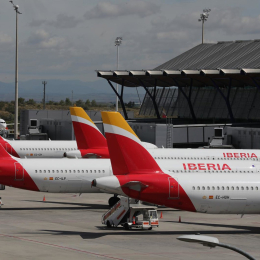
The truth is that the tension in Hormuz has a critical impact on the supply of aviation fuel, due to the high dependence on imports that use this route as a transport channel. As of today, the European Union imports 40% of the aviation fuel it consumes.
Beyond, approximately half of those imports transit almost mandatorily through the Strait of Hormuz, which turns this geographic point into a strategic bottleneck.
Featured story
Europe prepares for the risk of cuts in plane supply, cancellations and shift to teleworking
4 minutes
Despite the fact that in Brussels they are downplaying the alarmism about a possible immediate threat to the total security of supply, internal documents of the Executive speak of a “tense” situation for this specific fuel, due to the fact that alternative sources are limited.
As a measure of immediate relief, the possibility of recommending to Member States that their companies avoid air travel for work whenever possible was considered. For its part, the Commission will promote contacts with alternative suppliers and partner countries, such as the United States, to ensure supplies outside the conflict zone.
The turn of the United States
In the drafts consulted there is no reference to one of the proposals that the Spanish Government raised to the community institutions. Vice President Carlos Cuerpo proposed to the European Commission to introduce a tax on the extraordinary profits of energy companies.
Ribera slipped last week that, for the moment, the necessary consensus among the States was not being given, which requires unanimity when it comes to a fiscal measure. This type of tax was already applied during the 2022 energy crisis, although its re-edition presents important political and technical challenges.
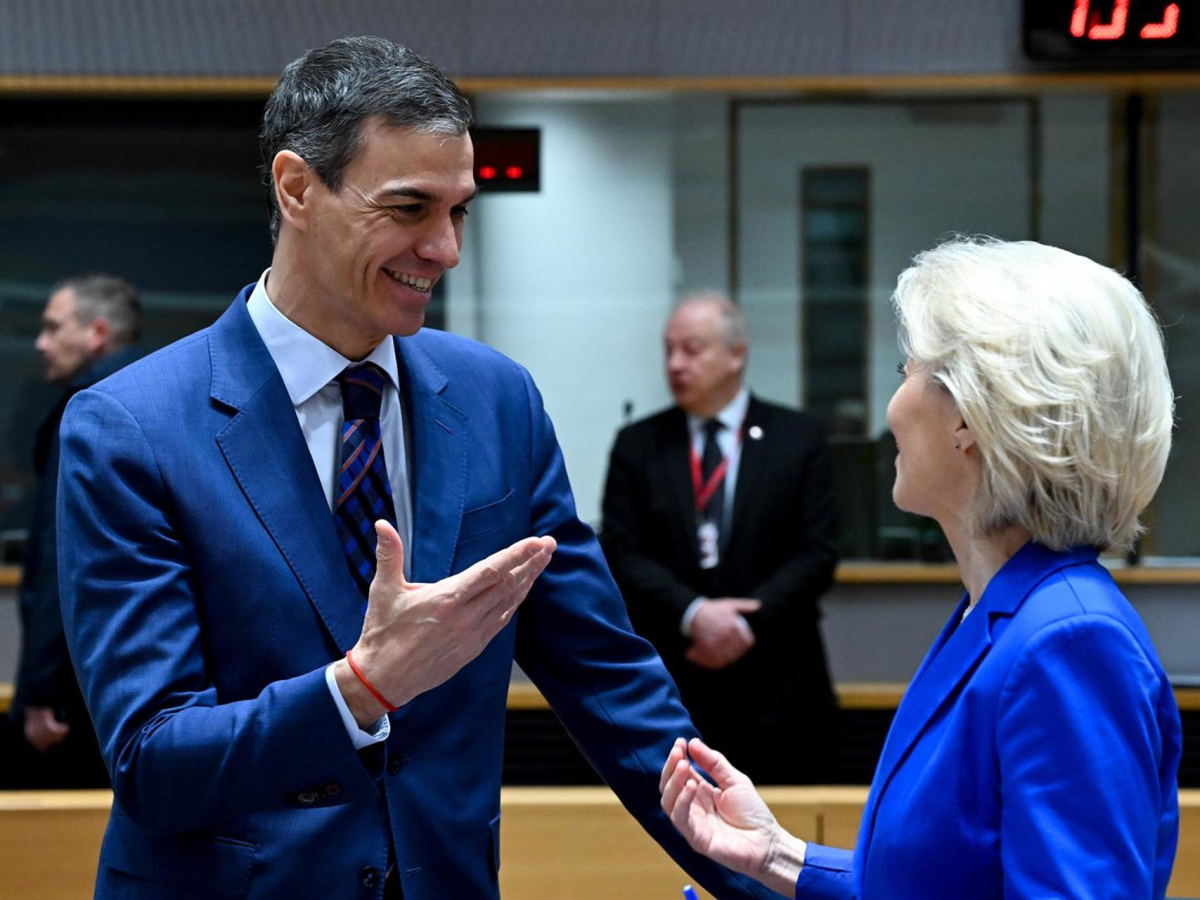
This package of measures will be discussed, in any case, by the Heads of State and Government of the Twenty-Seven, who will meet in Cyprus this Thursday and Friday. A moment at which Von der Leyen intends to align the position of the Member States in the face of the volatility of events and reinforce the idea that the European response must be, above all, coordinated, strategic, and sustained over time.