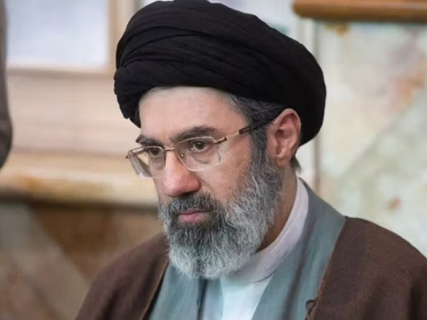

Iran's state media have confirmed that Mojtaba Jamenei becomes the new supreme leader of the Islamic Republic, succeeding his father, Ayatollah Ali Khamenei, who had governed the country for more than three decades.
The decision places for the first time a direct member of the supreme leader's family at the head of the Iranian regime, at a time of enormous regional tension after the attacks by the United States and Israel against Iranian targets.
Succession in the heart of Iranian power
Mojtaba Jamenei had been considered for years one of the main contenders to succeed his father, although his possible appointment generated controversy within sectors of the Iranian religious establishment.
The election of Mojtaba Jamenei consolidates the continuity of the political system created after the 1979 Islamic revolution and maintains control of power in the core of the religious and military apparatus that dominates the country.
The position of supreme leader of Iran is the highest political and religious authority of the State, with control over the armed forces, the judiciary, foreign policy, and the main security organs.
An appointment in the midst of a regional crisis
The announcement comes in an extremely delicate context for Iran, marked by the open conflict with the United States and Israel and by a military escalation that has shaken the Middle East in recent weeks.
The uncertainty about the Iranian leadership had intensified after the attacks against strategic facilities of the country and amidst the international debate about the Iranian nuclear program.
The arrival of Mojtaba Jamenei to power could redefine the internal balance of the regime and its strategy vis-à-vis the West.