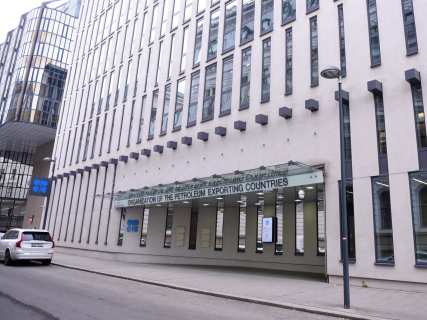

The Organization of the Petroleum Exporting Countries, in its expanded version OPEC+, announced this Sunday that it will increase its crude oil production by an additional 188,000 barrels per day starting in August, in accordance with the pact reached in its third meeting following the unexpected decision announced in May by the United Arab Emirates to leave the group in the midst of the Iran war.
At the close of the telematic meeting this Sunday, the seven members of OPEC+ (Algeria, Iraq, Kuwait, Saudi Arabia, Kazakhstan, Oman, and Russia) opted to maintain their line of "commitment to market stability," continuing with a series of increases that have added 940,000 barrels per day to quotas, almost 1% of global consumption, since the outbreak of the conflict on February 28.
To date, these increases have been largely nominal, as the war has blocked the Strait of Hormuz and prevented Persian Gulf producers from effectively increasing their exports and pumping. However, following the signing of the Memorandum of Understanding between Tehran and Washington, Saudi Arabia and neighboring countries have begun to normalize crude flows, which has contributed to a surplus in several key Asian markets.
Oil futures contracts have fallen 43% from their wartime high, to around $72 per barrel in London. While some analysts anticipate the return of a global supply glut, OPEC and its allies may soon be forced to choose between limiting pumping again or defending their market share, which would open the door to a possible price war, according to specialists cited by Bloomberg.
In any case, all these producers reiterate their willingness to "continue to closely monitor and assess market conditions" and emphasize the importance of "adopting a prudent approach and maintaining full flexibility to increase, pause, or reverse the gradual elimination of voluntary production adjustments," including those established three years ago.