
The Pentagon’s “number two,” Elbridge Colby, has called into question the usefulness of Ukraine’s long-range attacks on Russian territory, considering that “they don’t serve to end the war” and that they could even fuel a greater escalation of the conflict. His words come on the same day that the Ukrainian Army has carried out its most intense offensive since the start of the invasion in 2022, with strikes that included the Crimean Bridge, which links the peninsula with the Russian region of Krasnodar.
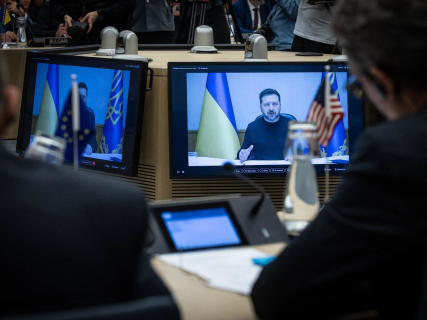
The U.S. Under Secretary of Defense has expressed this position this Tuesday during his remarks at the meeting of the Contact Group for the defense of Ukraine, held at NATO headquarters in Brussels. There he defended that Kiev’s military strategy should prioritize the front line and attacks against Russia’s war machinery.
“Our assessment is that these attacks have not been effective in bringing the war to an end, nor do they contribute to slowing down Russia’s advances on the front,” Colby said, who also urged NATO partners to strengthen their support for Ukraine so that it can sustain its lines and launch medium-range attacks against Russian logistics.
However, he clarified that this “does not mean that Ukraine should be forced to fight with its hands tied,” emphasizing that Washington continues to consider legitimate those operations aimed at Russia’s war machinery that directly help to slow down its military advances.
Ukraine asserts its right to self-defense
In response, the Ukrainian representative, Yevgeniy Khmara, has defended his country’s right to retaliate for Russian bombardments and cited as an example the recent action against the Kerch Bridge, which links Russia with the Crimean peninsula, occupied by Moscow since 2014.
“We have the right to defend ourselves, we have the right to retaliate,” he said at a press conference after the meeting, in which he detailed that Ukrainian forces planned the attack on the bridge after Russia began in October a systematic campaign of bombardments against the bridges over the Dniéper River to damage Ukrainian logistics.
In this context, he addressed Moscow with “a clear message”: “For every attack against our territory we will respond double, ten times more, and that is our right to defend ourselves.”
European partners back Ukraine’s attacks
European allies have stepped in to defend Ukraine's right to carry out long-range attacks against Russia. German Defense Minister Boris Pistorius has distanced himself from U.S. objections and has called it "quite stupid" to question operations aimed at destroying strategic targets of a military nature or used for military purposes.
"Instead of criticizing that, we should criticize and talk about the terrorist attacks that occur every night and every day against Ukraine's civilian energy, water and heating infrastructure," he argued, emphasizing that Ukrainian actions against military targets are "legal and legitimate".
In similar terms, British Defense Minister Wes Streeting has argued that "it is not for us to tell Ukraine how it should wage its war" and has defended that deep strikes have helped to erode the war-making machinery of Russian President Vladimir Putin.
For his part, NATO Secretary General Mark Rutte has avoided taking a direct position on the disagreement, but has reiterated the importance of Ukraine being able to protect itself from Russian attacks, regain territory, and weaken Moscow's military capacity. "I think we all agree that it is important to neutralize that war-making machinery," he said, reiterating the need to sustain military support for Kyiv.