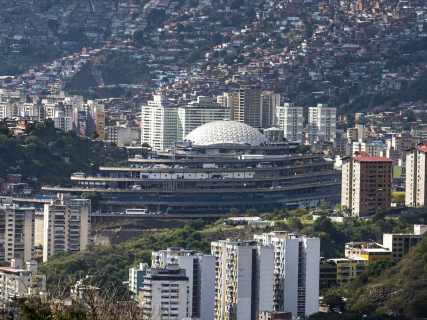

This Saturday, seven detainees considered political prisoners by the Venezuelan authorities have been released, according to several human rights defense organizations.
Among those released are Henry Castillo, Gilbert Araña, José Gregorio Valladares, Damián Rojas, Wilfredo Díaz, Juan Lagos, and Wilder Vázquez, all of whom had been held until now in the El Rodeo I prison, according to data released by the Committee for the Freedom of Political Prisoners.
"All of them processed for different causes and with diverse realities, as is the case of Wilder, who had accumulated years of arbitrary detention," the organization indicated in a message posted on social media.
Upon leaving the prison, the group was received by the mothers who are part of the civil protest camp set up in the vicinity, where they have been camping for more than 250 days to demand the release of all people imprisoned for political reasons. The families have announced that they will maintain the camp.
"Although we celebrate these emotional reunions, we remember that there are still dozens of political prisoners who have yet to regain their freedom. We will remain firm and organized until everyone returns home," the organization has warned.
Other NGOs have indicated that during the past night, between 20 and 30 additional releases may have occurred, although it has not been confirmed that all these cases correspond to detentions for political reasons. These measures come just hours after the conclusion of the second round of dialogue between the Government and the opposition.
According to the organization Foro Penal, among those released are former colonel Miguel Castillo Cedeño, arrested in 2019, and Frank Cabañas, detained in 2017, both linked to alleged destabilization plans against the government of President Nicolás Maduro, now imprisoned in the United States following the U.S. military incursion in January.
For its part, the NGO Justice, Encounter and Forgiveness (JEP) has reported 29 releases in different detention centers. "We want to clarify that a group of 17 people among those released did not appear in our registry of political prisoners. We clarify that this strictly responds to the technical and institutional criteria that we apply for the methodological qualification of cases based on the types of crimes or charges brought, which does not diminish the relevance of their situation nor the attention we pay to their process," JEP has indicated.
The NGO Surgentes has also reported the release of eight women, including a minor, pointed out by the authorities as being part of the so-called 'tancol', an acronym used by the Government to refer to "armed Colombian drug-trafficking terrorists."
After these releases, the United Platform of the Venezuelan opposition has emphasized that since August 21, only 33 political prisoners have been released and has demanded "political will" to complete the process.
The organization insists on the need to initiate massive, continuous, rapid, public, and transparent release processes "that guarantee the freedom of all political prisoners. "To achieve the freedom of all, only political will is needed (...). Nothing justifies that more than 420 innocents still remain behind bars," it has stated.