
Europe has its focus on the regulation of digital environments to shield the safety of young people, and one of the most transcendental decisions on the table is the prohibition of social media use for minors under 16 years old. The President of the Government, Pedro Sánchez, announced that it would be expressly included in the Bill for the protection of minors online, which is currently being processed in Congress and which this week has been reactivated with the formal constitution of the committee that will have to prepare the report.
The initiative states that minors have the right to be effectively protected in digital environments, for which purpose, a package of measures will be implemented that the deputies designated by their groups must put down in black and white in a report (which will subsequently be submitted to a vote). The hottest points are parental control and the labeling of technological devices (smartphones, tablets, computers, smart televisions, and any product with a network connection); and there are still many aspects to negotiate, as published by Demócrata. Who are responsible for doing it?
The who's who of the law
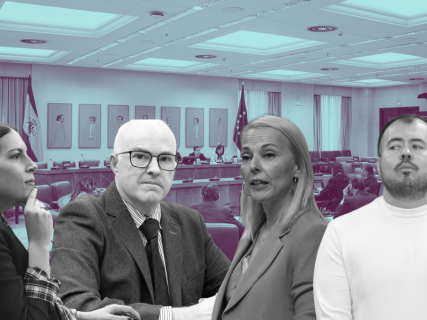
Of the 15 members of the committee, Popular Party and PSOE hold three each, as majority groups. Vox and Sumar, in a second tier, two each; and the rest of the formations, one per bench. Including the Mixed Group.
The team of the Partido Popular exemplifies the multidisciplinary nature of the matter, which impacts not only the Justice Commission, but also Youth and Childhood policies and digitalization. The popular trio is made up of deputies Fernando de Rosa, Juan Andrés Bayón and Juan Luis Pedreño. The first, De Rosa, is the second vice-president of the Justice Commission. A Law graduate from the Universidad de Valencia, he is one of the strong men of the PP in Congress in this area. He was a magistrate, vice-president of the CGPJ and Minister of Justice in the Comunidad Valenciana. Together with the popular spokesperson in the Commission, María Jesús Moro, they are the two faces that pilot Justice.
Accompanying him are Juan Andrés Bayón, deputy spokesperson of the Youth and Childhood Commission; and Juan Luis Pedreño, Doctor Telecommunications Engineer in Neurotechnology, Control and Robotics and spokesperson in the Economy, Trade and Digital Transformation Commission and in the Science, Innovation and Universities Commission.
For its part, the PSOE team embodies a very technical profile with a more social derivative and, above all, with a gender perspective. Adriana Maldonado, socialist spokesperson in the Commission of Industry and Tourism, will be accompanied by Milena Herrera, expert in gender impact assessment and spokesperson in the Commission for monitoring and evaluation of the agreements of the State Pact on Gender Violence, and by Inés Plaza, the authorized voice in the Commission of Social Rights and Consumption, in addition to being a member of the one for Equality, Youth and Childhood, in the Commission for monitoring and evaluation of the agreements of the State Pact on Gender Violence and of being a rapporteur in the subcommittee related to the fight against hate speech.
For its part, Vox has appointed as rapporteurs Blanca Armario, a graduate in Teaching, was director of a public Early Childhood and Primary Education school in Arcos (Sierra de Cádiz) and spokesperson for the group in the Youth and Childhood Commission; and Alberto Rodríguez, spokesperson for the Industry and Tourism Commission (like Adriana Maldonado) and in the Economy, Trade and Digital Transformation Commission.
Sumar has entrusted the task of negotiating several amendments and drafting the report to Nahuel González, spokesperson and first vice-president of the Constitutional Commission, spokesperson of the Culture Commission and of the Youth and Childhood Commission. He is the magenta voice in matters related to young people and the cultural sphere. In fact, he is from Izquierda Unida, the same political family as the Minister of Youth and Childhood, Sira Rego, whose fluid communication will allow pending issues to be landed, such as the commitment to parental control being activated by default. González forms a duo with Enrique Santiago, spokesperson in the Justice Commission.
As for the rest of the groups, their representatives are accustomed to amass several matters simultaneously due to the bulk of their respective benches. They are the following:
- For ERC, Pilar Vallugera.
- For Junts, Pilar Calvo.
- For EH Bildu, Isabel Pozueta.
- For the Basque Group EAJ-PNV, Nerea Rentería.
- For the Mixed Group, the representative of Podemos, Martina Velarde.
Yolanda Díaz compromises the law
The aforementioned deputies have already officially met face to face in the constitutive session of the committee and, now, it's time to work behind closed doors. The question is when they will start.
Usually, a date is usually set, but not on this occasion. Sources from the rapporteurship consulted by Demócrata assure that the idea is to meet “soon”, but the latest clash between the Minister of Labor, Yolanda Díaz, and Carles Puigdemont “does not help”.
This bill is not one of those that Junts announced it would facilitate after its break with the PSOE, so its accommodation in the BOE is by no means guaranteed. To make matters worse, it is an Organic Law, so it will require an absolute majority for its approval and, with Junts' withdrawal from the investiture bloc, the numbers don't add up. The sum of PSOE (121), Sumar (26), ERC (7), EH Bildu (6), PNV (5) and those assigned to the Mixed Group, Águeda Micó (Compromís), BNG, Coalición Canaria and the four from Podemos, results in a meager total of 172.
The Executive's plan involved seducing Junts, however, Díaz has blown everything up by calling Puigdemont's party “racist” and “classist”; to which the Catalan expresident was quick to react: “Next time, let her ask the PP for votes to be vice president”.
A app on the way
One of the most relevant issues and that, when the time comes, the paper must define, is parental control. The political consensus is that there should be a kind of parental control on devices so that minors cannot access certain content. The key question is on whom the responsibility falls and how to implement it technically. The dispute is between manufacturers and operators; and between those who opt for products to have it activated by default and those who choose to apply it during initial setup.
In this regard, last week the president of France, Emmanuel Macron, promoted a conclave in which both the president of the European Commission, Ursula von der Leyen, and Pedro Sánchez participated, among other EU leaders. In it, Macron positioned himself in favor of the platforms being the ones to assume parental control. Von der Leyen confirmed that she already has “technically ready” an app that verifies the age of users, and invited all Member States to use said architecture to develop their own applications, adapted to their respective national needs.
Labeling, another matter to resolve
The new norm establishes the obligation that manufacturers of smartphones, tablets, computers, digital televisions and other devices inform on their labels of the risks derived from access to content harmful to the health and the physical, mental and moral development of minors. It should be visible on the packaging and in the instruction manual.
The manufacturers of technological devices are reluctant to the current wording regarding the obligations of labeling for two reasons. Firstly, because they consider that it generates legal uncertainty, since each manufacturer would indicate different information, among other things, because elements such as recommendation times are outside their control and there is no scientific consensus, as they depend on individual factors. On the other hand, they argue that it would increase the use of paper (manuals and labels) and ink.
As an alternative, the sector proposes to the parliamentary groups that the information can be integrated on the website or in an easily accessible digital format , in addition to the authorities and public bodies being the ones to design a label with standardized information so that it is uniform, regardless of the manufacturer.
In an interview with Demócrata, the Minister of Youth and Children, Sira Rego, explains that the Government is digesting all the amendments and that the decision could be executed through a subsequent regulatory development.
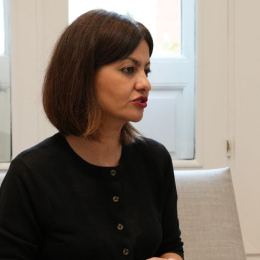
The minority partner of the Executive, Sumar, through its parliamentary group, proposes as an alternative that manufacturers can provide an easily accessible digital format, such as on the website, but maintaining the information on the packaging and in the instruction books, manuals or user guides. And in line with the sector, they consider that it must be the public authorities and bodies that determine by regulation the standardized set of information.
Other groups, such as PNV, ERC or Junts, through their respective amendments, advocate for making the requirement more flexible and that the information can be made available on any medium to prevent the excess of it from confusing consumers who, on occasion, do not pay due attention to the packaging of a new product.