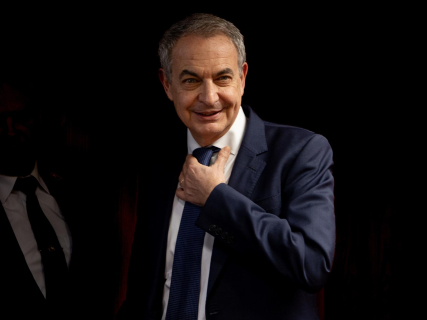

The PP spokesperson in the Senate, Alicia García, announced this Thursday an "offensive" in the SEPI investigation commission in the Upper House directed against former President of the Government José Luis Rodríguez Zapatero. The popular party wants to summon several key names mentioned in the case to testify, including the secretary of the former socialist leader, María Gertrudis Alcázar, the former minister and current governor of the Bank of Spain, José Luis Escrivá, and Manuel Aarón Fajardo, whom the PP places as Zapatero's lieutenant in Venezuela.
García presented this at a press conference in the Senate, where she stressed that her group will take advantage of the absolute majority in the Chamber to expand the list of those appearing in the SEPI investigation commission.
"We announce a total offensive in the SEPI Investigation Commission to continue uncovering everything that the Government of Spain and Sánchez want to hide," Alicia García told the media.
The new list of summoned individuals includes Zapatero's secretary, María Gertrudis Alcázar, to whom the popular party attributes having given "instructions for the incorporation of a company in Dubai," as well as "participation in the dealings carried out with public bodies."
The PP also wants Cristóbal Cano to appear before the commission, whom they define as the "manager" of businessman Julio Martínez: "He acted as the daily liaison for the corporate environment controlled by Martínez. The plumbers of the financial system to move the illegal money from the Plus Ultra bailout."
Regarding the appearance of José Luis Escrivá, the popular party maintains that he will have to clarify in the Senate "who ordered him to meet with Zapatero, who demanded that he make the Plus Ultra debt disappear, and if his promotion to the Bank of Spain has anything to do with this move."
Finally, the PP expands the list to Manuel Aarón Fajardo, whom they consider Zapatero's "lieutenant" in Venezuela, warning that "he will have to explain why Plus Ultra contacted him, what they needed, what they offered Zapatero, and what he accepted."