
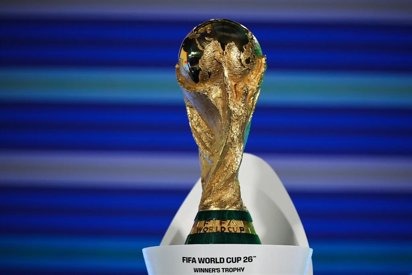
The 2026 World Cup is already on the launch ramp. There are no official matches yet this Saturday, June 6, but the competition has entered its final week of preparation before its debut in Mexico, the United States, and Canada.
The event will kick off on Thursday, June 11, with the opening match between Mexico and South Africa at the Azteca Stadium. It will be the first World Cup with 48 teams, three host countries, and an expanded schedule of 104 matches, an unprecedented scale for FIFA and for the host cities.
This Saturday, therefore, is not a day for World Cup results. It is a day for the countdown: team concentration, final friendlies, squad adjustments, injury reviews, travel logistics, ticket sales, stadium security, and last-minute television rehearsals before the tournament begins.
What to expect today, Saturday
Saturday's attention is focused on four fronts.
- The first is sporting: teams are finalizing preparations, correcting automatisms, and protecting their key players before the group stage. In this final week, coaches usually have a clear priority: to arrive alive, healthy, and with the starting lineup as defined as possible.
- The second is organizational. FIFA and the host cities are working against the clock to adjust security, access, transportation, volunteers, accreditations, referee technology, and internal services. In a tournament spread across three countries, logistics weigh almost as much as the ball.
- The third is television. Fans are already looking for schedules, channels, the full calendar, when Spain plays, and how to follow the matches live. It is a very clear search intention: less in-depth analysis and more useful service.
- The fourth is political-labor. In the United States, there is already tension at SoFi Stadium, one of the key venues for the tournament, where workers linked to stadium services have authorized a potential strike a week before the first matches at that venue.
When does the 2026 World Cup start
The 2026 World Cup begins on Thursday, June 11. The opening match will be Mexico-South Africa, with the Azteca Stadium as the main venue.
The choice has clear symbolic weight. Mexico will once again open a World Cup in a mythical stadium, while FIFA inaugurates an edition that aims to be the biggest in history in terms of the number of teams, matches, venues, and potential market.
The United States, Canada, and Mexico will share the organization, but a good part of the operational weight will fall on the US venues, which will host some of the most important matches of the tournament, including the final.
When Spain Debuts
Spain will debut on Monday, June 15, against Cape Verde in Atlanta. It will be the first match for Luis de la Fuente's team in Group H, which also includes Saudi Arabia and Uruguay.
The debut comes after preparation with tests, rotations, and load management. The team is coming off closing their farewell at home with a draw against Iraq, a match that offered more laboratory analysis than a result.
The Spanish calendar kicks off with a debutant and emotionally dangerous opponent. Cape Verde arrives at the World Cup as one of the most powerful stories of the tournament: a small team, with enormous symbolic weight and nothing to lose against a world champion.
Spain's Group
Spain has been drawn into Group H along with Cape Verde, Saudi Arabia, and Uruguay.
On paper, Spain is the favorite to qualify, but the group is not to be underestimated. Uruguay represents the strongest opponent in terms of history, competitiveness, and experience. Saudi Arabia is usually an uncomfortable team due to their pace, intensity, and discipline. Cape Verde brings the emotional component and the energy of the debutant.
For Spain, the main objective will be to win the first match. In a World Cup with 48 teams, the format changes some dynamics, but starting with doubts can affect knockout matches, rotations, and psychological management of the tournament.
The New Rules Coming to the World Cup
The 2026 World Cup will also introduce a package of refereeing adjustments designed to speed up the game and reduce time-wasting.
Among the new features is greater VAR intervention in certain actions, new instructions for sanctioning protest behavior, and measures to prevent tactical stoppages. There will also be more control over slow substitutions, medical attention, and delays in restarts.
FIFA wants the tournament to be fast, television-friendly, and with fewer dead times. The question is whether so many new rules will help organize the game or if they will generate new controversies in the early rounds.
In a World Cup, any refereeing decision weighs double. And with new rules, the first week will be especially sensitive.
The Ticket Front and Prices
Another issue already surrounding the World Cup is the price of tickets. The 2026 edition arrives with a very ambitious commercial policy, high prices for some matches and criticism for the economic impact on fans.
The controversy has intensified due to specific problems in sales and the use of dynamic pricing models, more common in major US events than in European football tradition.
For FIFA, the 2026 World Cup is a gigantic commercial opportunity. For many fans, it could also become the most expensive World Cup in history.
The threat of a strike in a key venue
SoFi Stadium in Los Angeles will be one of the main venues for the World Cup. It is scheduled to host eight matches, including games for the United States and a quarter-final tie.
But just days before its first match, stadium workers have authorized a potential strike due to a lack of labor agreement. The conflict affects concessions and internal services staff, profiles essential for the daily operation of the venue.
The threat does not mean the strike will necessarily happen, but it does put pressure on the organization. In a tournament subject to very strict security and accreditation controls, replacing staff on short notice is not easy.
A gigantic and more difficult World Cup to organize
The 2026 World Cup will be the largest in history. This means more teams, more matches, more travel, more television, and more business. But also more complexity.
The distances between venues will be enormous. Teams will have to adapt to time zone changes, different climates, long journeys, and stadiums far apart from each other. For fans, following their team may involve domestic flights, expensive hotels, and planning that is almost like a continental tour.
FIFA sells the format as a global expansion of football. Critics warn that the tournament may lose sporting focus and demand too much from players and fans.
What the Spanish fan should look at today
For the Spanish fan, the useful questions for this Saturday are very specific.
When does Spain play. Who do they debut against. Where will the match be broadcast. What group are they in. Which teams are considered favorites. Which absences could affect the tournament. And which schedule should be saved to avoid missing the first major clashes.
The short answer is clear: the World Cup begins on June 11, Spain debuts on the 15th against Cape Verde, and the first week will serve to measure whether the team arrives as a real contender or if it needs to grow within the tournament itself.