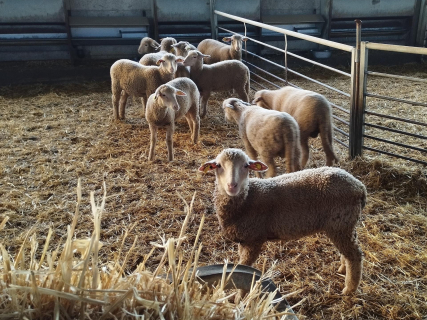










The Council of Government has informed this Wednesday of the granting of aid totaling more than seven million euros by the Junta de Andalucía, intended to support the work of 72 livestock health defense groupings (ADSG). These entities carry out during 2025 actions aimed at the prevention and control of various diseases that affect animals, with these subsidies covering expenses such as the purchase of vaccines, the performance of analyses, and the cost of the veterinary services required.
By province, the aid managed by the Ministry of Agriculture, Fisheries, Water and Rural Development exceeds 493,000 euros for seven ADSG in Almería; goes beyond 787,000 euros for seven groupings in Cádiz and reaches more than 1.4 million euros for nine entities in Córdoba. In Granada, subsidies close to 510,000 euros have been authorized for 12 groupings; in Huelva, more than 617,200 euros for four entities; and in Jaén, they stand at around 676,000 euros for twelve groupings, as the Junta details in a note.
In the province of Málaga, the aid is close to 750,000 euros for eight ADSG, while in Sevilla it exceeds 1.6 million euros for eleven groupings. To these are added two regional-scope entities that receive a little more than 234,500 euros. In relation to the health programs to which they are linked, the subsidies cover interventions aimed at surveillance and control of Brucellosis in cattle, sheep and goats; eradication of Bovine Tuberculosis; the classification of Caprine Tuberculosis; and the prevention, control and elimination of Infectious Bovine Rhinotracheitis and Contagious Catarrhal Fever in sheep and goats (Bluetongue).
Likewise, funding is provided for the health program against Aujeszky’s Disease; the tasks of surveillance and control of Salmonella serotypes in poultry holdings; and the measures that are carried out in aquaculture holdings to ensure animal health. Also eligible for support are the vaccination programs against Porcine Respiratory and Reproductive Syndrome, Contagious Agalactia in sheep and goats, Enzootic Abortion in sheep, Avian Mycoplasmosis, and Infectious Bursitis (Gumboro Disease).
The activity carried out by livestock health defense groupings, in coordination with national and regional health programs, contributes decisively to improving the hygienic conditions of farms, which in turn leads to an increase in their productivity. At the same time, the prevention and control of livestock diseases helps promote the trade of animals and derived products, thereby strengthening the sector’s profitability and competitiveness. These groupings represent a clear example of public-private collaboration and their work has direct effects on animal welfare, on livestock health, and on the protection of public health.