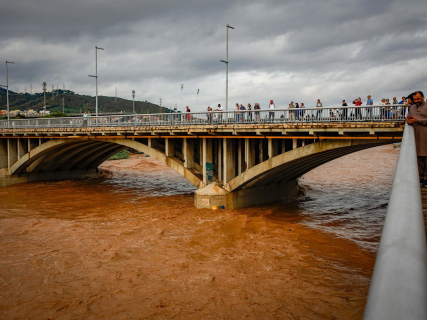









Rodalies faces another day of cuts due to the storm: these are the affected sections and the alternatives

The R1, R2 Nord, R4, R7, R8, and R11 maintain disruptions and AEMET forecasts new showers and storms in Catalonia.

fotonoticia 20261004145308 1920

fotonoticia 20261004145308 1920

Add DEMÓCRATA to Google

Ask FREN

Published

Last updated

3 minutes

Most read

Poder Digital · Carrera digital

La carrera digital de los candidatos

El Poder Digital de cada candidato a la Presidencia, de 0 a 100, desde junio · cambio en las últimas 4 semanas

30405060708090100julagoseptoctnovSánchez 93,8Montero 86,3Alvise 82,2Rufián 80,8Feijóo 79,1Abascal 78,4Colau 76,5Nogueras 58,0Valido 39,0
  1. 1Sánchez93,8▼ -0,2
  2. 2Montero86,3▼ -1,7
  3. 3Alvise82,2▼ -1,8
  4. 4Rufián80,8▼ -1,2
  5. 5Feijóo79,1▲ +0,1
  6. 6Abascal78,4▼ -3,6
  7. 7Colau76,5▲ +4,5
  8. 8Nogueras58,0▼ -4,0
  9. 9Valido39,0▼ -6,0

Pendientes de que su partido anuncie el candidato: Adelante, BNG, EH Bildu, EAJ-PNV y UPN.

Ver la carrera completa

Mide presencia e influencia en redes, no intención de voto.

The calm, in the meteorological, does not reach Catalonia. Rodalies faces this Monday, October 5, a new day with several sections affected by the rainstorm that hit Catalonia during the weekend. Circulation has partially recovered on some lines, but there are still rail cuts that force travelers to use alternative buses, Metro, or Ferrocarrils de la Generalitat (FGC), depending on the route.

On the R1, the rail service is limited to the route between Arenys de Mar and Badalona. To continue north, Rodalies has established an alternative road service between Arenys de Mar and Maçanet-Massanes. Between Badalona and Barcelona, travelers can use the Metro as an alternative.

On the R2 Nord, trains run from Barcelona to Granollers Centre, but do not reach Sant Celoni. That section is covered by buses. On the R4, circulation remains interrupted between Terrassa and Manresa and an alternative road service is offered. The line also does not recover passage through the tunnel of plaza Catalunya, affected by the accumulation of water.

The lines R7 and R8 also maintain alternative road service throughout their route. On the R11, which connects Barcelona with Girona and Portbou, the affected sections are Portbou-Maçanet-Massanes and Girona-Sant Andreu Comtal, both replaced by buses.

Line Situation Alternative
R1 Trains between Arenys de Mar and Badalona Bus Arenys de Mar-Maçanet-Massanes; Metro from Badalona to Barcelona
R2 Nord Trains to Granollers Centre Bus Granollers Centre-Sant Celoni
R4 No service between Terrassa and Manresa and affected in access to the tunnel of plaza Catalunya Bus Terrassa-Manresa; express bus and FGC for connections from Vallès to Barcelona
R7 Rail service affected Alternative road service
R8 Rail service affected Alternative road service
R11 Cuts at the ends of the route Bus Portbou-Maçanet-Massanes and Girona-Sant Andreu Comtal

Metro and FGC, alternatives for travelers

The Generalitat and the rail operators have planned to use other means of transport to absorb part of the affected movements. In the Vallès area, Rodalies recommends using the existing express bus lines and FGC to connect with Barcelona, while the section between Terrassa and Manresa has alternative road transport.

FGC, for its part, recovered normality in its lines after the incidents of the weekend. The Metro has also recovered a good part of its operation, although some stations and sections continue to be affected by the effects of the floods.

Rodalies also maintains rail services on the southern lines and in the Lleida services that have not been affected by the storm. The official information from the company states that travelers should check the updated status of each line before traveling, as the situation may change while inspections of the infrastructure continue.

AEMET maintains meteorological vigilance in Catalonia

The storm has lost intensity compared to the episode of the weekend, but Catalonia still faces new precipitation and storms this Monday. AEMET maintains meteorological warnings in different points of the community and specifically notes the possibility of downpours and storms that can be very strong in the coastal waters of Girona until 8:00 PM.

The AEMET forecast for the Catalan Pyrenees includes cloudy intervals and light rain or occasional showers during the afternoon, which could be locally strong and accompanied by hail in the Girona Pyrenees. The agency also does not rule out very strong gusts of wind in storm areas.

The weather forecast thus maintains a scenario that may continue to affect the recovery of the affected infrastructures. In coastal areas, AEMET forecasts downpours and storms in Girona, Barcelona, and Tarragona during the day, although the expected trend from 8:00 PM indicates that there would no longer be warning conditions in the Catalan coastal areas.

More key points, information and questions with FREN

AI-GENERATED CONTENT

How many parliamentary initiatives have been presented in Congress regarding the improvement of the Rodalies network in the last legislature?

With the available information, it is not possible to provide an exact and verifiable figure of the number of initiatives on Rodalies presented in Congress in the last full legislature (the XIV, 2019‑2023). Searches conducted in official sources and on the web confirm the existence of numerous initiatives, but do not return a filtered and closed list that allows for a reliable count of all those containing terms such as "Rodalies", "Cercanías de Cataluña", or "Cercanías de Barcelona" in the subject or text.

It can be stated with certainty that:

  • The XIV Legislature (December 3, 2019 – August 17, 2023) is the last full legislature prior to the current one.
  • Congress has an official initiative search engine by legislature, keywords, body, type of initiative, etc., accessible on the institutional website (initiative search engine).
  • During that legislature, both written and oral questions as well as non-legislative proposals, requests for appearances, and other initiatives related to Rodalies and Cercanías in Catalonia were registered, although the consulted sources do not provide a consolidated numerical count.
Why a closed figure cannot be given

The type of count you ask for requires having a complete list of initiatives from the XIV Legislature filtered by the content of the subject or text with the indicated keywords. Web searches have identified:

  • The general pages of the Congress initiative search engine for the XIV Legislature.
  • References to the existence of initiatives on Rodalies de Catalunya and Cercanías in parliamentary documentation and the press.

However, no document or pre-filtered view has been found that collects all initiatives with those terms and allows them to be counted directly. Without that complete list, any overall figure (for example, “X initiatives in total, of which Y are written questions…”) would necessarily be speculative and should not be presented as reliable data.

Categories and topics of initiatives on Rodalies

Although we do not have the exact number, it is possible to summarize what types of initiatives and contents usually appear when groups address Rodalies in Congress:

  • Written and oral questions to the Government: very often used to request explanations about:
    • Delays, cancellations, and service reliability.
    • Recurring incidents on specific lines and their impact on citizens.
    • Schedule and degree of execution of announced investments.
  • Non-legislative proposals (PNL) in the Transport Commission and Plenary:
    • Demanding maintenance and infrastructure renewal action plans.
    • Urging improved coordination between the State, Adif, Renfe, and the Generalitat.
    • Setting specific punctuality and service quality objectives for the Catalan network.
  • Requests for appearances:
    • From the Minister of Transport and officials from Renfe and Adif to explain specific crises in Rodalies.
    • To report on the transfer of powers agreements or financing agreements.
  • Other initiatives:
    • Urgent interpellations on the overall management of the Cercanías network.
    • Motions derived from interpellations, linked to political demands for improvement or requests for compliance with previous commitments.

Regarding the most frequent lines of debate in these initiatives, sources agree on several axes:

  • Service quality: chronic delays, train overcrowding, cancellations, and lack of user information.
  • Investment and maintenance: actual degree of execution of committed investment plans, infrastructure obsolescence, and modernization needs.
  • Management and institutional coordination: distribution of powers between the State and the Generalitat, compliance with transfer agreements, and political responsibility for incidents.
  • Social and economic impact: effects on daily mobility, the right to work, competitiveness of the Catalan economy, and territorial cohesion.
How to obtain the exact count yourself

If you need a strictly exact figure, the most reliable way is to use the Congress search engine directly:

  • Go to “Search for initiatives”.
  • Select the XIV Legislature.
  • Enter the keywords successively in the text field: "Rodalies", "Cercanías de Cataluña", and "Cercanías de Barcelona".
  • Filter by type of initiative (questions, PNL, appearances, etc.) and note the number of results in each category, avoiding duplicates.

This way you can build your own table with the total initiatives and breakdown by type, directly supported by the official source.

What competencies does the Generalitat of Catalonia have in the management of Rodalies according to current legislation?

According to current legislation and the State–Generalitat agreements, Catalonia today has broad functional competence over the Rodalies service (commuter and regional trains running entirely within Catalonia), while the State retains control of infrastructure, railway safety, and much of the essential means. The full transfer of Rodalies (including the network) is underway but has not been completed.

Main legal basis

  • Statute of Autonomy of Catalonia (LO 6/2006): grants the Generalitat competencies in railways and land transport running entirely within Catalonia, regardless of infrastructure ownership, including regulation, planning, management, coordination, inspection, and tariff authority over these services.
  • Law 38/2015, of September 29, on the railway sector (and its reform by Law 26/2022): establishes the General Interest Railway Network (RFIG), whose ownership, administration, and safety regime correspond to the State, but opens spaces for cooperation with autonomous communities and allows specific agreements.
  • Royal Decree 2034/2009, of December 30: transfers to the Generalitat the State functions over the commuter service in Catalonia.
  • Royal Decree 1598/2010, of November 26: extends that transfer to the regional railway passenger services on Iberian gauge in Catalonia.

What competencies the Generalitat currently has over Rodalies

The 2009 and 2010 royal decrees, in development of the Statute, make the Generalitat act as the competent authority of the service of Rodalies and regional trains in Catalonia. Specifically, it assumes:

  • Regulation and service organization: setting the specific rules of the transferred service within the basic State framework.
  • Offer planning: defining schedules, frequencies, stops, service levels, and quality standards for Rodalies and regional trains running entirely within Catalonia.
  • Service management, coordination, and inspection: daily monitoring of service provision, quality control, inspection, and adoption of corrective measures against non-compliance.
  • Tariff authority: setting prices and tariff policy for these services, coordinated with integrated tickets (ATM, free passes, etc.).
  • Sanctioning authority: applying sanctions for violations of the regulations governing the Rodalies service, within the framework provided by the transfer royal decree and sector legislation.
  • Subrogation in the relationship with the operator: the Generalitat subrogates the position previously held by the State vis-à-vis Renfe in public service contracts, being able to sign specific management agreements.
  • Participation in planning and management of State infrastructures in Catalonia, under the terms of the Statute and agreements published in the Official State Gazette (for example, for interchanges between RFIG and the Ferrocarrils de la Generalitat network).

Competencies retained by the State

Despite this broad functional transfer, the General State Administration retains key elements:

  • Ownership and management of the network: the RFIG in Catalonia (tracks, stations, safety and energy installations) remains State-owned and is managed by Adif, which is responsible for maintenance and traffic management, including when Rodalies trains run.
  • Basic regulation and railway safety: basic sector regulations, safety standards, and technical supervision correspond to the State (Ministry and State Railway Safety Agency).
  • Licenses and authorizations: the State grants licenses to railway companies and certifies personnel (drivers, etc.).
  • Rolling stock and historic operator: Renfe continues to be the main train supplier and, de facto, the operator, although now framed in a new corporate scheme.
  • Structural financing: the State continues to finance the operating deficit and improvement plans of Rodalies through direct subsidies to the Generalitat (Action Plan, aids included in royal decrees and State–Generalitat Mixed Commission agreements), which the Generalitat must then transfer to Renfe.

The new mixed company “Rodalies de Catalunya”

In application of recent political agreements (2023 investiture and subsequent developments), the central Government and Generalitat have agreed and signed the creation of Rodalies de Catalunya SME, SA as the new operator:

  • Capital: approximately 50.1% Renfe – 49.9% Generalitat, but with a majority of Generalitat representatives on the board of directors and presidency proposed by the Government of Catalonia.
  • Purpose: provision and management of commuter and regional services under Generalitat competence in Catalonia.
  • Legal function: operational instrument to deploy the agreed management model, without initially altering State ownership of the network or State competence in safety.

In summary, current legislation positions the Generalitat as the regulatory and planning authority of the service of Rodalies in Catalonia, with competencies over offer, tariffs, inspection, and sanctioning, and growing management capacity through the new mixed company. The State, for its part, retains infrastructure, railway safety, licenses, and structural financing, and also participates in the new operator through Renfe and Adif.

Can you explain article by article of the Statute and the Railway Sector Law what the legal bases of that competence distribution are? How is the Rodalies service financially structured between the State, Generalitat, and Renfe, including the Action Plan and direct subsidies? What exactly are the functions that the mixed company Rodalies de Catalunya will assume and what does it imply for the workers and for Renfe?

What legal requirements must the alternative bus service that replaces Rodalies trains in case of incidents comply with?

When a Rodalies service is interrupted and Renfe or the competent administration deploy replacement buses, that “alternative service” is not a free service but an extension of the railway passenger contract. Therefore, it must simultaneously comply with railway regulations, road transport regulations, and the accessibility and non-discrimination rules applicable to public transport in general.

1. Railway framework: service continuity and responsibility
  • Law 38/2015, on the railway sector (BOE-A-2015-10440) classifies passenger rail transport as a service of general and essential interest and sets the obligations of railway companies regarding service provision and user rights.
  • The Railway Sector Regulation, approved by Royal Decree 2387/2004 (BOE-A-2004-21908), develops:
    • The regime of passenger transport service and the complaints book.
    • Civil liability of the railway company towards passengers, luggage, and third parties, with requirements for very high minimum insurance (millions of euros per incident) and the obligation to have contracted the Mandatory Passenger Insurance.
    These obligations also apply when, to fulfill the transport contract, the company decides to use buses instead of trains.
  • The royal decrees on operational safety and accident investigation (Royal Decree 929/2020 and Royal Decree 623/2014, amended in 2026) require that any alternative solution, including the bus, be organized preserving safety levels and victim assistance protocols in case of incident.
2. Passenger rights and accessibility
  • The rights of Rodalies users are supported by European regulations on rail passenger rights (directly applicable European regulation) and national development regulations.
  • Royal Decree 1544/2007, on basic conditions of accessibility and non-discrimination in transport modes (BOE-A-2007-20785), is key:
    • Its Annex I regulates accessibility in rail transport (stations, rolling stock, information).
    • Its Annex IV regulates passenger road transport and special services, where replacement buses fit.
    • It requires guaranteeing access and use of transport for persons with disabilities or reduced mobility, non-discriminatorily, including reserved seats, ramps or suitable boarding means, and understandable information systems.
  • Additionally, recent legislation on accessibility of products and services (Law 11/2023, BOE-A-2023-11022) strengthens standards for accessible information and equal treatment.
3. Road transport regulations applicable to the replacement bus
  • The bus service is governed by the Land Transport Regulation Law and its Regulation, approved by Royal Decree 1211/1990, referred to by numerous subsequent norms (for example, Royal Decree 284/2021, BOE-A-2021-6624).
  • Among the most relevant obligations:
    • Discretionary or special road transport authorizations when acting as reinforcement or replacement services for rail.
    • Compliance with rules on driving and rest times and tachograph (European tachograph regulation, Royal Decree 640/2007 and its amendments by Royal Decree 729/2022, as well as Order FOM/1190/2005).
    • Respect for road safety and vehicle technical condition regulations, reinforced by resolutions such as that of February 27, 2009, on characteristics of vehicles for regular public passenger road services.
    • Compliance with specific accessibility and non-discrimination requirements of Royal Decree 1544/2007 for public service buses.
  • When, due to severe traffic crises, some driving and rest time obligations are temporarily excepted, it must be done by express resolution of the Directorate General of Road and Rail Transport (such as various 2025 and 2026 resolutions published in the BOE), with limited scope and specific justification.
4. Standards on how the alternative service must be provided

None of the cited regulations generally set a minimum frequency in minutes or a specific number of seats per hour for replacement buses. What does emerge from the overall framework is:

  • The bus is part of the transport obligation already assumed by the railway company or competent authority: it must be at no additional cost to the passenger and offer a reasonable solution for journey continuity.
  • It must be provided under conditions analogous in safety, accessibility, and information to the railway service: safe vehicles, qualified personnel, clear information on schedules, stops, and transfers, and full attention to persons with reduced mobility.
  • Users retain their rights to claim and, if applicable, to compensation or refunds according to rail passenger rights regulations and the civil liability and mandatory passenger insurance regime.

In practice, this requires that any alternative road transport plan for Rodalies be designed to provide a sufficient offer of seats, stops coordinated with affected stations, reasonable waiting times, and special attention to persons with reduced mobility, all under the same safety and responsibility standards that govern ordinary rail service.

Could you specify what reimbursement or compensation rights I would have as a Rodalies user if I refuse the alternative bus? What specific obligations do Renfe, Adif, and the Generalitat of Catalonia have in Rodalies when scheduling replacement road services? Are there examples of sanctioning resolutions or collective claims for poor alternative bus service in Rodalies or other commuter rail services?

Play

Test your knowledge with FREN!

How much do you know about this topic? Answer the following 3 questions.

Which section of the R1 line of Rodalies is operational after the storm?

Question 1 of 3

What service is offered as an alternative between Terrassa and Manresa due to the interruption of the R4?

Question 2 of 3

What does Rodalies recommend to travelers given the variable situation of the incidents?

Question 3 of 3