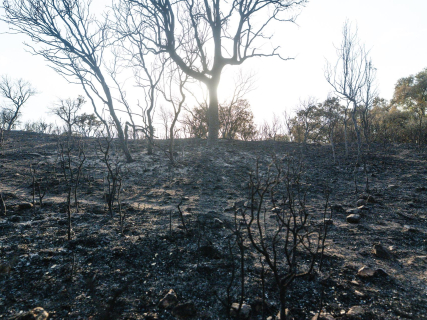
The EU will create an alliance of insurance against fires, droughts, and floods.

Brussels wants to reduce the enormous protection gap against extreme phenomena: currently only about 25% of climate-related losses in Europe are insured.

2 minutes

fotonoticia 20260909122656 1920

fotonoticia 20260909122656 1920

Add DEMÓCRATA to Google

Ask FREN

Published

2 minutes

Most read

The European Union is preparing a new economic response to the consequences of extreme weather phenomena. The European Commission will promote a climate insurance alliance with the aim of reducing the gap between losses caused by disasters and the damages that are ultimately covered by policies.

The President of the European Commission, Ursula von der Leyen, announced the initiative this Wednesday in her State of the Union speech, following a summer marked in Europe by wildfires, droughts, and heatwaves.

In Brussels, there is concern that only around 25% of climate-related economic losses in Europe are currently insured.

The hole left by disasters

This means that approximately three-quarters of economic damages remain outside insurance coverage. The bill ultimately falls, depending on each case, on families, businesses, and public administrations.

The Commission believes that the increase in the frequency and intensity of certain extreme phenomena requires strengthening Europe’s capacity to anticipate and economically absorb these episodes.

The problem is not only how much the damages cost, but who can bear them. A high insurance gap increases the financial exposure of property owners and companies and may force the public sector to intervene after major disasters.

What the European alliance will be

For now, Brussels has announced the creation of a climate insurance alliance, but it has not yet presented a finalized design that allows for the discussion of a new European policy directly contractable by citizens.

The initiative should therefore be understood as a mechanism to increase insurance protection against climate risks and reduce the so-called protection gap, not as the immediate launch of a single European insurance.

The issue has been on the table of community institutions for some time. The Commission, the European Central Bank, and the European Insurance and Occupational Pensions Authority have analyzed different formulas to better distribute risks that can exceed the capacity of insurers, households, or administrations when major disasters occur.

From reacting to disasters to preparing for them

The new alliance will be part of a broader European adaptation strategy. Von der Leyen has also put forward a climate resilience strategy initially aimed at 100 vulnerable areas, along with preparedness measures against heatwaves and actions related to water management.

The approach involves strengthening the second pillar of European climate policy. In addition to reducing emissions to limit warming, Brussels aims to increase the capacity of the economy and infrastructure to withstand impacts that are already occurring.

More key points, information and questions with FREN

AI-GENERATED CONTENT

At what stage of processing is the proposal for the climate insurance alliance in the European institutions, and what are its next steps for approval?

To date, there is no formal legislative proposal from the Commission registered with the European Parliament and the Council under the name “European Climate Risk Insurance scheme” or “Climate Insurance Alliance”. What exists is a broader pre-legislative process on climate resilience and risk management, in which European climate insurance and reinsurance schemes are being explored, but it is still in the design and consultation phase, not in ordinary legislative processing.

What has already been done in the European institutions

The Commission has been laying the groundwork for a future European system of climate risk management and insurance through several milestones:

  • In March 2024, it presented a Communication on climate risk management, based on the first European climate risk assessment (EUCRA). It emphasizes the need to mobilize financing for resilience and announces the creation of a reflection group on climate resilience financing, including industry, financial and insurance sectors (summary news).
  • That group presented its final report in December 2025, recommending, among other things, strengthening the use of insurance, creating a European observatory on insurability, and improving access to financing for resilience projects (financial resilience report).
  • Meanwhile, the Commission has led a Dialogue on climate resilience, whose conclusions (September 2024) stress closing the “climate protection gap” and exploring public-private insurance partnerships as part of the solution (Dialogue conclusions).
  • At the end of 2025, the Commission itself confirmed it is preparing a “European Integrated Framework for Climate Resilience” expected to be adopted by end of 2026; this framework will integrate proposals on insurability and climate insurance (Dialogue and reflection group).
  • The Environment Council, in December 2025, “welcomes” the Commission’s plans to develop a legal framework for climate resilience and insists on integrating this resilience into all policies (Council conclusions).

Additionally, some Member States, such as Spain, are explicitly pushing for common insurance/reinsurance instruments. In a recent letter to the Commission, the Spanish Government proposes a European public-private reinsurance system to cover losses from extreme events and suggests financing it, among other ways, with a European tax on oil and gas companies’ profits and with climate risk bonds (article in Demócrata).

Current phase of the climate insurance “alliance”

Based on available information, the so-called “alliance” or European climate insurance scheme is in a pre-design and idea aggregation phase:

  • There is not yet a single legislative text from the Commission submitted to the ordinary legislative procedure with an official title and file number.
  • The Commission is collecting technical recommendations (reflection group on financing, Climate Resilience Dialogue, sector consultations such as the one reviewed by Contexte on the future integrated resilience framework planned for Q4 2026: Contexte analysis).
  • Some elements are already materializing in adjacent instruments (solidarity funds, CAP adjustments and agricultural reinsurance proposals, EIB initiatives), but the pan-European systemic climate insurance scheme remains in political and technical definition phase.
Expected next steps until approval

Based on what the Commission and the Council have announced, the reasonably expected next steps would be:

  • 1. Presentation of the climate resilience package (2026): the Commission plans to adopt the European Integrated Framework for Climate Resilience by the end of 2026. It is very likely that it will include, or announce, one or more legislative and programmatic initiatives on climate insurance and reinsurance at the EU level.
  • 2. Ordinary legislative procedure: if the Commission opts for a specific regulation or directive on climate insurance, that text will be sent to the European Parliament and the Council, which will process it through the ordinary legislative procedure: first reading in Parliament (competent committees, amendments, and plenary vote), negotiation with the Council, and likely trilogues until a final agreement.
  • 3. Formal approval and entry into force: once agreement is reached, the legislative act will be signed and published in the Official Journal of the EU. If it is a regulation, it will apply from the date set; if a directive, a period will open for its transposition into national laws.
  • 4. Practical development of the insurance scheme: in parallel or afterwards, the following would be specified:
    • the design of a possible European reinsurance fund or mechanism,
    • the participation rules for insurers and Member States,
    • activation criteria after climate disasters,
    • and, if applicable, associated financial instruments (climate risk bonds, blended finance platforms, etc.).

In summary, the “climate insurance alliance” is currently in a preparatory phase, without a finalized legislative proposal. The key moment will be the climate resilience package the Commission promises for the end of 2026, from which the formal processing in Parliament and Council will begin.

What are the powers and responsibilities of the President of the European Commission, Ursula von der Leyen, in developing climate initiatives?

The President of the European Commission, currently Ursula von der Leyen, does not act alone on climate matters but concentrates a decisive part of the initiative and coordination power within the institution that holds the almost exclusive monopoly on legislative initiative in the EU. Her powers combine formal legal bases in the Treaties with significant political and internal weight on how climate initiatives are born and shaped.

General legal framework of her role

According to Article 17 of the Treaty on European Union, the Commission is the institution responsible for proposing European legislation, ensuring the application of the Treaties, and representing the general interest of the Union. The President of the Commission:

  • Defines the general political guidelines of the Commission.
  • Organizes the work of the institution and distributes portfolios among Commissioners.
  • Decides on the composition of the College (including executive vice-presidents and Commissioners responsible for climate, energy, environment, etc.).
  • Chairs and sets the agenda of College meetings where legislative proposals are approved.

In climate matters, these powers connect with Articles 191–193 of the Treaty on the Functioning of the EU, which establish the objectives and bases of the Union’s environmental and climate policy, always channeled through Commission proposals.

Driving and defining the climate agenda

Von der Leyen’s central role is seen primarily in the phase of setting priorities and agenda:

  • Political program and inaugural speech: when presenting herself to the European Parliament, she defines her government program, where the European Green Deal was an absolute priority. That political mandate guides all the Commission’s climate regulatory output.
  • Annual work program: each year she approves, together with the College, the Commission’s work program, listing the planned climate packages and proposals (e.g., emissions market revisions, emission reduction targets, energy efficiency, etc.). The President decides what enters that program and with what ambition.
  • Mission letters to Commissioners: she defines in writing the objectives and tasks of the Executive Vice-President responsible for climate and sectoral Commissioners (energy, transport, agriculture, industry), establishing cross-cutting priorities such as decarbonization or climate adaptation.

Internal powers in developing initiatives

The Commission works collegially, but the President concentrates strong internal direction capacity over the regulatory process:

  • Political authorization of new initiatives: before services work intensively on a climate proposal, the President (through her cabinet) must give initial political green light. She can request acceleration, delay, or reorientation of an initiative’s scope.
  • Coordination among portfolios: climate initiatives often affect energy, transport, industry, competition, agriculture, etc. The President decides which Commissioners co-lead a file, arbitrates conflicts among them, and determines the degree of integration of the climate variable in other policies (e.g., when climate enters an industrial or trade package).
  • Chairing College meetings: Von der Leyen sets which climate proposals are submitted to the College, when, and with what final text. She can postpone an item, request substantial changes, or condition approval on political adjustments (e.g., balancing climate ambition and competitiveness concerns).
  • Supervision of regulatory quality: although technical services prepare impact studies and public consultations, the President can demand additional analyses (costs for industry, social impact, territorial effects) before accepting a climate proposal.

Relationship with the European Council and Parliament

Von der Leyen’s powers also include her capacity for political intermediation:

  • Interaction with the European Council: she attends its meetings and participates in setting major climate goals (such as emission reduction targets for 2030 or 2050). Although the Council sets orientations, the President translates those mandates into concrete legislative packages.
  • Relationship with the European Parliament: she negotiates with political groups the main lines of major climate packages, adapts the legislative calendar to power balances, and assesses how far the ambition of a proposal can go without losing parliamentary support.
  • International dimension: she represents the EU at climate summits (COP, G7, G20, bilateral forums), politically committing the Union to certain goals or alliances, which later materialize in internal regulatory initiatives.

Political responsibility and limits

Although her role is very influential, the President:

  • Shares the collegial responsibility for proposals with other Commissioners, who vote on initiatives.
  • Is subject to the control of the European Parliament, which can censure the Commission if it considers its climate action inadequate.
  • Must respect the framework of the Treaties and EU competences, so she cannot legislate beyond the available legal bases.

Overall, Von der Leyen is not the sole “legislator” on climate but the architect and political director of the process by which the European Union’s climate initiatives are born, prioritized, and formulated.

What requirements must Member States meet to participate in the future climate insurance alliance proposed by the European Commission?

To date, the European Commission has not yet presented a finalized legal proposal that formally creates a “climate insurance alliance” with a detailed membership regulation for Member States. What exists is a set of communications, dialogues, and preparatory work on climate resilience, insurance protection gap, and climate risk financing, from which only an indicative framework of the likely requirements can be drawn.

In its documents on climate risk management and resilience, the Commission starts from a common diagnosis: only about a quarter of climate damages in the EU have been insured in the past, and climate change worsens the gap between economic losses and insured losses. To address this “climate protection gap,” the Commission has promoted a Climate Resilience Dialogue with public authorities, supervisors, consumer organizations, and the insurance sector, whose final report includes recommendations and possible instruments, including insurance schemes and public-private partnerships.

Additionally, the Commission is preparing a European Integrated Framework for Climate Resilience, planned for 2026, which will be the umbrella under which insurance and reinsurance instruments will fit. A reflection group on financial resilience has proposed, among other things, a European observatory on insurability and a portfolio of climate resilience projects to facilitate financing, initiatives the Commission has announced it will incorporate into the design of that framework.

From these sources, the underlying conditions that, de facto, are posed as requirements or “preconditions” for Member States to benefit from common climate insurance or reinsurance instruments at the EU level can be identified:

  • Systematic climate risk assessment. The Commission insists that States must improve risk understanding based on the best available data and periodic assessments. In practice, participating in a climate insurance alliance will involve having solid diagnostics of exposure and vulnerability (e.g., to floods, wildfires, heatwaves, droughts, or storms) and regularly updating those analyses.
  • Integration of climate resilience into all policies (“resilience by design”). Commission and Council texts emphasize the need to integrate climate risks into spatial planning, infrastructure planning, and civil protection mechanisms. A Member State wishing to join a European insurance scheme should demonstrate that its investment and planning decisions already incorporate risk reduction, not just post-disaster response.
  • Clear governance framework and defined responsibilities. The Commission demands clear identification of “risk holders” and smooth cooperation between national, regional, and local levels. In the logic of an insurance alliance, this means States should have administrative structures capable of managing risk, collecting data, applying prevention measures, and coordinating with the insurance industry and EU institutions.
  • Active use of public-private partnerships and market solutions. The Climate Resilience Dialogue report explores the role of public-private partnerships and other insurance-based solutions to reduce the protection gap. Being part of a European alliance will likely require States to promote or maintain national catastrophe insurance schemes, open to reinforcement through reinsurance or common instruments at the EU level.
  • Commitment to adaptation goals and risk reduction measures. The Commission states that risks cannot be addressed only with financial transfers: upfront investment in vulnerability reduction (civil protection, resilient infrastructure, land management, ecosystem protection, etc.) is necessary. Participation in climate insurance instruments will likely be linked to the existence of adaptation strategies and the implementation of preventive measures.
  • Data transparency and contribution to common European tools. Initiatives in preparation include blended finance digital platforms and a European observatory on insurability. To fully participate in a climate insurance alliance, States will have to provide data on risks, damages, and coverages in a harmonized and accessible way, so premiums, coverages, and reinsurance needs can be calculated at the European scale.
  • Mobilization of public and private financing for resilience. The Commission and the financial resilience reflection group point out that mobilizing sufficient funds will be crucial, combining EU, national budgetary resources, and private capital. Although no mandatory contributions linked to a “climate insurance alliance” have yet been set, it is reasonable to anticipate that participating States will have to commit certain levels of co-financing and support for adaptation projects.

In sum, rather than a closed list of formal eligibility requirements, the future climate insurance alliance is being shaped based on structural commitments in risk assessment, governance, prevention, public-private cooperation, data transparency, and financial capacity. The legal details (specific membership criteria, co-financing rules, conditions to activate common coverages, etc.) will only be known when the Commission presents the specific regulatory proposal within the future European Integrated Framework for Climate Resilience.

Play

Test your knowledge with FREN!

How much do you know about this topic? Answer the following 3 questions.

What is the main objective of the climate insurance alliance announced by the European Commission?

Question 1 of 3

Who announced the climate insurance alliance initiative in the EU?

Question 2 of 3

Currently, what portion of economic losses from extreme climate events in Europe are covered by insurance policies, according to the European Commission?

Question 3 of 3

Hola, soy Fren. ¿Cómo te ayudo?