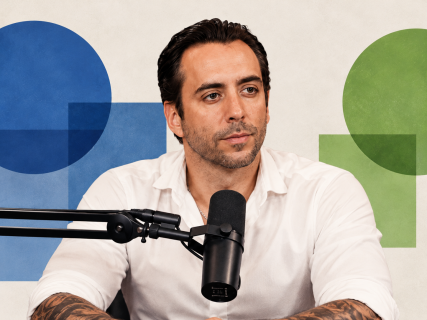

Jordi Wild has taken stock of his interviews with Pedro Sánchez, Alberto Núñez Feijóo and Ada Colau after an intense week in which politics has taken center stage in his podcast, The Wild Project. The content creator has acknowledged that his conversations with the three candidates for the general elections on next 29 November have allowed him to change some of his personal perceptions, although none has managed to convince him to give him his vote. In an interview granted to El Español and published this Saturday, 14 November, Wild analyzes the differences between the leaders, the difficulties he encountered during the recordings, and the controversy sparked by Santiago Abascal’s decision to cancel his participation at the last moment.
The host, whose program has more than seven million subscribers on YouTube, admits that the experience has left him exhausted and that he has no intention of repeating it soon. In recent days he has spoken with three of the main candidates for La Moncloa, while the president of Vox, Santiago Abascal, ultimately decided not to attend the interview that had been agreed. Wild says that direct contact with the politicians has allowed him to get to know a more personal side of each of them, although he maintains his reservations about the major parties and acknowledges that he still cannot identify a party to support electorally.
Jordi Wild, surprised by Feijóo’s agility: "His head works fast"
One of the main conclusions that Jordi Wild draws from this experience has to do with Alberto Núñez Feijóo, whose ability to react during the interview positively surprised him. The creator admits that he expected to find a leader who was less dynamic in his answers, but ended up discovering a greater speed than he had anticipated.
"I was expecting someone more still," Wild acknowledges in statements to El Español, where he highlights the mental agility of the president of the Partido Popular. However, the host also shows particular criticism toward himself about how that conversation went, since he considers that the interview with Feijóo was less incisive than the previous ones and that he failed to address all the issues he had prepared.
Among the pending issues were the PP’s performance during the management of the DANA, the position that Feijóo had maintained regarding Carlos Mazón, railway accidents, and the situation in care homes. Wild explains that he also intended to devote an important part of the conversation to the possible Government agreements with Vox and to economic matters, but the available time ended up conditioning the outcome.
As he relates, Feijóo’s team kept a strict duration limit and did not accept extending the recording. The creator acknowledges that he handled the time badly by allowing answers that were too long on some topics and that, when he received the notice that there were 25 minutes left, he still had numerous questions pending. In his view, having an additional half hour would have allowed the most delicate issues to be explored in greater depth.
Sánchez was the most complicated interview, but he wanted to stay longer
The assessment about Pedro Sánchez is different. Jordi Wild believes that the President of the Government was the most demanding of the three as the one with the most political experience and the ability to carry himself in the face of difficult questions. The creator argues that the socialist leader knows how to handle situations of pressure and keep control of the conversation even when he is presented with contradictions or changes of position.
During the meeting, Wild assures that Sánchez showed moments of discomfort with certain questions, although he highlights his ability to answer and continue the dialogue. The presenter also explains that the president tried to create a close atmosphere before starting the recording, talking about music, basketball, and other personal matters.
One of the aspects he values most is that Sánchez agreed to prolong the interview when some of the most difficult questions arrived, despite the fact that initially there was time agreed with his team. According to Wild, the president decided to continue answering instead of ending the meeting, an attitude that contrasts with the scheduling limitations he later encountered with Feijóo.
Nevertheless, the creator insists that this willingness does not mean that he shares the president’s political positions. In fact, he considers that the conversation made it possible to address numerous contradictions in Sánchez and maintains that the public should draw its own conclusions about the answers given.
Ada Colau, the candidate who gave Jordi Wild the most leeway
The third interview that is analyzed is that of Ada Colau, candidate of the Frente Amplio, with whom she acknowledges having maintained a fluid conversation despite their ideological differences. Wild explains that she had certain prejudices before meeting her personally, but that the treatment she received and her willingness to engage in dialogue helped to change her perception.
The presenter believes that Colau has an especially idealistic view of politics and of society, although he questions whether some of her proposals fit the difficulties of the real world. This is a personal assessment by the creator, who admits that he does not share many of the former mayor of Barcelona’s positions.
Unlike what happened with Feijóo, Colau allowed the interview to extend beyond the time initially planned, becoming the longest conversation of the three. Wild highlights that this flexibility facilitated the development of the dialogue and allowed him to understand better her arguments, although it did not substantially change his own positions.
He also acknowledges that the order of the interviews may have influenced his performance as an interviewer. Colau was the first guest, when he still had more energy, while Feijóo participated at the end of an especially intense week, after Abascal’s cancellation.
Abascal’s cancellation: "It was an erroneous strategic decision"
The absence of Santiago Abascal is one of the episodes that has most marked Jordi Wild’s experience. The Vox president had agreed to participate in the podcast, but his communications team communicated the cancellation shortly before the recording, a decision that sparked intense controversy on social media.
In his interview with El Español, Wild admits that the cancellation affected him personally, especially because he had dedicated several days to preparing for the meeting and was hoping to complete a series of conversations with four of the main candidates for President of the Government.
The creator believes that Vox made a strategic mistake by pulling out at the last moment, fundamentally because of the way the decision was communicated. In his view, the organization could have explained its reservations with more advance notice, thus avoiding a situation that generated criticism among part of the public.
He also rejects the accusations circulated on some social networks that suggested he had prepared the questions for Abascal with the collaboration of Pedro Sánchez. Wild assures that all the interviews were designed by him and his team, without the candidates’ involvement, and he argues that precisely the conversation with the president of the Government included some of the most sensitive issues in the series.
The host explains that he had prepared a demanding interview for Abascal, with questions about political and technical matters which, according to his approach, went beyond the usual controversies associated with Vox. However, the cancellation prevented knowing how the figure would have answered those questions.
Jordi Wild assures that he would not vote for any of the three candidates interviewed
Despite the positive assessments of certain personal aspects of Sánchez, Feijóo and Colau, Jordi Wild states that the interviews have not changed his position regarding the vote. The creator explains that he continues to not feel represented by the main political parties and that he maintains significant disagreements with all of them.
In statements to El Español, he points out that his reservations are related to issues such as corruption, the attitudes of some political figures, and differences between political programs and his own convictions. Although he acknowledges that the conversations have allowed him to humanize the three candidates and better understand their positions, he insists that this personal closeness does not equate to electoral support.
Wild also rejects the ideological labels he usually receives on social networks. He assures that, depending on the guests and the topics covered in his podcast, some viewers place him close to the right and others link him to the left, despite the fact that he considers his content to be mainly focused on entertainment and dissemination.
The presenter recalls that his program usually addresses issues related to history, science, medicine, sport, or social current affairs, and that the political interviews of this week constitute an exception. For that reason, he has no plans to turn The Wild Project into a regular space for election interviews.
The series of conversations has placed the creator among the protagonists of the 29N pre-campaign, by offering the main candidates a different format from traditional television debates. However, Wild concludes the experience with the feeling that meeting the politicians in person has allowed him to better understand how they act, but has not resolved his doubts about the parties they represent.