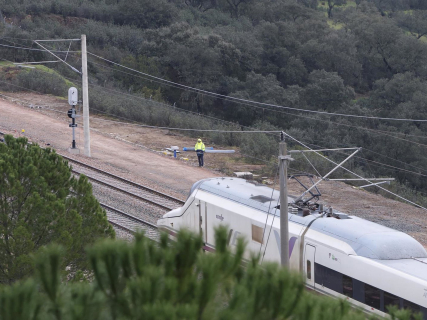
The technical investigation of the Adamuz (Córdoba) train accident, in which 46 people died on January 18, has conclusions. The Railway Accidents Investigation Commission (CIAF) maintains in a new report, sent to the Montoro (Córdoba) court, that the "cause" of the derailment was "the existence of a rail break."
According to El País, the report concludes that no anomalies were detected in the trains involved before the critical moment. “The analyzed data does not show that there are anomalies in either of the two trains involved before second 19:43:33,” the investigation states, which places the passage of the Iryo train at that instant through the exact point of the fracture in the track.
The key: a failure in the infrastructure
The CIAF analysis points directly to the track as the origin of the accident. Specifically, to the breakage of the outer thread of the rail on track 2, a failure that would have caused the derailment and subsequent collision.
This aspect is especially relevant because it shifts the focus of the investigation from the trains—which have no previous incidents—to the state and maintenance of the railway infrastructure.
No previous anomalies in the trains
The technical report rules out, at least in this phase, mechanical or operational failures in the trains. The recordings analyzed inside the wagons and the circulation data show no irregularities up to the moment the train crosses the break point.
This detail reinforces the hypothesis of a sudden failure on the track, with no prior signals detected by the train's systems before the impact.
What the court is now investigating
The judicial investigation opened in Montoro must now determine whether that lane rupture was avoidable or not. Among the keys that remain to be clarified:
- If there were prior indications that allowed detecting the deterioration of the lane
- If the maintenance and inspection protocols were applied correctly
- What responsibility corresponds to the manager of the railway infrastructure
It should be recalled that the CIAF reports are technical in nature and do not attribute criminal responsibility, a task that exclusively corresponds to the court.
A technical cause, but not definitive
Although the report places the lane rupture as the cause of the accident, the investigation remains open. The determination of responsibilities will depend on whether that failure was unforeseeable or if, on the contrary, it could have been avoided with adequate action.