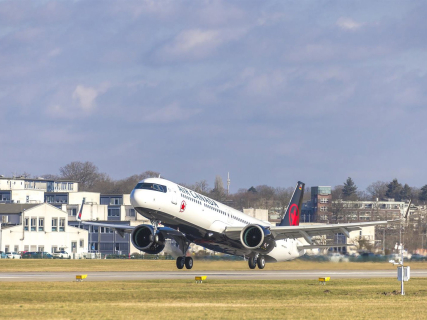

Pakistan has become the first country to officially recognize a critical situation of aviation fuel supply as a consequence of the war in Iran and the restrictions in the Strait of Hormuz, one of the most important energy routes in the world.
Pakistani authorities admitted this Saturday that the country has enough jet fuel reserves for about ten days, a sign of the immediate impact that the disruption of maritime traffic in the area can cause on economies highly dependent on energy imports.
The Ormuz Bottleneck
The Strait of Hormuz connects the Persian Gulf with the Indian Ocean and a substantial part of the world's oil and energy derivatives pass through it. Although international attention usually focuses on the rise in the price of crude oil, some countries face a more urgent problem: the physical lack of available product, even if they are willing to pay more.
This is the case of Pakistan, which imports a good part of its refined aviation fuel from Gulf producing countries. The interruption of maritime routes and the absence of new shipments have left the country in a particularly vulnerable position.
Official notice to the air sector
The public company Pakistan State Oil (PSO), in charge of national energy supply, confirmed that it is working with local refineries to try to alleviate the situation. However, it acknowledges structural difficulties: domestic capacity does not cover all demand and aviation fuel requires specific processes and complex logistics.
In recent days, Islamabad had already issued a NOTAM (Notice to Air Missions), the international system of notices to the air sector, requesting companies and operators to exercise extreme control over consumption to extend available reserves.
That message has been interpreted by analysts as a clear sign of stress in the supply chain.
Risk for flights and economy
If the situation continues, Pakistan could be forced to prioritize strategic routes, limit domestic operations, or review international frequencies. Aviation fuel not only affects tourism or passenger transport: it also conditions urgent cargo, logistics chains, and business activity.
Furthermore, Pakistan is going through a delicate economic situation, with high external dependence, pressure on foreign exchange, and recurring difficulties in importing energy.
Even if Hormuz Reopens, the Problem Would Persist
Specialists in the sector warn that even if the Strait of Hormuz returned to normal tomorrow, the logistics chain would not be restored immediately. Ships need to be repositioned, contracts must be reactivated, and maritime transit times delay any quick solution.
Therefore, Pakistan could be just the first visible warning of a broader crisis. Other countries with less storage capacity or heavy reliance on refined fuel could face similar tensions in the coming days if the conflict continues.
First global symptom
The Pakistani warning turns the country into the first major international thermometer of the real impact of the energy crisis derived from the war with Iran. Beyond the price of oil, the scarcity of strategic supplies is beginning to spread to specific sectors and vulnerable economies.
What today affects kerosene in Pakistan could extend tomorrow to other markets and other fuels if the tension in the Middle East does not ease soon.