The United States has incorporated Spain into its new military infrastructure investment program, included in the defense budget for 2027, a roadmap that raises the Pentagon's total spending to 1.45 trillion dollars, a 44% increase compared to the previous year.
The plan contemplates 8.5 billion dollars allocated to 64 military construction projects, some of them on Spanish territory, which places Spain among the countries considered strategic for the logistical and operational modernization of the US Navy.
The decision comes in a context marked by tensions between both countries regarding military spending within NATO, after the United States has intensified pressure on its European allies to increase their defense investment.
Spain gains strategic weight on NATO's southern flank
The Department of Defense budget proposes reinforcing key infrastructures capable of responding to an increasingly unstable geopolitical scenario. Investments include base modernization, improvement of naval facilities, and updating of logistical capabilities.
Within that framework, Spain appears alongside allies such as Australia and Japan, consolidating its role as an operational platform in the Mediterranean and the Atlantic.
Spanish inclusion points especially to the reinforcement of facilities linked to naval operations and international deployments, at a time of growing military attention on North Africa, the eastern Mediterranean and strategic maritime routes.
Rota consolidates itself as a key piece
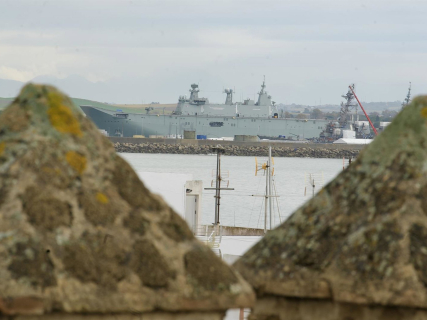
The announcement coincides with movements by the U.S. Navy Supply Systems Command to promote projects linked to the maintenance of destroyers deployed in Europe. The naval base of Naval Station Rota, at the center of the controversy after the Spanish veto to the United States over the Iran war, is once again at the center of the U.S. strategy, reinforcing its function as a fundamental logistical enclave for NATO operations and permanent maritime deployments.
Thus, the US Navy has initiated a process to seek new suppliers responsible for the maintenance of the five destroyers it keeps deployed in Rota. The initiative comes from the Pentagon, which has launched a public tender aimed, for now, at analyzing proposals and evaluating possible alternatives to guarantee the technical service and upkeep of these ships.
Since 2013, the maintenance of US-Navy ships in Rota has been in the hands of Navantia, which has developed an infrastructure within the base considered the "fourth shipyard" of the Bay of Cadiz. This activity currently supports a workforce of nearly 400 people linked to repair and naval support work.
In addition to infrastructure, the budget contemplates 9.8 billion dollars to improve military housing, aimed at renovating residences and raising the conditions of personnel stationed at various bases. The plan also seeks to rebuild the U.S. defense industrial base through more than 100 billion dollars allocated to domestic production, critical minerals, and strategic autonomy.
Among the main items, 52.9 billion dollars for critical munitions, drones, and autonomous systems, 58.5 billion for artificial intelligence and multi-domain command, and more than 70 billion to modernize the US nuclear arsenal stand out.