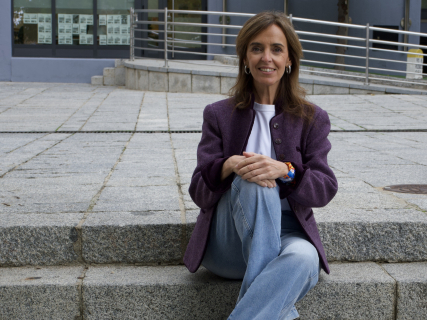

The Partido Popular places the reform of the National Health System among the priorities of a possible Government of Alberto Núñez Feijóo. Carmen Fúnez, deputy secretary of Health and Social Policy of the party, anticipates in this interview with Demócrata that her first initiative will be to call on doctors, healthcare professionals and autonomous communities to push for a major State Pact for Health. Among her proposals are a new Medicines Law, the reform of the Framework Statute, autonomous funding that reinforces healthcare resources, and the creation of a state fund to guarantee access to innovative treatments for rare diseases. All this, against what she describes as the “disastrous” balance of the health policy of the Government of Pedro Sánchez.
QUESTION: What assessment do you make of health policy over the last four years?
RESPONSE: Disastrous. The assessment of Sánchez in health policy is riddled with conflicts, strikes, cancelled medical acts, and a deteriorated public system with no support or protection from the Government.
This is not a personal opinion: this Government, in this last legislature, has managed to approve only one health law and it was thanks to the support of the Partido Popular, that of the State Health Public Agency. As for the rest of the issues on which the Minister of Health has been jumping from one to another, she has failed to resolve not even one of the problems and debates that they have generated.
This is the record of a President of the Government who in eight years has had six different health ministers, who has used the Ministry of Health as an electoral platform for candidates and, in this last stage, handed it over to the minority party in his Government. Sánchez has not worried at any time about the National Health System; in fact, he has allowed his minister to be more concerned about campaigning against the autonomous communities than about attending to her responsibilities.
Q: She has recently defended that healthcare will be a priority for a future Government of Alberto Núñez Feijóo and that Spain needs a reform of the National Health System with a view to the next two decades. What would be the first measures the PP would put in place during the first days of Government, and what legislative changes does she consider essential to carry out that transformation?
R: The first measure the PP will take in the health sphere will be to recover dialogue and listen, exactly the opposite of what this Government has done. The next Government of Feijóo will convene doctors, the rest of the professionals, and the autonomous communities to put in place a major State Pact for Public Health, from which the reforms that the National Health System needs will be tackled.
The system has always been one of the jewels in the crown of our welfare state, but at this moment it is necessary to address the necessary reforms to guarantee its strengthening and protection. And this has to be done with budgets and with everyone, contrary to what Pedro Sánchez and Mónica García have done.
If Spaniards give us their trust, they will have a prepared and competent Government to put in motion the necessary legislative changes.
P: What measures do you consider priorities?
R: From the consensus-based reform and with everyone—from the Estatuto Marco to the Ley del Medicamento, through the Ley de Ordenación de las Profesiones Sanitarias or the reform of regional funding, key to ensuring the system’s sustainability.
P: The PP has committed to incorporating at least 4,500 doctors into Primary Care and to reform the Estatuto Marco, with a specific negotiation framework for practitioners. Since personnel competences largely correspond to the autonomous communities, what role would the Ministry of Health assume to make these commitments a reality? What calendar and funding do they have?
R: It is the Government of Spain that must guarantee both sufficient autonomous funding and the number of places in specialized health training, which is the key for there to be enough professionals in the system. In addition, we must restore the value of the Interterritorial Council as a working and coordination body, rather than as a space for confrontation, which is what this Government has turned it into.
Spain needs a plan for health human resources that allows needs for professionals to be anticipated, taking into account retirements, demographic characteristics, and existing deficits in the different specialties.
According to the Ministry of Health’s own reports, today it is estimated that around 4,500 doctors are missing in Primary Care, which will rise to nearly 5,500 by 2029. The only way to reverse this situation is through the sufficient and decisive expansion of the number of specialized health training places, to address the shortage of professionals.
Q: What do you think of what the Government has done in this regard?
A: A few days ago, provisional figures were coming out and the Ministry of Health barely increases by 13 the MIR places for Primary Care for 2027. It’s a joke.
Q: He has announced that the PP will push for a new Medicines and Medical Devices Law if it comes to Government, after the processing of the current project lapsed. What aspects of the current text would you keep and which would change? How would you address controversial issues, such as nurse and physiotherapist prescribing, the financing of innovation, or patients’ access to new treatments?
A: It’s that Spain and its healthcare system need reforms, we are not going to evade them. And it needs a new Medicines and Medical Devices Law so that we can tackle the challenges of pharmaceutical innovation with a regulatory framework adapted to the advances and needs of the system.
The problem with the project promoted by the Government was not only its content, but also the way of addressing it. We are talking about a Medicines Bill that received around 6,000 allegations from about 400 different entities during its public consultation. I think that shows the extent to which there was a lack of prior dialogue with the sectors involved.
We are not going to reject anything that could represent progress, but we will also not consider a text as good without revising it and without listening to those who have to apply its provisions.
On issues such as nurse prescribing, we consider it essential to open a negotiation with the professionals affected and to analyze their approaches before closing the specific wording of the regulation.
Our priority is that the new law responds to three major objectives: speeding up access to new medicines and treatments; protecting and strengthening our pharmaceutical industry; and preserving our community pharmacy model, which plays an essential role in territorial cohesion and in access to medicines.
That is why we defend moving from R&D&i to R&D&i+A: research, development, innovation and access. Because access is key when we talk about new medicines and treatments that can save lives.
Q: Have you had the opportunity to see the 10 priorities of the Spanish association of orphan and ultra-orphan medicine laboratories (AELMHU)? How are those priorities going to be worked on and improve care for people with rare diseases, and will these pathologies be a strategic axis and a health priority given the special role and relevance they have in Europe?
A: With dialogue and reaching out to civil society. This is not a commitment for the future, but something we have already done over all these years. For us, care for people with rare diseases and their families is as much a priority as the fact that we include it in the electoral program.
The next Government of Feijóo will set in motion the creation of a State Innovation Fund for Rare Diseases and Advanced Therapies, which will serve as a territorial cohesion fund to ensure funding for the most costly medicines and treatments for this type of rare disease in those autonomous communities where it is not possible to guarantee it from a budgetary standpoint.
For us it is key that any Spaniard knows that they have their National Health System backing them and that they will have the same rights, services and benefits, regardless of where in Spain they reside.
Q: Territorial cohesion appears as one of the pillars of your health proposal. They have proposed a single card and a single health-and-social history, in addition to incorporating a specific item for health in the new model of regional financing. How would both of these initiatives be made specific, and what mechanisms would allow reducing differences between communities in access to benefits, medicines and health technologies?
A: Spain has decentralized healthcare, but that decentralization cannot translate into inequalities among Spaniards: 17 regional health services, yes; a single National Health System, also.
For that, effectively, we are proposing measures like the one I am telling you about: the State Innovation Fund for Rare Diseases and Advanced Therapies, the single health-and-social card, or moving forward in the interoperability of medical records.
Q: How do they intend to do that?
R: Making healthcare a fundamental pillar within the system of regional funding and speaking with the autonomous communities, rather than confronting the central Government with the regional governments.
Spain has sufficient mechanisms, but this Government has distorted them. You only have to see what they have turned the Interterritorial Council into, which over these last few years the Minister of Health has used as an electoral platform to confront the autonomous communities, both those governed by the PP and those governed by other parties. That is not the way and, of course, the necessary change involves carrying out a different type of policy, in which we leave behind the wall and sectarianism to look out for the general interest.
P: In his latest appearances he has insisted on the need to move from a system that reacts to disease to one that anticipates it, with more prevention, early diagnosis, and care for chronic conditions. What specific measures does the PP propose to make that change? What weight will Primary Care, screening programs, public health, and the incorporation of technology and artificial intelligence have?
R: We need to move from a system focused on treating diseases to one that is also capable of preventing them, detecting them in time, and supporting patients throughout their lives. We need a system that not only cures, but also cares.
This transformation starts in Primary Care, which we want to strengthen with more professionals, greater diagnostic capacity, less bureaucracy, and multidisciplinary teams. We also propose strengthening vaccination programs, screening, early diagnosis, and the promotion of healthy habits, as well as fully developing the State Agency for Public Health.
Technology and artificial intelligence must help us improve diagnoses, care coordination, and system efficiency, but without ever losing something fundamental: the human relationship between the healthcare professional and his or her patient. In fact, what we are defending from the Partido Popular is precisely to let doctors do their job, to attend to patients and diagnose them, instead of having them filling out forms and working on bureaucratic matters.
P: He has also announced a state law on palliative care, a reform of the Euthanasia Law, and a specific fund for rare diseases. What legislative timetable does the PP propose for these initiatives, and how would it ensure they have sufficient funding and are applied uniformly across all autonomous communities?
R: They are three commitments we have in the area of healthcare and, of course, all of them come with the total defence that we carry out from the Partido Popular for the equality of all Spaniards.
Feijóo has already announced his willingness to reform the Euthanasia Law, but it is that our political project goes further: we not only agree with making it possible to have a dignified death, but we want to guarantee a dignified life.
That is why we are putting forward a Palliative Care Law, based on what the professionals tell us who are in those units, and which will serve to accompany and care for patients and their families until the very last moment.
This purpose of caring is the same that we have with regard to the State Fund for Innovation in Rare Diseases and Advanced Therapies, which will serve to guarantee the equality of all Spaniards in access to the most innovative treatments and medicines for those diseases for which it is not always easy to find solutions.
IN DETAIL:
Despite attempts to make the interview in person, it has been impossible to align schedules. The election campaign takes up all the attention. Fúnez, born in Almodóvar del Campo, is fully devoted to Ciudad Real, her homeland, which she represented in the Cortes de Castilla La Mancha between 1999 and 2004, in the Senate between 2004 and 2015, and in the Congress in the XV Legislature. And from Ciudad Real come the photos that illustrate the interview, in a pause between event and event.