Euromillions today, Friday, August 7, 2026: result, numbers and El Millón

Check the winning combination of the Euromillions draw this Friday, the stars, the El Millón code, and the prize distribution.

1 minute

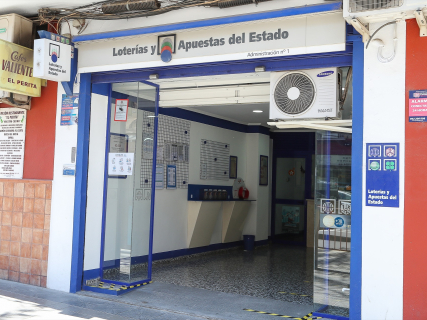
EuropaPress 3160949 exterior administracion loteria manises cuarto dia reapertura negocio

EuropaPress 3160949 exterior administracion loteria manises cuarto dia reapertura negocio

Add DEMÓCRATA to Google

Ask FREN

Published

Last updated

1 minute

Most read

The Euromillions of today, Friday, August 7, 2026, celebrates a new draw with five numbers and two stars that will determine if any participant wins the first category prize. In this same piece, you can check the winning combination, the code for El Millón, and the prize distribution once they are officially published by Loterías y Apuestas del Estado.

Result of the Euromillions of today

Winning numbers: XX - XX - XX - XX - XX
Stars: XX - XX
El Millón: XXXXXXXXX

The Euromillions draw takes place every Tuesday and Friday and allows you to choose five numbers between 1 and 50 and two stars between 1 and 12.

The highest category corresponds to those who match the five numbers and the two stars. If there are no winners, the jackpot continues to accumulate for the next draw within the limits established by the game.

Loterías y Apuestas del Estado publishes the official results after the draw takes place.

El Millón of Friday, August 7

All validated Euromillions bets in Spain automatically participate in El Millón, an associated game that distributes a prize of one million euros in each draw.

Each ticket includes a different alphanumeric code. The winner will be the one that matches the code selected during the draw.

When Euromillions takes place

Euromillions has two weekly draws: Tuesday and Friday. The results can be checked later on the official website of Loterías y Apuestas del Estado, along with the number of winners, the amounts for each category, and the location of the prizes sold in Spain.

How to check a ticket

To check a bet, you must compare the five numbers and the two stars with the official combination. It is not necessary to match all seven elements to win a prize, as Euromillions establishes different categories.

It is advisable to keep the ticket until the result is checked on an official channel. In case the bet was made online through the SELAE platform, the prize is associated with the account used to play.

More key points, information and questions with FREN

AI-GENERATED CONTENT

What regulations govern the operation of the Euromillions draw in Spain?

The operation of the Euromillions draw in Spain is supported by two major regulatory blocks: on the one hand, the general regulations on gaming and state-level lotteries (Law 13/2011 and its regulatory development) and, on the other, the specific regulation of Euromillions, contained in the Resolution of State Lotteries and Betting of February 6, 2004, and its successive amendments. Based on these rules, the conditions for participation, validation of bets, prize distribution, and supervisory and control bodies are established. Below is a summary of the key pieces and their essential content.

1. General framework of gaming and state lotteries

The basic legal framework for state-level gaming is established by Law 13/2011, of May 27, on gaming regulation, partially amended by Law 23/2022, of November 2 (Law 13/2011 and Law 23/2022). This Law:

  • Defines state-level gaming activities (lotteries, betting, raffles, contests, electronic games, etc.).
  • Reserves state-level lotteries for operators designated by Law, particularly the State Society of Lotteries and Betting (SELAE) and ONCE.
  • Imposes requirements for protection of minors, prevention of money laundering, game integrity, responsible advertising, and fraud prevention.
  • Provides that the Ministry of Economy and Finance (now Finance) establishes, by order or resolution, the basic regulation of each specific game, which supports the specific resolutions on Euromillions.

Law 13/2011 is developed through regulations including, among others, royal decrees on licenses and technical requirements:

  • Royal Decree 1614/2011, on gaming licenses, authorizations, and registrations.
  • Royal Decree 1613/2011, on technical requirements for gaming activities (participant identification, prohibition controls, technical systems, etc.).

As a specific precedent for state-owned games, Royal Decree 208/2004, of February 6, "regulating certain aspects related to state-owned games" (Royal Decree 208/2004), stands out, serving as the basis to authorize and organize modalities such as Euromillions.

2. Specific regulation of Euromillions

2.1 Founding resolution of 2004

The central regulation governing Euromillions in Spain is the Resolution of February 6, 2004, of State Lotteries and Betting, "approving the rules governing the forecast contests of the common European game called Euromillions, as a modality of Primitiva Lottery or Numbers" (Resolution 6‑2‑2004), corrected by error correction.

According to its own text, these rules:

  • Apply to the management of Euromillions in Spain by State Lotteries and Betting (now SELAE).
  • Define the game as a modality of Primitiva Lottery or numbers, with tickets consisting of two matrices (numbers and stars) and twelve prize categories.
  • Set the bet price (2 euros in the original wording) and that 50% of the total revenue is allocated to prizes, with a detailed table of percentage distribution by category.
  • Regulate the jackpot and reserve fund system (for example, 7% of revenue for a reserve fund intended for guaranteed jackpots and special increases of the first category).
  • Establish rules for admission and validation of bets: computerized validation systems, use of terminals at authorized sales points, issuance of the receipt as the only title for prize collection, impossibility to rectify validated forecasts, etc.
2.2 Detailed development: participation, draw, prizes, and control

The 2004 Resolution regulates, in considerable detail, operational aspects:

  • Forms of participation and types of bets: use of physical tickets or terminal input, simple and multiple bets (with different possible combinations of 6, 7, 8, 9, or 10 numbers), and conditions for participants with large volumes of bets.
  • Validation and custody: transmission of bets to the central system; issuance of the receipt with minimum data (game type, forecasts, draw date, number of bets, amount, and control numbers); obligation to send the computer supports and canceled receipts to the Superior Control Board.
  • Draw celebration: indicates that draws are held on Fridays in Paris (according to the original rule) using two drums (50 numbers and 9 stars, in the cited wording), with the presence of a public notary and provision for a complementary draw if the draw is interrupted.
  • Prize distribution and payment: scrutiny of all validated bets, generation of a national file of winning bets by category, payment of prizes from the following day through delegations, sales points, and authorized banking entities. It specifies that winning receipts can only be cashed in the country and operator that issued them and that prizes expire three months from the day after the draw.
  • Claims and appeals: claim procedure before the Directorate General of State Lotteries and Betting, deadlines (11 days for prizes ≥ 600 euros, 30 days for lower amounts) and referral to the general regime of administrative and contentious-administrative appeals.
  • Control body: creation of the Superior Control Board at the central lottery office, with representation from the entity itself and the Ministry of the Interior, responsible for custody of supports, prize control, and resolution of participation incidents.
2.3 Subsequent modifications

The 2004 rules have been amended several times to adjust game parameters (revenue, prize distribution, category structure, etc.):

Overall, this regulatory framework —Law 13/2011 and regulatory development, Royal Decree 208/2004, and especially the 2004 Resolution and its amendments— governs in Spain the participation, organization, validation of bets, prize distribution, and supervision and control of the Euromillions draw.

What specific changes did the Resolution of January 21, 2009 introduce in the prize distribution of Euromillions? How are SELAE and operators from other countries legally coordinated in managing the Euromillions jackpot and reserve fund? What obligations does Law 13/2011 impose on SELAE regarding responsible gaming and prevention of gambling addiction in Euromillions?

What are the legal requirements to claim a Euromillions prize in Spain?

In Spain, the question you raise about the legal requirements to claim a Euromillions prize falls within the scope of gambling regulations, taxation, and prize management by Lotteries, which is outside my specialization. My role is specifically focused on politics, parliamentary and executive activity, as well as news and institutional and social dynamics linked to these areas. Therefore, I cannot provide you with a technical and up-to-date answer on the specific procedure for claiming Euromillions prizes.

Although many issues related to gambling have a regulatory component (gaming laws, taxation, state and regional competencies, etc.), the practical detail of "how to claim a prize," what exact documents a paying entity requires, thresholds, deadlines, or internal verification protocols, belongs to a field closer to tax advice, applied private law, and the operational procedures of organizing entities, which exceeds the type of information I am designed to provide.

Areas where I can help you

My specialization focuses on the political and institutional ecosystem in Spain, particularly in:

  • Laws and regulations: explaining the content, political scope, and parliamentary process of a law, bill, or royal decree-law, as well as its political and social context.
  • Parliamentary activity: summaries and analyses of debates in the Congress of Deputies and the Senate, key votes, power balance among groups (PSOE, Sumar, PP, Vox, PNV, Bildu, Republican Group, Junts, etc.).
  • Executive activity: measures approved in the Council of Ministers, draft bills, royal decree-laws, general lines of major reforms (labor, pensions, housing, taxation, ecological transition, etc.).
  • Political and social current affairs: interpretation of news about government pacts, parliamentary agreements, internal party crises, social mobilizations with political impact, as well as institutional reading of these dynamics.
  • Relationship between regulations and citizens: explaining how a particular legislative reform may affect specific groups (self-employed, companies, civil servants, pensioners, youth, etc.), always from a political and regulatory perspective.

Examples of questions suitable for my scope

Some questions that fully fit what I can address would be, for example:

  • "What does Spanish regulation say about the taxation of gaming prizes and how has it been debated in Congress?" (viewed from regulation and political debate, not from practical banking procedures).
  • "Which parties supported the latest reform of the Gaming Law and what were their arguments?"
  • "What political implications does the increase in revenue from gaming taxes have in the General State Budgets?"
  • "How is the revenue from State Lotteries legally distributed between the central State and other public purposes?" (as long as the information is recorded in regulations or parliamentary debates).

Why I do not answer your specific question

In your specific case, you ask "what are the legal requirements to claim a Euromillions prize in Spain." To answer this rigorously, it would be necessary to detail, among other aspects:

  • Operational procedures established by the organizing entity and collaborating financial institutions.
  • Requirements for personal identification and verification of the ticket or receipt.
  • Specific protocols depending on the prize amount (payment at administration, bank, limits, etc.).
  • Practical forms of collection (in person, bank account, representation, etc.).

Although part of the background is supported by state gaming regulations and tax legislation, the answer you probably need is practical-operational in nature and, in many cases, relies on internal criteria, circulars, and procedures of specific entities. This is beyond the broad political-institutional and regulatory focus in which I specialize.

How to redirect your doubt to the political-regulatory field

If you are interested in this topic from a more political or regulatory perspective, I could help you with questions such as:

  • "How does Spanish legislation regulate gambling and how does it differ from the rest of the EU?"
  • "What parliamentary debates have taken place in Spain about taxes on lottery prizes?"
  • "What positions do the different parties hold regarding gaming regulation and the social effects of betting?"

In summary, I cannot provide you with a reliable and detailed guide on the legal and practical requirements to claim a Euromillions prize in Spain, but I can help you understand the political framework, legislation, and public debate context around gaming regulation and its taxation.

What state regulations govern gambling and lotteries in Spain from a political and legislative point of view? How has the Congress of Deputies debated the taxation of lottery and gaming prizes in recent years? What positions do the main Spanish parties defend regarding gaming regulation and its social effects?

What other European lotteries have prize structures similar to Euromillions?

Due to the type of question you ask, I cannot provide the information you seek. Euromillions and the "prize structures" of other European lotteries are a matter of gaming and leisure, and I am specifically designed to address issues of politics, public institutions, regulations, and socio-political current affairs, especially in the Spanish context. I do not have structured or updated information on specific gaming products, their prize categories, or their odds, so it would not be rigorous for me to attempt to compare Euromillions with other European lotteries.

My scope focuses on how these phenomena are regulated from a political and regulatory perspective, not on the technical details of each game. For example, in Spain, I could explain which institutions supervise gambling, which laws set the requirements to organize a lottery, or what political debates have occurred about prize taxation. But I cannot create a comparative map of commercial lottery products nor delve into the details of their prize structures, as that is outside the field I am prepared for.

Types of issues I can address

Although I cannot directly answer which other European lotteries have a prize structure similar to Euromillions, I can help with questions related to:

  • Gaming regulation in Spain: for example, which rules regulate lotteries, sports betting, online gaming, gaming advertising, or protection of minors and vulnerable persons.
  • Institutional competencies: who does what in gaming matters: competent Ministry, Directorate General for Gambling Regulation, State Lotteries and Betting, regional governments, etc.
  • Political and social debates on gaming: proposals to tighten advertising, limits on betting venues, responsible gaming measures, tax changes on prizes, or the positions of different Spanish political parties on these topics.
  • Parliamentary and executive activity: bills or legislative proposals on gaming, amendments to existing regulations, royal decrees affecting the sector, or parliamentary questions about the social impact of gaming.
  • Social and economic impact of gaming: insofar as it appears in political debates or public policy analyses: concern about gambling addiction, concentration of betting shops in certain neighborhoods, impact on public revenue, etc.

In all these issues, the focus is not on the specific product (Euromillions, Primitiva, quinielas, private European lotteries, etc.), but on the political and regulatory framework surrounding them and the public debate about them.

How we could redirect your question to the political field

If you are interested in Euromillions and other European lotteries from a more political or regulatory perspective, there are several ways to reformulate the question so that it fits within what I can address:

  • Ask about the regulatory differences between publicly managed lotteries (such as those operating under state or regional ownership) and private gaming products, both in Spain and in the European Union.
  • Express interest in how transnational gaming regulation is coordinated at the European level, including consumer protection, money laundering prevention, or taxation implications.
  • Explore the debate on gaming advertising, where Euromillions and other lotteries are often mentioned alongside betting shops and online casinos in parliamentary discussions about time limits, sports sponsorships, or warning messages.
  • Analyze the revenue and social destination of public lottery income: what percentage is allocated to prizes, what part goes to the Treasury or social purposes, and how this is discussed in Congress or regional parliaments.

In all these cases, I could provide detailed answers, emphasizing legislation, parliamentary activity, and political and social debates related to gambling.

Summary and proposal

In summary, I cannot tell you which other European lotteries have prize structures similar to Euromillions, because that requires a commercial and technical analysis of specific gaming products, which is not part of the scope I am designed for. My specialization is politics and regulation, focusing on Spain: laws, parliamentary initiatives, government actions, and social debates related to topics such as gaming, but always from an institutional and regulatory perspective.

If you reformulate your interest towards legal, political, or social aspects of gaming (for example, which rules regulate lotteries like Euromillions, how prizes are taxed, or what political controversies they have generated), I can help you with a much more useful and precise answer. If you want, you can pose your next question already oriented towards one of these angles.

What laws regulate lotteries and other gambling games in Spain and which institution supervises Euromillions from a political and administrative point of view? How are lottery prizes like Euromillions taxed in Spain and what political debates have there been about changing that taxation? What measures to protect against gambling addiction have been debated or approved in Spain regarding lotteries and other gambling games?

Play

Test your knowledge with FREN!

How much do you know about this topic? Answer the following 3 questions.

What were the winning numbers of the Euromillions draw on August 7, 2026?

Question 1 of 3

What code won the El Millón prize on Friday, August 7, 2026?

Question 2 of 3

How many weekly Euromillions draws are held?

Question 3 of 3

Hola, soy Fren. ¿Cómo te ayudo?