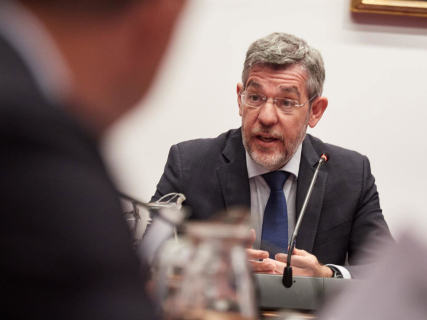

The PP Deputy Secretary for Economy and Sustainable Development, Alberto Nadal, criticized this Thursday that the recent rail accidents, the widespread blackout, and the housing access problems are due to the “lack of investment, not looking to the future, and using public resources exclusively to be liked.”
During a conference at the San Pablo CEU University in Madrid, Nadal accused Pedro Sánchez’s Government of putting its continuity in power ahead of the essential investments needed to modernize the country and open up new opportunities for citizens.
“Its only goal is to stay in power amid ongoing parliamentary instability, with impossible coalitions and not investing anything in the future,” the Popular Party leader said, insisting that this way of governing compromises Spain’s economic development.
Along these lines, he stressed that no Government had managed until now such high fiscal revenue, issued so much public debt, or had so many European funds as the current one and, despite this, Spain is “the second-to-last country in Europe in public investment.”
For this reason, he demanded a decided push for investment, a reordering of public spending, and a reduction in tax pressure, especially on those who start businesses and make a greater effort. “We have to bring out the forces the country has,” he said, calling for a change of direction in economic policy.
According to Nadal, the lack of investment prevents productivity from improving and, consequently, also slows the advance of wages. “And since, in addition, fiscal burden is generated to buy votes on a continuous basis and, at the same time, pressure is being applied to the lower part of the wage mass, the result is that qualified work is paid less and less,” he argued, warning of the impact on employment with higher added value.
Lastly, he accused Sánchez’s Government of “robbing the future” from young people by not fostering in Spain an appropriate environment for investing, strengthening institutions, designing a coherent energy policy, and effectively incorporating new technologies.