
The shift from a merely sequential Human Resources model to another one that is far more proactive, involved in corporate strategy from the very first moment, focused on skills-based planning, individualized support for the workforce, and the integration of AI into teams, has become one of the main challenges for the people department in the transformation of business models.
These ideas were addressed at the meeting "Elevating talent management, from execution to strategy," an event from the Execution of Opportunities project, driven by Europa Press in collaboration with the consulting firm McKinsey & Company.
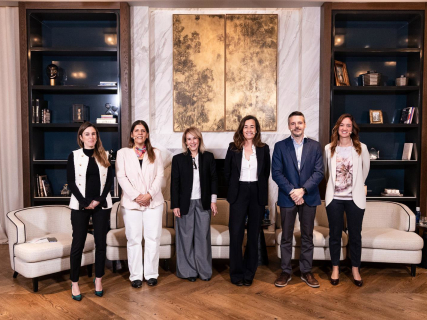
At the session, McKinsey & Company partner Amaia Noguera took part; Telefónica’s Director of Cultural Transformation and People Digitization, Antonio Dvorák; Ikea Spain’s Director of Human Resources and Sustainability, Virginia Garrido; BBVA’s Head of Talent and Culture for corporate areas, Marta Cadenas; and Danone Iberia’s Specialized Nutrition division’s Head of Human Resources, Laura López.
Throughout the debate, the need was emphasized for Human Resources to adopt an active role, linked to the definition of strategy and supporting the business from the start of change processes.
In a context of constant change, the Talent area must generate an environment of trust that reduces the fatigue associated with transformation, support employees, and provide them with training tailored to their needs. Likewise, it is key to learn how to lead teams in which agentic AI has a relevant role and to involve the entire organization.
McKinsey & Company’s representative recalled that, although 80% of employees already perceive individual improvements in their work thanks to AI, only 37% of companies manage to translate that value into their financial results.
According to Noguera, this is explained by the fact that many companies continue operating with traditional models, so she has argued that Human Resources can position itself "at the beginning of the transformation".
At the same time, she noted that, although historically it was the business that set the strategy, the disruption generated by AI opens the door for Human Resources to identify organizational and talent needs in advance.
Anticipation and agility in the HR function.
Along these lines, Telefónica’s executive has stated that anticipation and agility are two essential pillars of this process. He has highlighted the relevance of "anticipating what is coming" and of aligning the organization with the pace at which technology advances.
For her part, Ikea’s spokesperson has warned that transformation can generate "fatigue" in people and has emphasized the role of HR in "creating learning environments and psychological safety" that facilitate adaptation. BBVA’s head has agreed, recognizing that employees may feel "a great deal of uncertainty and vertigo" in the face of these changes.
Garrido has added that Human Resources professionals need to deepen their knowledge of the business and assume a leading role in the redesign of processes and organizational structures, in addition to driving agility and cultural and leadership changes.
In turn, Cadenas has reiterated that managers and leaders must get involved actively and "accompany this transformation," for which HR has to get ahead and provide the necessary tools.
Danone Iberia’s head has emphasized that the main challenge lies in how "talent and organizations" are managed, insisting that transformation must be aligned with the company’s global strategy and should not be addressed "in isolation," so that it responds to the real objectives and needs of the business.
The speakers have agreed on highlighting anticipation as a key element, insisting on the importance of translating strategy into concrete initiatives. In this regard, McKinsey & Company’s partner has argued that HR must be able to anticipate the competencies the company will require and guide planning based on them, rather than limiting itself to formal roles.
Noguera has stressed that analytical capabilities and critical thinking will be "very relevant," along with other emerging skills such as 'AI Fluency', fluency in artificial intelligence.
Adoption of AI and talent development
Telefónica’s representative has pointed out that the transformation of processes must go hand in hand with the effective adoption of AI tools by the workforce and has specified that, depending on the degree of integration of these technologies, some profiles will be reassigned and others will see their functions expanded.
Ikea’s spokesperson has indicated that “finding time to train is the great challenge,” in part due to the high level of bureaucratic burden associated with regulations and data protection. In light of this, she has advocated for peer learning and has highlighted the advantages of having an AI specialist or “ambassador” in each area who trains and guides the rest.
Along the same lines, BBVA’s head has explained that certain employees incorporate these tools “more quickly” and become a kind of “wizards of artificial intelligence,” helping their colleagues and spreading good practices.
Danone Iberia’s executive director has pointed out that the change involves identifying talent, developing it, and expanding it within the organization, so that the transformation is driven from within. “This is not about creating training programs, but about having the capacity to transform,” he added.
Toward agentic organizations: people and AI agents
Beyond understanding AI only as a tool, the representative of McKinsey & Company has put the focus on the fact that artificial intelligence agents can interact with each other and collaborate in carrying out different tasks.
In this scenario, she has argued that Human Resources must take a leading role in training and in the design of mixed teams, made up of people and AI agents.
Telefónica’s executive has maintained that, as long as an AI solution has the ability to carry out actions, there must be a professional who assumes responsibility. It will be essential that there be a person who “knows how to lead.”
“We want artificial intelligence and people not to compete, but for one to serve the other. We have a large number of agents working, and it is necessary to define and limit what they are for and what they are not for,” Ikea’s spokesperson added.
As she explained, for this evolution to be viable, it is key to involve the entire company and maintain clear, ongoing communication about progress and changes.
BBVA’s head has pointed out that, just as when a new professional is brought in, AI agents also need a training phase to be able to perform their functions with guarantees.
In this context, she has highlighted the work of HR in creating a collective capability that brings together employees and AI agents and fosters collaboration between the two.
Cadenas has assured that this integration will allow generating new roles and responsibilities and setting up a relationship model that increases the effectiveness of teams. Leaders "have to be able to integrate agents into the ecosystem," he has emphasized.
Along the same lines, the person in charge of Danone Iberia has insisted that the key is to anticipate and support the business strategy, noting that "it is a challenge beyond technology; it is human."