Price of electricity today, July 26: the cheapest hour will be from 6 PM to 7 PM

The price of electricity today, Sunday, July 26, 2026, drops in the wholesale market to an average of 69.37 euros per megawatt hour. For consumers with a regulated rate, the cheapest hour will be from 18:00 to 19:00, at 0.03556 euros per kilowatt hour, and the most expensive will be from 22:00 to 23:00, at 0.23441 euros.

2 minutes

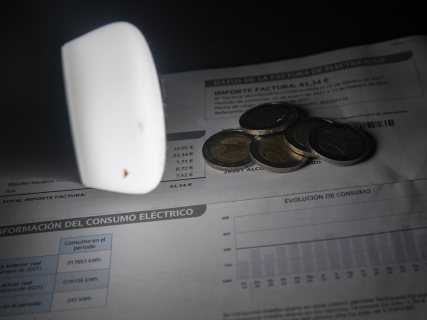
EuropaPress 4165629 lampara refleja importe factura dia precio luz marcado minimo primera vez

EuropaPress 4165629 lampara refleja importe factura dia precio luz marcado minimo primera vez

Add DEMÓCRATA to Google

Ask FREN

Published

Last updated

2 minutes

Most read

The price of electricity drops this Sunday and leaves a wide window for economical consumption during the central hours and the afternoon.

The wholesale market registers an average of 69.37 euros per megawatt hour, a maximum of 177.46 euros and a minimum of -1 euro. The average decreases by 15.46% compared to Saturday.

What is the cheapest hour of electricity today

The cheapest hour for consumers under the PVPC will be from 18:00 to 19:00 hours.

The price will be 0.03556 euros per kilowatt hour. This will be the best time to run the washing machine, the dishwasher, use the oven or charge an electric vehicle.

There will also be null or negative wholesale prices from mid-morning until a good part of the afternoon. In the OMIE auction, the minimum is recorded from 11:00 to 12:00, with -1 euro per megawatt hour.

The negative data from the wholesale market does not mean that electricity is free for the consumer. The PVPC includes tolls, charges, adjustment services, taxes, and other components.

When will electricity be more expensive

The most expensive hour of the PVPC will be from 22:00 to 23:00 hours, at 0.23441 euros per kilowatt hour.

The cost will be more than six times higher than that of the cheapest time slot. It is advisable to avoid simultaneous use of air conditioning, oven, dryer, and other high-power appliances during that period.

In the wholesale market, the most expensive hours are also concentrated at the end of the day. The period from 22:00 to 23:00 reaches 174.87 euros per megawatt hour, followed by the one from 21:00 to 22:00, with 166.63 euros.

A wide window to save

Sunday offers a particularly favorable situation between 09:00 and 19:00 hours.

During that period, the wholesale market registers values close to zero or negative. Households that can shift their consumption to those hours will find a considerable difference compared to the night.

The best strategy will be to concentrate the highest consuming appliances during the afternoon and reduce them from 21:00 hours onwards.

Wholesale price and PVPC price are not the same

The 69.37 euros per megawatt hour correspond to the daily market managed by OMIE.

The consumer with a regulated tariff pays the PVPC, which incorporates the wholesale market and other regulated costs. For that reason, the minimum hour of OMIE, from 11:00 to 12:00, does not coincide with the cheapest hour of the PVPC, which is between 18:00 and 19:00.

Customers of the free market also do not necessarily pay these amounts by hours. Their cost will depend on the contract signed with the retailer.

More key points, information and questions with FREN

AI-GENERATED CONTENT

What legal procedures or updates are planned for the regulation of the PVPC in Spain?

The basic regulation of the PVPC was already reformed and has been fully in force since 2024, with a methodology that introduces forward prices and whose weight on the bill reaches 55% from 2026. However, there are several regulatory fronts still in processing or development that indirectly affect the PVPC: the deployment of the new General Supply and Contracting Regulation, changes in the content of invoices, the review of collective self-consumption regulations, and the update of the social bonus linked to the 2026‑2030 Strategy against energy poverty. Additionally, the Government has opened the door for the CNMC to issue an analysis on the future of the regulated tariff in the context of the European Commission's requirements.

Status of the PVPC methodology

According to various reports from Demócrata, since 2024 a new PVPC calculation method has been applied that combines day-ahead market prices with references from futures markets to reduce volatility. The proportion directly linked to the 'pool' is decreasing in favor of forward products: 25% in 2024, 40% in 2025, and 55% from 2026 onwards, so this scheme is now fully deployed (article on the calculation method; quarter-hour auction and PVPC; recent price impact).

Therefore, strictly regarding the PVPC formula, sources do not currently identify a new methodological reform project in process: what was planned is already applied.

Deployment of the General Supply Regulation and its impact on PVPC

The Government has approved the General Regulation on supply, marketing, and aggregation of electric energy by royal decree (referred to as Royal Decree 88/2026 in the MITECO note), which is now the central piece of the contracting framework. Demócrata details that its processing has been contentious for part of the sector, which denounces “dangerous surprises, without public hearing or adaptation period” (sector reaction) and that independent marketers request a specific transitional period to adapt their systems (ACIE request).

A summary from the Council of Ministers collected by Demócrata indicates that this regulation:

  • Allows households and SMEs to terminate contracts without penalty, with limited exceptions.
  • Prevents penalties when a vulnerable consumer switches to PVPC.
  • Introduces special subrogation rules in case of rental and changes of holder in PVPC.
  • Strengthens safeguards when a social bonus beneficiary wants to leave PVPC to go to the free market (Council of Ministers summary).

The bottom line is that, although the PVPC tariff is maintained, the Government is adjusting the entire contracting and supplier change regime around it.

Electric bills: proposal in public consultation

In June 2026, MITECO submitted to public consultation a “Draft resolution” on the mandatory minimum content of electric bills, affecting both the free market and PVPC. The official note explains that:

  • The invoice model is updated to adapt it to the new general supply regulation and recent regulations.
  • Information about the contract type (fixed or indexed price) and the contracted product or offer is added.
  • A block with the average consumption of neighbors in the same postal code is introduced to encourage savings.
  • PVPC bills will include a “offer comparator” section with a QR code linking to the CNMC comparator.
  • Transparency is reinforced in re-billing, penalties, and information about the social bonus.

This proposal, open for comments until July 6, 2026, can be consulted in the MITECO note on bill improvement. It is the most immediate and concrete ongoing procedure affecting how PVPC is presented to the consumer.

Collective self-consumption and PVPC

Another update path is the review of the collective self-consumption framework. IDAE and MITECO explain that the ongoing regulatory proposal requires that bills of self-consumers under the regulated PVPC market include the production of the installation and its distribution, as well as access to generation data (IDAE note; MITECO note). This is also a proposal in processing, not yet in force.

Vulnerable consumers, social bonus, and relation with PVPC

PVPC remains a condition to access the electric social bonus, as Moncloa notes on measures against the energy crisis and aid to vulnerable consumers remind (energy crisis measures; aid to vulnerable consumers).

The 2026‑2030 Strategy against energy poverty, approved by the Council of Ministers, announces relevant future changes: redefining who is a vulnerable consumer “for social bonus purposes,” linking access more strictly to income criteria (especially for large families), and updating the royal decree regulating the social bonus. All this will require a subsequent regulatory development, for which public consultations have already been opened (Demócrata analysis).

Relation with the EU and possible PVPC roadmap

Finally, in a statement collected by Demócrata, Vice President and Minister Sara Aagesen has indicated that “at this moment there is no plan to eliminate” the PVPC, despite the European Commission requesting roadmaps to abandon regulated tariffs. She emphasizes that the Government has linked PVPC to futures markets, as Brussels requested, and that the CNMC has been tasked with a specific analysis to assess if at some point PVPC could be dispensed with (Aagesen's statements).

That CNMC report and a possible roadmap with the European Commission are, as of today, the main “strategic” pending procedures regarding the future of the regulated tariff, beyond the regulatory adjustments already described.

Could you explain with concrete examples how the PVPC is calculated today after the reform that introduces futures markets? What exact changes in the social bonus are foreseen with the 2026‑2030 Strategy against energy poverty and how might they affect those on PVPC? Within what timeframes could the CNMC and the Government define a roadmap with Brussels to maintain or eliminate the PVPC?

What are the CNMC's competencies in setting electricity prices?

The National Commission of Markets and Competition (CNMC) does not set the “electricity price” in the market, but it does determine a key part of the bill: the access tolls to the transmission and distribution networks and the remuneration methodology for those networks. The Government, on the other hand, sets the charges and other regulated components. This division derives from Law 3/2013, which created the CNMC, Law 24/2013 of the Electric Sector, and its adaptation to European law through Royal Decree-law 1/2019, as successive BOE resolutions and analyses by the newspaper Demócrata recall.

Basic legal framework: Law 3/2013 and Royal Decree-law 1/2019

Law 3/2013 assigns regulatory functions in energy to the CNMC, developed in its article 7. According to Demócrata in a piece on energy circulars, these functions include:

  • Setting the methodology for tolls of gas and electricity networks.
  • Defining the remuneration system for transmission and distribution.
  • Establishing methodologies for access and connection to networks, including international interconnections.

Royal Decree-law 1/2019, cited by the BOE in the resolution of May 27, 2025, modifies Law 3/2013 to align it with Directives 2009/72/EC and 2009/73/EC (internal markets for electricity and gas). Specifically:

  • It strengthens the role of the independent regulator required by the EU.
  • Assigns the CNMC the function of establishing by circular the methodology of tolls and fees.
  • Introduces article 7.1 bis, which allows the CNMC to approve, by resolution, the specific values of access tolls for electricity and gas networks.

The BOE resolution emphasizes that, under article 7.1 bis, the CNMC is competent to issue resolutions setting toll values, although the example cited in the BOE refers to gas.

Competencies on electric tolls and network remuneration

In the electric system, access tolls are the part of the bill intended to pay for the networks. According to Demócrata, the CNMC:

  • Regulates tolls to cover network costs and remuneration of transmission and distribution companies.
  • Applies a methodology set out in its Circular 3/2020 –mentioned in several BOE resolutions– that distributes the annual remuneration among the expected demand.
  • Approves each year a toll resolution that specifies how much each type of consumer pays (2.0 TD, 3.0 TD, 6.1 TD, etc.).

The same information highlights that the CNMC also decides the financial remuneration rate and the methodologies for transmission and distribution, as explained in articles about network remuneration and the new circulars of 2025 and 2026 (network remuneration, legal strength of the circulars, Endesa's appeal).

Relation with Law 24/2013 of the Electric Sector

Law 24/2013 organizes the electric system and distinguishes between tolls and charges. According to Demócrata, tolls are decided by the CNMC, while charges “are determined each year by the Ministry for Ecological Transition.” Article 19 of Law 24/2013, cited by Demócrata in news about tariff deficits (provisional deficit 2025, deficit 2026), sets how revenues from tolls and charges are settled and how temporary imbalances are managed.

Also, article 33 of Law 24/2013 distributes competencies in access and connection to networks: according to the CNMC press release on generation access capacity specifications (CNMC note 2024), the Government sets the general framework, but the CNMC approves the methodology and conditions through circulars and technical resolutions.

Price and market supervision, but not energy price setting

Although the CNMC does not set the kWh price in the wholesale market or PVPC, it indirectly influences the final price by:

  • Determining the regulated part of the bill (tolls and remuneration methodologies).
  • Supervising the wholesale markets and sanctioning price manipulation behaviors, as shown by the long history of proceedings and rulings noted by Demócrata (Iberdrola case).
  • Monitoring contract conditions with consumers, for example when it reminds that in fixed-price contracts only regulated elements like tolls and charges can be modified (article on commercial calls).

European context and future National Energy Commission

The expansion of CNMC competencies on tolls responds to European requirements: Royal Decree-law 1/2019 was approved precisely to comply with directives on the internal electricity and gas markets, as the BOE recalls in the resolution of May 27, 2025. Additionally, the Government has presented a draft bill to create a new National Energy Commission that would assume the energy functions currently exercised by the CNMC, including toll and remuneration methodologies, as detailed by Demócrata in this analysis.

Overall, the CNMC's competencies focus on the regulated part of the electricity price (tolls and networks) and on supervising the proper functioning of markets, while the energy price itself is formed in the market and charges and other elements remain in the Government's hands.

How exactly do tolls differ from charges on the electric bill and who decides each? What role does the Government want to give the future National Energy Commission in setting electric tolls? How do recent CNMC resolutions on electric networks affect the cost of electricity for households and industries?

What requirements must a consumer meet to access the regulated PVPC tariff?

To subscribe to the voluntary price for the small consumer (PVPC), state regulations essentially require the supply to be low voltage with a reduced contracted power and to be supplied by a reference marketer in the regulated market. The basic framework is in Law 24/2013 of the Electric Sector and Royal Decree 216/2014, which defines PVPC as a maximum price that only these reference marketers can apply to those who meet the requirements. PVPC applies, according to the royal decree itself, to low voltage consumers with power up to 10 kW. The social bonus is based on this scheme but is not a requirement to contract PVPC; rather, it is an additional discount for certain vulnerable groups regulated separately.

Type of consumer who can access PVPC

Royal Decree 216/2014 (PVPC calculation methodology and contracting legal regime) indicates that the voluntary price for the small consumer will apply to low voltage consumers with contracted power up to 10 kW. Therefore, it is a product designed for small consumers, mainly households and small businesses connected at low voltage.

The royal decree itself is issued under article 17 of Law 24/2013, which defines PVPC as “the maximum prices that marketers who (…) assume the obligations of reference supply” may charge to consumers who meet the requirements. That is, PVPC can only be enjoyed if the supply is through a reference marketer, not a free market marketer.

Conditions of voltage, power, and type of supply

  • Voltage: The supply must be low voltage (Royal Decree 216/2014 expressly refers to low voltage consumers).
  • Contracted power: Power must be up to 10 kW. If power exceeds this threshold, the royal decree no longer considers that supply point within the “small consumer” scope to which PVPC applies.
  • Domestic or small business use: The regulation is designed for small consumers; the regime for large consumers is channeled through other figures (e.g., the electro-intensive consumer statute or specific tariffs not linked to PVPC).

Relation with the free market and reference marketers

To enjoy PVPC, the consumer must be in the regulated market, which in practice means:

  • Having a contract with a reference marketer, designated according to Royal Decree 216/2014 (which defines criteria such as number of clients to be designated).
  • Not having a valid free market contract for that supply point.

The royal decree also foresees that certain consumers may be served by a reference marketer in situations such as:

  • When, without meeting PVPC requirements, they are temporarily left without a free market supply contract (in these cases, last resort tariffs would apply, not exactly PVPC).
  • When there is a transfer of clients due to non-compliance by a marketer, under article 47.2 of Law 24/2013 (fragment included in the norm itself).

Social bonus and vulnerable consumers

Royal Decree 897/2017, of October 6, regulates the figure of the vulnerable consumer and the social bonus for domestic electricity consumers, developing Law 24/2013. This royal decree defines income thresholds and categories (vulnerable, severely vulnerable, at risk of social exclusion) and establishes the application procedure, but in the available excerpts it does not explicitly detail, article by article, the technical connection with PVPC.

What is clear from the normative structure is that the social bonus is an additional protection mechanism, regulated separately from PVPC, applicable to vulnerable domestic consumers. There is no literal wording in the consulted sources imposing the social bonus as a requirement to access PVPC; rather, the opposite, PVPC exists as a general regulated tariff for small consumers, and the social bonus overlaps for certain groups.

Self-consumption and other limitations

Self-consumption regulation is contained in Royal Decree 244/2019, of April 5, which sets administrative, technical, and economic conditions for self-consumption, and which has been amended, among other norms, by Royal Decree-law 18/2022. In the available excerpts of these norms and Royal Decree 216/2014, there is no general prohibition or specific condition preventing a supply point with self-consumption from accessing PVPC, beyond the basic requirements already mentioned (low voltage, power ≤ 10 kW, and supply through a reference marketer). No further information on additional limitations by specific self-consumption modality is available in the consulted sources.

Reference regulations with BOE links

The main regulations associated with the PVPC structure and energy consumer protection include, among others:

Other provisions completing the framework (invoices, charges, tariffs, and regulated costs, etc.) include, among others, the 2021 invoice model resolution, the electric system charges methodology, the 2025 charges order, and the 2014 resolution on minimum invoice content, along with numerous CNMC resolutions and ministerial orders on tolls, marketing costs, and offer comparators (all accessible in the BOE through the links cited in this text).

How is the change from a free market tariff to PVPC with a reference marketer requested in practice? What specific conditions does the electric social bonus require today and what practical relation does it have with being on PVPC? What recent changes has Royal Decree-law 18/2022 introduced in the protection of consumers subscribed to PVPC?

Play

Test your knowledge with FREN!

How much do you know about this topic? Answer the following 3 questions.

At what time will electricity be cheapest for consumers under the PVPC this Sunday?

Question 1 of 3

Why does the cheapest hour in the wholesale market not match that of the PVPC?

Question 2 of 3

What will be the average electricity price in the wholesale market this Sunday?

Question 3 of 3

Hola, soy Fren. ¿Cómo te ayudo?