Who is Yan Diomande, the winger for whom Real Madrid offers 100 million

Real Madrid has made an offer of 100 million euros for Yan Diomande, 19-year-old Ivorian winger from RB Leipzig. The German club has rejected the proposal and demands at least 120 million for one of the great revelations of the last season.

3 minutes

mourinho

mourinho

Add DEMÓCRATA to Google

Ask FREN

Published

Last updated

3 minutes

Most read

Who is Yan Diomande, the winger for whom Real Madrid offers 100 million

Yan Diomande has become one of the main names in the transfer market.

Real Madrid has started negotiations with RB Leipzig and would have presented a proposal of 90 million euros fixed plus another ten in variables. The German club has rejected it and places its valuation at a minimum of 120 million. 

The winger has also attracted the interest of Paris Saint-Germain, Liverpool, Arsenal, and Manchester City.

Who is Yan Diomande

Yan Diomande is an international attacker with Ivory Coast born in 2006.

He is 19 years old and can play on either wing. He stands out for his speed, power in dribbling, ability to attack spaces, and ease of reaching the area from wide positions. 

His progression has been rapid: he went through Leganés before joining Leipzig for an amount close to 20 million euros.

The offer from Real Madrid

The proposed amount rises to 100 million euros.

The structure would be 90 million fixed and ten in variables. Leipzig considers that amount insufficient and intends to obtain at least 120 million or retain the player for another season. 

Discussions continue, but the agreement is not closed. Diomande is not yet a player of Real Madrid.

Why Leipzig asks for 120 million

Diomande has a contract until 2030 and does not have a known release clause.

Leipzig controls the timing of the operation and does not need to accept an immediate offer. The German entity believes that the player can continue to increase his value after his performance in the Bundesliga and in the World Cup. 

The club also values offering him a contract extension with a salary increase.

His numbers at Leipzig

The consulted sources agree that Diomande had a season of great impact, although there are small differences between the counts depending on the competition included.

The reported figures place his production around 12 or 13 goals and between nine and ten assists in just over 30 matches. 

His influence is not limited to goals. The Ivorian breaks lines through dribbling, forces one-on-one situations, and can appear on both wings.

PSG is also negotiating

Paris Saint-Germain appears as one of the main competitors of Real Madrid.

According to the published information, the French club would have advanced in a personal agreement with the footballer, but has not yet reached a deal with Leipzig. One of the conditions studied by the German team would be to sell him and keep him on loan for another season. 

The future remains open and will depend on both the price and the sports project offered.

Mourinho's interest

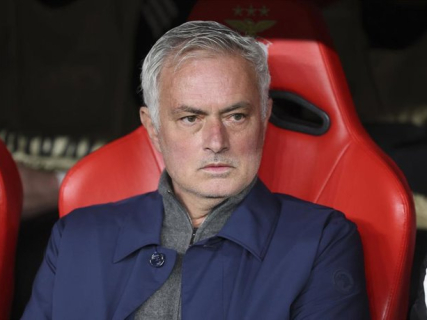
Diomande fits the type of attacker that José Mourinho can use.

He is fast, vertical, and capable of covering many meters after a recovery. He can play wide, attack the back of the full-back, and offer a direct outlet when the team recovers in their own half. 

His possible arrival would have consequences for the distribution of minutes among Vinícius, Rodrygo, Mastantuono, and the rest of the offensive players.

What does Leganés gain if the transfer is completed

Leganés is closely monitoring the operation.

The Spanish club would have reserved a percentage of the capital gain from a future sale when they transferred the player to Leipzig. The published information places that percentage at 10%. 

A sale above 100 million could generate a significant extraordinary income for the Madrid entity.

Is the signing closed?

No.

Real Madrid has made an offer and is negotiating, but Leipzig has rejected it. There is also no official confirmation of an agreement between the white club and the player.

Presenting him already with the Real Madrid shirt would be misleading. The operation still depends on an increase in the offer, a reduction of the German demands, or the emergence of an intermediate formula.

More key points, information and questions with FREN

AI-GENERATED CONTENT

What is the current status of the possible signing of Yan Diomande by Real Madrid and what steps remain until its completion?

The information you request about the possible signing of Yan Diomande by Real Madrid is outside my scope: I am not designed to provide detailed tracking of sports transfer operations, market rumors, or contractual status of football players. My specialization focuses on politics and institutional current affairs, mainly in the Spanish context (Government, General Courts, autonomous communities, regulations, parliamentary debates, parties, unions, employers' associations, and other political and social actors). For this reason, I cannot offer you a reliable timeline or an accurate processing status of that specific operation.

Why I cannot answer about this signing

The type of question you raise (status of a transfer negotiation, phases until closure, etc.) requires real-time access to sports sources, transfer market information, leaks to specialized media, and, in many cases, information that is not even public during the negotiation. My current configuration is not oriented to that type of content, but to:

  • Political and legislative activity: processing of laws, royal decree-laws, bill proposals, amendments, appearances, and votes in the Congress and Senate.
  • Government action: agreements of the Council of Ministers, regulatory plans, public policies, economic, social, labor, or tax reforms.
  • Social and economic current affairs linked to politics: labor conflicts with political dimension, major structural reforms, debates on pensions, housing, education, health, etc.
  • Political and social actors: parties, political leaders, business and union organizations, associations, and NGOs when they intervene in public or regulatory debate.

Within this framework, I can explain in quite some detail how, for example, a government draft bill, a parliamentary group bill proposal, or a royal decree-law and its validations are processed. I can also place a measure in the context of the government program or the positions of different political groups. However, the internal operations of a football club and its negotiations with players or representatives are not part of this scope.

What kind of questions I can answer

Although I cannot help you with the status of Yan Diomande's signing, I can provide useful information if you direct the question towards political, regulatory, or institutional aspects related to sport. For example:

  • Explain the framework of the current Sports Law and how it affects the organization of professional leagues, the federation, or athletes' rights.
  • Analyze debates about professional sports financing, the distribution of audiovisual rights, or public control over SADs (sports public limited companies).
  • Detail parliamentary initiatives affecting the taxation of professional athletes or club taxation.
  • Comment on the positions of different political parties regarding issues such as salary caps in professional sports, agent regulation, or protection of young athletes.

I can also help you understand how a major club like Real Madrid would fit into broader debates, for example, about:

  • Use of public funds or urban planning conditions linked to sports infrastructure.
  • Economic and social impact of professional sport in a city or autonomous community.
  • Possible regulatory reforms affecting the governance of federations and leagues.

How to reformulate your query to obtain useful information

If you are interested in connecting the world of football with politics and regulation, you can reformulate your question, for example:

  • Asking about the regulation of transfers and signings in Spain from a legal-sports perspective and the role of the State versus FIFA, UEFA, or LaLiga regulations.
  • Consulting about political proposals to protect minors in international signing processes.
  • Requesting an analysis of how financial fair play rules or salary caps relate to Spanish legislation.

In all these cases, I could build a detailed and structured response, explaining the legal framework, the institutions involved, parliamentary debates, or the positions of different political groups and social actors.

In summary: I cannot reliably and up-to-date inform you about the specific point of the negotiation of Yan Diomande's signing by Real Madrid nor about the remaining contractual steps until its closure, because that falls within sports journalism and the transfer market, beyond my reach. But I can help you if you steer the conversation towards the political, regulatory, or institutional dimension of professional sport in Spain or the European Union.

What does the current Spanish regulation say about professional footballers' signings and transfers? What changes did the latest Sports Law introduce and how do they affect professional football clubs? What positions do the main Spanish parties hold regarding the economic regulation of professional football?

What are José Mourinho's competencies and professional trajectory as a coach in European football?

I do not have specialized information nor am I designed to answer in detail questions about individual sports careers such as José Mourinho's or technical analysis of European football coaches. My field focuses on politics and social current affairs, especially in the Spanish context: institutions, parties, parliaments, governments, regulations, and public debates. Therefore, I cannot offer you a rigorous and updated review of Mourinho's tactical competencies, sporting achievements, or professional path in the different European clubs where he has coached.

My configuration is intended to work with content related to the legislative and executive power, the functioning of the State and public administrations, and the actors involved in political decision-making. This includes both Spanish national politics and, often, its interaction with the European sphere and, complementarily, the news coverage by media such as the newspaper Demócrata or other outlets on institutional, regulatory, and social topics. Professional sport, football coaches, and analysis of leagues or competitions fall outside this thematic perimeter.

What kind of questions I can answer

Although I cannot detail José Mourinho's professional trajectory, I can be useful if you are interested in the intersection between politics, sport, and society, as long as the focus is on the political, institutional, or regulatory component. For example, I can help you with issues such as:

  • Public policies related to sport: government plans to promote grassroots sport, regulations on violence in sport, regulation of sports betting, or parliamentary debates on financing sports infrastructure.
  • Regulation and taxation in professional football: tax treatment of elite athletes, special tax residence regimes in Spain, or legislative changes affecting clubs and players (provided they appear in parliamentary or regulatory activity).
  • Relationship between clubs and public administrations: public aid, use of municipal stadiums, institutional sponsorships, or parliamentary investigations when documented in official sources or political and social coverage by media like Demócrata.
  • European and Spanish sports framework: legislative initiatives or regulations at the European Union level affecting professional sport and reflected in Spanish political debate, as well as party or government positions on projects like the Super League or reforms in European competitions, always from a political and regulatory perspective.
  • Political actors related to sport: actions of competent ministries (e.g., Culture and Sport), appearances in Congress or Senate, and public debates when sport becomes a political or media agenda topic.

Why I cannot develop Mourinho's career

The way I am built implies that my usable knowledge is limited to what is linked to:

  • Parliamentary and executive activity: laws, bill proposals, royal decree-laws, Council of Ministers agreements, public consultations, hearings, and official reports.
  • Political and social actors: parties, parliamentary groups, business or union organizations, civil associations, and other groups involved in norm-making processes or public policy discussions.
  • Political and social current affairs: elections, government pacts, institutional conflicts, citizen mobilizations related to public decisions, etc.

The football career and competencies of a coach like José Mourinho belong to a strictly sports field (club history, titles, tactical approaches, locker room management, etc.), which is usually documented in sports media and specialized statistical databases, not in parliamentary, executive, or political analysis sources. Therefore, although I have general capabilities, my current design prevents me from using that type of information to give you a detailed and reliable answer about his trajectory as a coach in European football.

How to redirect your query if you are interested in the intersection between politics and football

If your interest in Mourinho or European football has some political or social dimension (for example, economic and regulatory impact of major leagues in Spain, debates about club ownership, relations between governments and UEFA, or legal controversies involving coaches, clubs, or federations), I could try to help you as long as the question is formulated in those terms and there is a trace in political activity or current information related to institutions.

In summary, I cannot offer you José Mourinho's professional sports profile as a coach, but I can accompany you in any analysis or question that connects the world of sport with politics, regulation, and institutional life, especially in the Spanish case and its close European context.

What sports policies has the Spanish Government recently promoted and how do they affect professional football? What debates have taken place in Congress about the taxation of footballers and clubs in Spain? How has the Spanish Government positioned itself regarding projects like the European Super League from a political and regulatory point of view?

What legal requirements regulate the percentages of capital gains in player transfers between European clubs?

The question you raise about the legal requirements regulating capital gains percentages or resale clauses in transfers between European clubs mainly belongs to the field of private sports law (FIFA/UEFA regulations and civil/mercantile contractual law), not the core of public policy, parliamentary activity, or institutional oversight that I cover in a specialized way. For that reason, I cannot provide you with a complete or updated technical analysis on specific percentage limits, contractual structure, or formal requirements of those clauses. However, I can guide you on how these issues connect with political decisions, European court rulings, and regulatory debates that do appear in parliamentary information and in the newspaper Demócrata.

Areas where I can help

My specialization focuses on topics where there is clear intervention by public authorities, supervisors, or courts in the football and professional sport ecosystem, for example:

  • Decisions by the European Union and the Court of Justice of the EU on sports rules and their fit with competition law or community freedoms, such as rulings on FIFA agents discussed in this Demócrata analysis or the case of Juventus executives sanctioned for illegal capital gains in this news piece.
  • Interventions by the Spanish Tax Agency and courts on the tax treatment of football-related operations, such as fines to Atlético de Madrid for improper expenses linked to UEFA sanctions in this article, or the ruling on Louis van Gaal's compensation against the Tax Agency in this chronicle and its economic-fiscal approach in this analysis.
  • Regulation and public control of the economic structures of professional football, such as taxation of World Cup prizes in this information or this Gestha calculation, or the debate on guarantees and democratic functioning in clubs like Real Madrid, covered in this regional news or this other piece about economic requirements for candidacies.
  • Labor, Social Security, and professional recognition regulations for athletes, such as the update of contributions for footballers discussed in this article or the debate on the Athlete Statute in this analysis and this piece.

In all these cases, there is a clear political and regulatory dimension: intervention of ministries, Social Security, Tax Agency, CNMV, Bank of Spain, CNMC, CSD, or national and European parliaments, something that is part of my scope.

Why I do not answer in detail about capital gains clauses

Capital gains or “sell-on clauses” are essentially contractual agreements between clubs (and, where applicable, with agent involvement) subject to private law and technical sports regulations. Their detailed regulation depends on:

  • The specific wording of transfer contracts between sports entities.
  • Internal regulations of FIFA, UEFA, and each national federation.
  • Civil and commercial codes applicable in each country.

This level of detail —maximum percentages, formulas for calculating capital gains, internal documentary requirements, or accounting schemes of each league— is outside the focus of the political-regulatory and parliamentary information I work with. There is no specific normative explanation on percentage limits of resale clauses or their exact articulation within the Regulations on the Status and Transfer of Players in the consulted sources, beyond collateral news about fair play, agents, or sanctions.

What clearly appears in Demócrata's coverage is the intervention of the EU and the CJEU when these sports rules clash with European law (as in the case of FIFA agents, addressed in this ruling), or when capital gains considered fraudulent are sanctioned, such as in the Juventus case mentioned in this piece, where the CJEU supports professional bans if justified by accounting transparency and competition regularity.

What kind of questions I can develop in detail

If you are interested in the intersection between football and politics/regulation, I can deepen, for example, in:

  • How the EU or the CJEU decide on FIFA/UEFA sports rules and their impact on Spanish leagues and clubs.
  • What the Spanish Government and the General Courts have done regarding labor reform and Social Security for professional athletes.
  • How the Tax Agency, CNMC, CNMV, or Bank of Spain act in matters related to clubs, audiovisual rights, takeovers, or insider information use, as illustrated in this report or in this fiscal analysis.

If you reformulate your doubt towards any of these institutional or normative angles (for example, the role of the EU and courts in fighting fictitious capital gains in European football), I can give you a much more complete answer supported by recent political and judicial activity.

For context and to respect the obligation to preserve the links used as an informational basis, I can also refer you to other pieces where the interrelation between sport and politics or regulation is seen: balance of powers in FIFA, FIFA fund distribution, political messages in stadiums, disciplinary investigations or debates on federation governance and use of public resources, such as in this initiative in Congress.

What exactly has the CJEU said about the compatibility of FIFA regulations with Union Law regarding agents and transfers? How is the Tax Agency intervening in Spain in the fiscal control of football clubs and what recent cases have reached the National Court? What role do the Spanish Government and Congress play in the labor and Social Security regulation of professional athletes?

Play

Test your knowledge with FREN!

How much do you know about this topic? Answer the following 3 questions.

For how much money has Real Madrid offered to sign Yan Diomande?

Question 1 of 3

What is Yan Diomande's age?

Question 2 of 3

Which club would receive a percentage of the capital gain in case of Diomande's sale?

Question 3 of 3

Hola, soy Fren. ¿Cómo te ayudo?