Price of electricity today, Sunday, October 18: the cheapest hours and the time slot to avoid

The wholesale market drops by 28.81%, down to 76.28 euros/MWh. In the regulated rate, the central hours of the day offer the best opportunity to save.

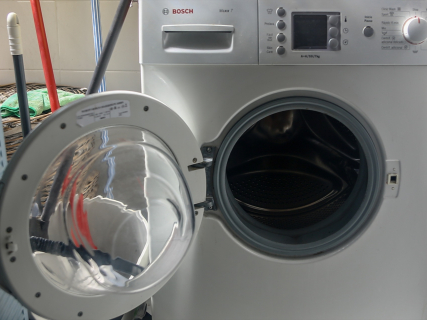
EuropaPress 3879445 lavadora cuarto dia record consecutivo precio luz 12 agosto 2021 madrid

EuropaPress 3879445 lavadora cuarto dia record consecutivo precio luz 12 agosto 2021 madrid

Add DEMÓCRATA to Google

Ask FREN

Published

Last updated

2 minutes

Most read

España vota · Congreso y Senado

Elecciones generales 29 de noviembre de 2026

Se eligen 350 diputados y los senadores de elección directa. Encuestas, calendario, candidaturas, programas y todo lo que necesitas saber para votar.

Faltan 41 días y 8 horas para que abran los colegios electorales.Hasta que abran los colegios, el domingo 29 a las 09:00 (hora peninsular).
Entra en el especial

Próximas fechas

  1. Presentación de candidaturas al Congreso y al Senado21–26 oct · Fecha prevista
  2. Voto desde el extranjero (CERA): envío de la documentación24–30 oct · Fecha prevista
  3. Publicación de las candidaturas presentadasFecha prevista
  4. Proclamación de candidaturasFecha prevista
Calendario completo

The price of electricity drops this Sunday, October 18, 2026, and concentrates the best savings opportunities between the morning and the first hour of the afternoon. The wholesale market registers an average of 76.28 euros per megawatt hour, compared to 107.15 euros on Saturday, which represents a drop of 28.81%.

For consumers under the regulated tariff, however, the reference that allows organizing domestic consumption is the Voluntary Price for the Small Consumer, known as PVPC. Its daily average is around 0.1397 euros per kilowatt hour before taxes, approximately 3.2% less than the previous day.

The difference is significant: the drop in the wholesale market does not translate into the same percentage for the domestic price nor does it allow for anticipating an equivalent reduction in the bill.

When is electricity cheaper this Sunday

The cheapest hour will be from 14:00 to 15:00, with a price of 0.04683 euros/kWh in the PVPC. The most expensive period will be from 20:00 to 21:00, when it will reach 0.25902 euros/kWh. The kilowatt hour will then cost more than five times what it marks at the minimum of the day.

The margin for savings is not limited to a single hour. Between 10:00 and 18:00, there is a stretch of reduced prices that allows for distributing household tasks without concentrating all appliances at the same time.

From 18:00 onwards, the price rises again. The increase intensifies from 19:00 and remains throughout the night, so bringing forward any scheduled consumption can make a difference.

Price of electricity by hours

The table shows the energy term of the mainland PVPC before taxes. It does not represent the full cost of the bill, which incorporates other concepts.

Price of electricity on Sunday, October 18, 2026. Mainland PVPC before taxes.
Schedule Price in €/kWh
00:00–01:00 0.19963
01:00–02:00 0.19287
02:00–03:00 0.17199
03:00–04:00 0.14050
04:00–05:00 0.13618
05:00–06:00 0.13503
06:00–07:00 0.16097
07:00–08:00 0.17265
08:00–09:00 0.17496
09:00–10:00 0.12335
10:00–11:00 0.05440
11:00–12:00 0.05064
12:00–13:00 0.04972
13:00–14:00 0.04886
14:00–15:00 0.04683 — minimum
15:00–16:00 0.04858
16:00–17:00 0.05020
17:00–18:00 0.05338
18:00–19:00 0.13715
19:00–20:00 0.23843
20:00–21:00 0.25902 — maximum
21:00–22:00 0.24822
22:00–23:00 0.23804
23:00–24:00 0.22083

How much can be saved by changing the hour

A consumption of 2 kWh during the cheapest hour would have an energy cost of about 9 cents before taxes. That same consumption during the most expensive time would be around 52 cents. The difference would be about 42 cents for using exactly the same amount of electricity.

The example does not equate to the cost of a specific cycle of a washing machine or dishwasher, which depends on the appliance and the chosen program. It does allow for visualizing why the schedule can influence spending.

Those who have a fixed price tariff should consult the conditions of their contract: shifting consumption only changes the cost if the applied tariff distinguishes between schedules or incorporates variable prices.

More key points, information and questions with FREN

AI-GENERATED CONTENT

What are the procedures and deadlines for modifying the PVPC regulation in Spain?

The usual way to modify the PVPC —Voluntary Price for the Small Consumer— is a royal decree that reforms its methodology or regulatory conditions. Not every modification requires a law: some elements can be changed by ministerial order, while altering the legally established framework requires a norm with the rank of law. Therefore, there is no single deadline applicable to any PVPC reform.

1. Choosing the regulatory instrument

The basic framework is in Article 17 of the Electricity Sector Law. Its main development is Royal Decree 216/2014, which regulates the price calculation and its contracting regime. Three cases must be distinguished:

  • Calculation methodology: it is the Government's responsibility to establish it. The route used to introduce references to forward markets was Royal Decree 446/2023, which amended the 2014 regulation.
  • Power limit for access: Article 5.3 of Royal Decree 216/2014 expressly allows modification by order of the holder of the Ministry for Ecological Transition and Demographic Challenge, subject to agreement by the Government Delegated Commission for Economic Affairs.
  • Content set by law: if the intention is to change the legal rules, and not develop them within the existing authorization, a law or, when its constitutional requirements concur, a royal decree-law is needed.
2. Processing the regulatory reform

The competent ministry promotes the drafting. Public participation distinguishes two moments that should not be confused:

  • Prior public consultation: before drafting the project, it allows opinions on the problem, objectives, and regulatory alternatives.
  • Hearing and public information: with a drafted text, it allows specific observations and proposed changes to the articles. Allegations must be submitted through the channel and within the deadline indicated in the call.

Then the processing of the file is completed, including the reports and opinions required, and the final text is prepared. If it is a royal decree, approval corresponds to the Council of Ministers; if it is an order, to the competent ministerial holder, respecting the required prior authorizations or agreements.

3. Deadlines: distinguishing participation, approval, and application

The deadline to submit allegations should not be confused with the total duration of the reform. The closing date of a consultation or hearing limits participation in that procedure but does not oblige immediate approval of the norm afterward. For a specific file, the operative dates are those published in each call.

Approval, publication in the BOE, and effective application must also be separated. The reform may provide an entry into force and, additionally, a transitional schedule to adapt contracts, calculation systems, or billing. Therefore, knowing the approval date is not enough to determine when the bill will change.

4. If it is necessary to modify the law

The ordinary route goes through parliamentary approval in Congress and Senate, with submission of amendments, debate, and voting. It does not have a uniform total duration. After its definitive approval, royal sanction has a maximum period of 15 days; the law enters into force when its text provides or, failing that, 20 days after publication.

The royal decree-law requires extraordinary and urgent necessity and subsequent parliamentary control: it must be submitted for validation or repeal within a maximum of 30 days. It is not a shortcut available for any PVPC modification.

What powers does the Ministry for Ecological Transition have regarding electricity tariffs?

The Ministry for Ecological Transition and Demographic Challenge (MITECO) has powers to approve electricity charges, develop the regulation of regulated prices, and propose their methodologies to the Government. However, it does not set the entire electricity tariff alone: network tolls correspond to the CNMC, the energy cost depends on the markets, and taxes are established through tax regulations.

1. Approving the charges of the electrical system

This is its most direct competence over the bill. The charges finance costs other than transport and distribution: among others, the specific remuneration of renewables, cogeneration and waste, certain surcharges of non-peninsular systems, and the annual installments of the electricity deficit.

Article 16 of the Electricity Sector Law expressly states: "The Ministry will approve the charges by order of the holder of the Ministry for Ecological Transition, subject to agreement by the Government Delegated Commission for Economic Affairs."

Therefore, two decisions must be distinguished:

  • Methodology: established by the Government, after a report from the CNMC. Royal Decree 148/2021 regulates its calculation and distribution among consumers.
  • Prices of the charges: approved by the Ministry by order, generally each year. They can also be revised when regulated costs or calculation parameters change significantly.

This power is not discretionary: it must respect the methodology and the economic and financial sustainability of the system.

2. Intervening in the PVPC and last resort tariffs

The Voluntary Price for the Small Consumer (PVPC) is a regulated price whose methodology corresponds to the Government. Article 17 of the Electricity Sector Law assigns the Ministry the development by order of the necessary provisions to establish these prices, subject to agreement by the Government Delegated Commission for Economic Affairs.

The PVPC incorporates the cost of electricity production, tolls, charges, and commercialization costs. Therefore, regulating its formula does not equate to freely deciding the final price: the energy component is determined through market mechanisms.

The Ministry also promotes and develops protection for vulnerable consumers, including the social bonus. The law contemplates last resort tariffs both for these consumers and for those who, without meeting PVPC requirements, temporarily lack a contract in the free market.

3. Guiding energy policy, without replacing the CNMC

Transport and distribution tolls pay for network use. Their methodology corresponds to the CNMC through a circular, and their values are approved by resolution, according to Article 16 and Circular 3/2020.

The Ministry adopts energy policy guidelines within which the regulator acts, but it cannot replace it by order to unilaterally set those tolls. It can also request necessary information from companies to determine charges and exercise its regulatory functions.

4. Limits and effects on the free market

In the free market, the commercial price is agreed with the retailer; the Ministry does not determine each offer. However, its decisions on charges also affect those contracts because they are part of the regulated supply costs. It also cannot modify taxes through a tariff order.

In summary: the Ministry approves charges and develops regulated prices; the Government establishes their methodologies; the CNMC sets network tolls. This separation allows identifying which authority can modify each component of the bill.

What requirements must a retailer meet to offer regulated electricity tariffs in the Spanish market?

To offer the regulated electricity tariff in Spain, the Voluntary Price for the Small Consumer (PVPC), a company must be designated as a reference retailer. It is not enough to meet the general requirements to market electricity: it needs that specific authorization and to assume the obligations associated with regulated supply.

The main framework is formed by Law 24/2013 of the Electricity Sector and Royal Decree 216/2014. It is advisable to distinguish between the conditions to exercise marketing, the additional requirements to be a reference retailer, and the subsequent obligations.

1. Legal, technical, and economic capacity

The company must be constituted as a commercial company, registered in the corresponding registry, and have a corporate purpose that allows buying and selling electricity without limitations or incompatible reservations with the activity. Additionally, it must prove legal, technical, and economic capacity to market and maintain compliance with applicable regulatory requirements.

To voluntarily access the status of reference retailer, these requirements stand out:

  • Minimum share capital of 500,000 euros. This is a specific requirement, not a guarantee that this amount covers all financial needs of the activity.
  • Three years of prior effective activity marketing electricity to consumers, with uninterrupted compliance with applicable requirements.
  • At least 25,000 average customers supplied in Spanish territory during the last twelve months.

2. Absence of incompatible records

The designation is also conditioned by the compliance history. The company must not have been disqualified from marketing during the previous three years nor have suffered administrative transfer of its customers in that period.

Likewise, there are restrictions due to final administrative sanctions for serious or very serious marketing infringements within legally established periods. These conditions may affect companies of the same group or linked entities: the evaluation must not be only of the applicant entity in isolation.

3. Express administrative designation

Meeting the requirements does not automatically allow starting to offer PVPC. The company must request designation from the competent ministry and provide supporting documentation. The regime contemplates CNMC intervention and designation by the Council of Ministers through royal decree.

The voluntary access must be distinguished from the mandatory designation case: groups that have supplied more than 100,000 average customers in Spain during the last twelve months must have a reference retailer. For Ceuta and Melilla, there are specific rules, with a threshold of 25,000 customers for the corresponding territorial designation.

4. Obligations once designated

The retailer must apply the regulated price and conditions, not freely set a commercial offer and call it PVPC. Article 17 of the Electricity Sector Law establishes that these prices are unique throughout Spanish territory and have the character of maximum prices.

  • Attend regulated supply and formalize contracts with consumers who meet access conditions.
  • Manage the social bonus and apply discounts to those who prove the corresponding requirements.
  • Assume certain transitional supplies of consumers lacking a contract in the normatively provided cases.
  • Guarantee contractual and billing transparency, prove the customer's contracting will, and offer clear and understandable conditions.
  • Maintain the required conditions and comply with information and regulatory accounting obligations.

In short, a free market retailer cannot offer the regulated tariff by its own decision: it needs to meet additional requirements, obtain designation, and continuously assume the obligations of the reference supply.

Play

Test your knowledge with FREN!

How much do you know about this topic? Answer the following 3 questions.

What was the average wholesale electricity price this Sunday, October 18, 2026?

Question 1 of 3

During which time slot was the lowest PVPC price concentrated this Sunday?

Question 2 of 3

What cost difference can there be when consuming 2 kWh in the cheapest hour compared to the most expensive hour of the day?

Question 3 of 3