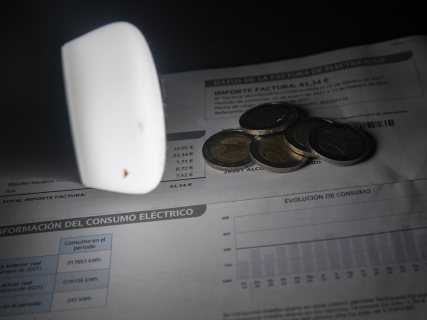

The electricity bill is one of the most important fixed expenses for Spanish households, but many consumers are unaware if they have contracted the regulated tariff PVPC or an offer from the free market. The difference is not minor: it determines how the price of electricity is calculated, what conditions the contract has, and if the user can request aids such as the electric social bonus.
Although both models coexist in Spain since the liberalization of the electricity sector, identifying which one is contracted is relatively simple. It is enough to review some sections of the bill or the contract to know the type of supply and check if the marketer belongs to the regulated market or the free market.
How to know if you have contracted the regulated tariff PVPC
The quickest way to find out is to check which company issues the electricity bill. If the contract is signed with a Reference Marketer (COR), the supply belongs to the regulated market and the consumer may have contracted the Voluntary Price for the Small Consumer (PVPC).
In Spain, there is a limited number of Reference Marketers authorized by the Government. Among the main ones are Energía XXI, Curenergía, Régsiti, Baser Reference Marketer, COR of CHC Energía, Teramelcor, Energía Ceuta XXI, and Aguas de Barbastro Energía, each linked to different energy groups.
In addition to the name of the company, many bills explicitly indicate that the contract corresponds to the PVPC or refer to the Voluntary Price for the Small Consumer, which allows for immediate identification that it is the regulated tariff.
What it means to be in the free market
If the bill corresponds to companies or commercial plans different from the Reference Marketers, it is usual for the contract to belong to the free market.
In this case, the price of electricity is not determined by the regulated system, but by the conditions agreed upon with the marketer. It is common to find offers with fixed price for one year, promotional discounts, specific tariffs for certain time slots, maintenance services, or even commitments to stay.
For this reason, the commercial name of the tariff usually offers a clear clue. Names like Stable Plan, Fixed Tariff, Night Plan, Home Plan, or similar usually correspond to contracts from the free market.
The price of electricity works differently
One of the main differences between both systems is in the way the price of energy is calculated.
In the regulated PVPC rate, the cost of electricity is linked to the regulated system established by the Government, incorporating references to both the wholesale market and, since the reform applied in 2024, to the futures markets with the aim of reducing price volatility.
In the free market, on the contrary, each retailer designs its own offers and sets the economic conditions of the contract, so the price can remain stable for a certain period or vary according to the agreed clauses.
Only those with PVPC can apply for the social bonus
A particularly relevant difference affects access to the electric social bonus.
This aid aimed at vulnerable consumers can only be requested when the supply is under the PVPC and contracted with a Reference Retailer. Consumers who have a free market rate must first switch to the regulated market if they wish to access this benefit and meet the economic and family requirements established by the regulations.
Therefore, knowing the type of contract not only allows for a better understanding of the electricity bill but also to check if one is entitled to one of the main public aids to reduce the cost of electricity.
How to check if there is a cheaper rate
Consumers who have doubts about whether their contract is competitive can use the official comparator of offers from the National Commission of Markets and Competition (CNMC). This tool allows one to know the type of contracted rate, compare available offers, and estimate what the annual cost would be based on the consumption of each household.
Periodically reviewing the contract is especially advisable when promotions end or the economic conditions of a rate change, as small differences in the price per kilowatt-hour can translate into significant savings over the year.