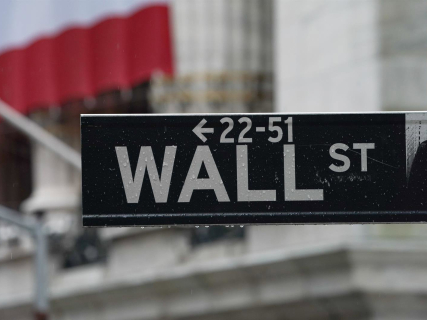

The main stock exchanges in the United States posted deep declines this Thursday, weighed down by the near-general collapse of semiconductor manufacturers and other companies linked to the AI infrastructure 'boom', after the decisive Democratic victory in the 'midterms', which increases doubts about the investment framework and the future regulation of the sector.
In this context, the Philadelphia Stock Exchange Semiconductor Index, which includes the 30 largest semiconductor firms listed on the US, known colloquially as 'chipmakers', was down by more than 10% during the session, with double-digit retreats, or very close to it, for most of its components.
Within the indicator, Nvidia shares fell by 8.99% and 8.65% in the case of ASML, while Broadcom stocks fell by 9.3%. In turn, the drop for Intel exceeded 10% and went beyond 13% for Qualcomm, while AMD and Micron suffered losses of more than 17% each.
Asian sector companies listed on US markets were also dragged down by the selling, with South Korea’s SK Hynix and Taiwan’s TSMC giving up 13.8% and 10.4%, respectively.
The selling pressure also spread to the 'neocloud' Nebius, which fell as much as 19.8% in the first hours of trading, while data storage companies such as Seagate lost 15.9%, Western Digital fell by 16.7% and SanDisk was close to a 20% drop.
Meanwhile, the stock prices of companies linked to Elon Musk, one of the most prominent contributors to the Republican campaign, suffered sharp corrections, reaching 11% in SpaceX and exceeding 10% in Tesla.
"It is expected that the Democrats’ victory will become a possible obstacle to investments," says Ipek Ozkardeskaya, an analyst at Swissquote Bank, referring to the "questions about massive spending, uncertainty about future returns and, obviously, the financing of all of this" that AI companies are facing.
"AI enablers and the broader conflicts related to AI, including data centers and energy, have undoubtedly become more complex after the midterm elections," he adds.
The punishment of technological values, in a context of a shift toward more defensive assets, dragged the Nasdaq to a decline of more than 4% in the session and to enter a correction phase, after accumulating a drop of more than 10% from its last high. For its part, the Dow Jones Industrial Average fell by more than 2%.