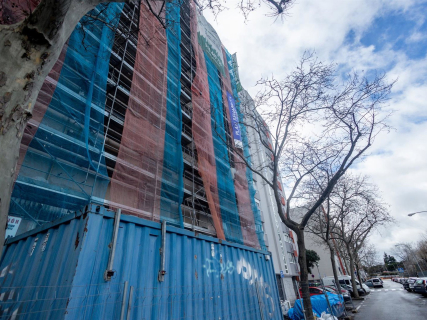

The State Housing Plan 2026-2030, ratified this Tuesday by the Council of Ministers, incorporates a package of subsidies that can reach 102,000 euros per dwelling when it is built in a stressed area and industrialized construction systems are used.
Endowed with 7 billion euros, the State Housing Plan 2026-2030 aims to expand the affordable housing stock, with priority for public and protected housing; activate and improve the existing stock, and reinforce coverage for groups with greater access difficulties.
The program is structured around ten main innovations grouped into three axes: increased construction to increase residential supply, more rehabilitation actions to put into use and dignify already built homes, and a reinforcement of protection for the most vulnerable households.
Up to 85,000 euros per new home intended for rent
The plan increases aid for the promotion of new public housing or housing promoted through public-private partnership formulas, with subsidies of up to 85,000 euros per dwelling, subject to maximum rental prices of 900 euros per month and with permanent protection. In municipalities with fewer than 10,000 inhabitants, sale will also be permitted, always maintaining protected status.
This limit of 900 euros has been calculated taking as a reference a large type dwelling (85 square meters of useful area) with garage and storage room (25 square meters). This is an indicative value that may be adjusted depending on the surface area of the dwelling and its annexes, respecting the limits set in the State Housing Plan itself.
The program also incorporates specific aid for the urbanization of land that reserves, at a minimum, 40% for protected housing, with up to 8,000 euros for each future home.
With the aim of promoting the industrialization of the sector, an additional aid of up to 8,500 euros per dwelling is incorporated when industrialized construction techniques are used, so that the global aid can reach 93,500 euros per new dwelling.
This maximum figure may be raised to 102,000 euros if the promotions are located in areas of a stressed residential market, thanks to an extra aid of up to 8,500 euros intended to contain prices where demand pressure is most intense.
Transfer of housing to the autonomous communities for affordable rent
The Plan also aims to increase the public housing stock by purchasing homes from individuals by the autonomous communities, with financing from the General State Administration of up to 70% of the acquisition price, which may rise to 85% in stressed areas, always with the commitment to allocate them to affordable rental with maximum rents of 800 euros per month.
To this route is added aid of up to 17,000 euros –or 25,000 euros if the home is located in a stressed area– for private owners who cede their home to the autonomous community, so that the administration is the one who offers it under an affordable rental scheme for a maximum of 600 euros per month. The autonomous community will assume the complete management of the lease and, once the contract is concluded, will return the home to its owner in optimal conditions.
In addition, up to 12,000 euros are contemplated to finance renovation or rehabilitation works in the assigned homes, a tool especially relevant in rural areas, where a large part of the empty housing stock is concentrated, often in poor condition.
Rehabilitation, accessibility and energy efficiency
In terms of rehabilitation, the Plan deploys a set of aids for structural improvement, accessibility, and energy efficiency interventions. Subsidies may reach 8,000 euros per dwelling for structural works; accessibility actions may receive up to 13,000 euros per dwelling, and energy rehabilitation actions up to 20,500 euros, depending on the primary energy savings achieved, the property's surface area, and the budget for the works.
The program pays special attention to historic centers and built heritage, with an additional aid of up to 30,000 euros when the rehabilitated housing is located in these areas or has some type of heritage protection. Adding all lines, public support can reach 50,000 euros per dwelling if structural, accessibility, and energy efficiency improvements are combined.
Likewise, specific aid is launched to activate empty homes that have been unoccupied for more than two years, with up to 30,000 euros per home –35,000 in rural areas–, conditioned on them being subsequently used for affordable residential rental for a minimum period of five years.
Rent subsidies of up to 300 euros for young people
The third block of the Plan is aimed at reinforcing the protection of groups with greater difficulties, with special attention to young people, who will be able to opt for rent assistance of up to 300 euros per month, modifiable by the autonomous communities.
A subsidy of up to 15,000 euros is also foreseen for young people up to 35 years of age who acquire or build their first home in municipalities of up to 10,000 inhabitants, extendable to towns of up to 20,000 inhabitants that are suffering population loss.
Women victims of gender-based violence will have a specific support line that guarantees an immediate, adequate, and dignified housing solution, with the Administration assuming the payment of rent up to a maximum of 1,000 euros per month, which may be extended by the autonomous communities if they deem it appropriate.
The Plan also includes aid aimed at people in vulnerable situations, with a general rent subsidy of 250 euros per month for low-income households.