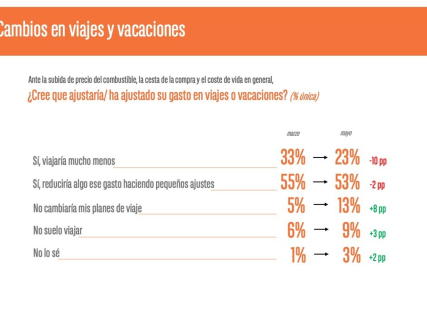

Spanish consumers show a lower level of economic stress after the initial impact of the geopolitical conflict. This improvement is reflected in greater stability in households and a shift in consumption expectations. Among the most notable changes is the increase in those who will keep their travel plans, which rise from 5.2% to 13.4%, according to Cetelem.
The Spanish Consumer Economic Stress Indicator (IEECE) stood at 54.5 points in May 2026, compared to 70.7 points recorded in March. This drop of 16.2 points places financial stress in a moderate range, although households continue to cut back on certain items, especially in leisure, restaurants, and tourist travel.
In this context, the percentage of Spaniards who claim to be reducing their spending on leisure falls from 68% in March to 49% in May. At the same time, the search for offers and promotions reaches 38.6% of respondents.
By indicator components, the reduction in leisure spending goes from 78.7 to 62.4 points; the purchase of cheaper products decreases from 75.2 to 64.4; the reduction in total spending from 65.8 to 58.9; the cutback in car use from 69.7 to 49.4; the delay in purchases from 60.4 to 33.6; and the increase in savings from 64.4 to 48.3 points.
The study highlights that 24% of consumers declare not to have modified the use of their private vehicle despite the increase in fuel prices, while the percentage of those who claim to have reduced it goes from 52.9% to 48.1%.
Consumers Turn to Offers
Regarding the shopping basket, the main strategy continues to be the search for offers and promotions. However, the report indicates that the intensity of purchase reduction has been less than anticipated and that the number of consumers who have not changed their habits is increasing.
As for spending on trips and vacations, the percentage of those who claim to have cut their budget falls from 55.1% to 52.8%, while the group that stated they would travel "much less" decreases from 32.5% to 22.6%.
In terms of savings, the percentage of Spaniards who planned to increase them falls from 16% to 6.8%, while the percentage of those who admit to having decreased their savings capacity or having resorted to their reserves to cover daily expenses grows.
The Cetelem Observatory concludes that, although the economic impact of the geopolitical context remains present, the pressure on the consumption of Spanish households has moderated compared to the levels observed in the early months of the conflict.