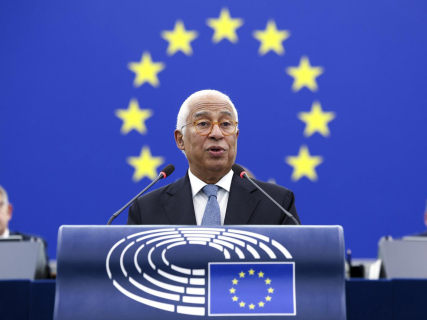

The President of the European Council, António Costa, has responded this Thursday to the Italian prime minister, Giorgia Meloni, with a letter in which he argues that the European Union must take part in the talks that will determine the future of Ukraine and the security of the continent. Costa has also agreed to the Italian leader’s request to address this issue at the next informal meeting of the European Council, scheduled in Dublin.
The response comes after Meloni submitted in writing her concerns about the role of the EU in negotiations related to the war in Ukraine. Costa shares the need for the Twenty-Seven to act in a coordinated manner and be able to defend their interests in any discussion that affects European security.
"The European Union must participate appropriately in the debates that shape Europe’s security and the future of Ukraine", the President of the European Council notes in the letter, which DEMÓCRATA has obtained.
Costa adds that this participation must be organized in such a way that the EU can convey "a clear and unified message", defend its interests, and maintain its support for Ukraine.
Costa asserts the role of European institutions
One of the central points of the response is the argument that it should be the Community institutions themselves that are responsible for representing the Union’s interests in international talks.
"The interests of the European Union must be represented by its institutions, in accordance with the Treaties", Costa says.
The President of the European Council reminds Meloni that he has already addressed this issue in previous meetings with the heads of state and government of the Twenty-Seven.
His position responds to the debate about how the EU should participate in negotiations that affect Ukraine, especially when the decisions that are adopted may have consequences for the security of the continent as a whole.
Costa does not propose a specific representation mechanism in his letter nor does he identify who should participate in those talks. He does, however, insist on the need for the Union to be able to intervene with a common position and defend its institutional interests.
The debate will take place at the next informal summit in Dublin
Costa has also accepted Meloni’s request to include this issue in the talks of the next informal meeting of the European Council.
"I take note of your request to continue debating this matter at the next informal meeting of the European Council in Dublin and I will set aside time for this discussion", he informs him.
The response opens the door for European leaders to address directly how to organize community participation in negotiations on Ukraine.
The letter does not anticipate any decision on the format of that representation, but confirms that the matter will have room on the agenda of the heads of state and government.
A lasting peace and with Ukraine
The President of the European Council frames his response in the consequences of the Russian invasion and in the need for Europe to maintain a common position.
Costa considers that the human suffering caused by the war and its consequences for European security require acting with "consistency, unity and determination".
In the closing of his letter, he argues that the shared goal should be for the Union to contribute effectively to achieving "a just, lasting and sustainable peace", in close cooperation with Ukraine and other international partners.
With this response, Costa addresses Meloni's request to open a discussion among European leaders and reaffirms that the EU must have its own voice in decisions that affect the security of the continent.