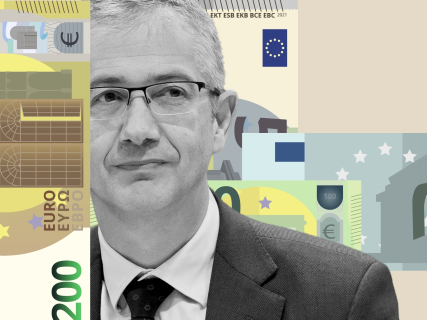
De Cos takes Spain to the summit of European monetary power

The former governor of the Bank of Spain becomes Christine Lagarde’s successor at the head of the ECB after the distribution of the main positions in the top leadership agreed upon by France and Germany, as well as the Spaniard with one of the greatest responsibilities in the Community context

ILUSTRACIONES (1200 x 675 px) (1200 x 675 px)

ILUSTRACIONES (1200 x 675 px) (1200 x 675 px)

Add DEMÓCRATA to Google

Ask FREN

Published

Last updated

5 minutes

Most read

Hasta el día de las elecciones (29 de noviembre) se muestran los resultados de las elecciones generales anteriores, las del 23 de julio de 2023.

Resultados de las elecciones generales del 29N en directo

Elecciones generales del 23 de julio de 2023 · Congreso de los DiputadosSenado

Escrutado: 100,00 %Votantes: 24.952.447Participación: 66,59 %

Votos

PartidoEscañosVotosPorcentaje
PP1378.160.83733,06 %
PP: 137 escaños. Se presenta con estos nombres:
  • PARTIDO POPULAR (PP)131 escaños
  • PARTIDO POPULAR / PARTIT POPULAR (PP)5 escaños
  • PARTIT POPULAR / PARTIDO POPULAR (PP)1 escaño
PSOE1217.821.71831,68 %
PSOE: 121 escaños. Se presenta con estos nombres:
  • PARTIDO SOCIALISTA OBRERO ESPAÑOL (PSOE)85 escaños
  • PARTIT DELS SOCIALISTES DE CATALUNYA (PSC-PSOE)19 escaños
  • PARTIDO DOS SOCIALISTAS DE GALICIA-PSOE (PSdeG-PSOE)7 escaños
  • PARTIDO SOCIALISTA DE EUSKADI-EUSKADIKO EZKERRA (PSOE)5 escaños
  • PARTIDO SOCIALISTA DE ISLAS BALEARES-PSOE (PSIB-PSOE)3 escaños
  • PARTIDO SOCIALISTA DE NAVARRA-PSOE (PSN-PSOE)2 escaños
Vox333.057.00012,38 %
Sumar313.044.99612,33 %
Sumar: 31 escaños. Se presenta con estos nombres:
  • SUMAR10 escaños
  • SUMAR - EN COMÚ PODEM (SUMAR - ECP)7 escaños
  • SUMAR ANDALUCÍA (SUMAR)5 escaños
  • COMPROMÍS - SUMAR: SUMEM PER GUANYAR (SUMAR - COMPROMÍS)4 escaños
  • SUMAR GALICIA (SUMAR)2 escaños
  • SUMAR CANARIAS (SUMAR)1 escaño
  • SUMAR ARAGÓN1 escaño
  • SUMAR MÉS (MÉS PER MALLORCA-MÉS PER MENORCA-SUMAR)1 escaño
ERC7466.0201,89 %
Junts7395.4291,60 %
EH Bildu6335.1291,36 %
EAJ-PNV5277.2891,12 %
BNG1153.9950,62 %
CCa1116.3630,47 %
UPN152.1880,21 %
PACMA0169.2370,69 %
PACMA: 0 escaños. Se presenta con estos nombres:
  • PARTIDO ANIMALISTA CON EL MEDIO AMBIENTE (PACMA)0 escaños
  • PARTIT ANIMALISTA AMB EL MEDI AMBIENT (PACMA)0 escaños
CUP-PR099.6440,40 %
FO046.2740,19 %
NC-bc045.5950,18 %
PDeCAT-E-CiU032.0160,13 %
RECORTES CERO023.4210,09 %
PUM+J023.2900,09 %
PUM+J: 0 escaños. Se presenta con estos nombres:
  • POR UN MUNDO MÁS JUSTO (PUM+J)0 escaños
  • POR UN MUNDO MAIS XUSTO (PUM+J)0 escaños
  • BIDEZKO MUNDURANTZ (PUM+J)0 escaños
U.P.L.023.2010,09 %
EXISTE020.4400,08 %
EXISTE: 0 escaños. Se presenta con estos nombres:
  • TERUEL EXISTE - COALICIÓN EXISTE (EXISTE)0 escaños
  • ARAGÓN EXISTE - COALICIÓN EXISTE (EXISTE)0 escaños
PCTE013.3820,05 %
GBAI099380,04 %
SY096970,04 %
Adelante091910,04 %
JM+082930,03 %
ESCAÑOS EN BLANCO079860,03 %
XAV073620,03 %
BQEX058070,02 %
CJ056200,02 %
FE de las JONS046830,02 %
PAR041730,02 %
PCTC038750,02 %
ESPAÑA VACIADA031580,01 %
PH029020,01 %
ASTURIAS EXISTE EV023140,01 %
XH019310,01 %
VP019170,01 %
Zsi018430,01 %
VB017740,01 %
POR MI REGIÓN016980,01 %
AHORA CANARIAS-PCPC016740,01 %
PARTIDO AUTÓNOMOS014460,01 %
EVB014420,01 %
CpM012980,01 %
JxG012180,00 %
EV-PCAS-TC011840,00 %
PREPAL09640,00 %
Somos Cc09630,00 %
ALM08740,00 %
PCTG07020,00 %
F.I.A.05060,00 %
3e04840,00 %
Ud.Ca04630,00 %
ESCONS EN BLANC04620,00 %
GITV03660,00 %
PUEDE02690,00 %
EVC02650,00 %
LB02630,00 %
PCTE/ELAK02590,00 %
UNIDOS SI02530,00 %
+RDS+01650,00 %
CCD01530,00 %
FUERZA CÍVICA01150,00 %

Los partidos que se presentan con varios nombres van juntos: pasa por encima del ? para ver el detalle. Porcentajes sobre votos válidos. Resultados definitivos del 23J de 2023.

Escaños (350)

Mayoría: 176
PP: 137 escaños en 2023 (PARTIDO POPULAR: 131; PARTIDO POPULAR / PARTIT POPULAR: 5; PARTIT POPULAR / PARTIDO POPULAR: 1)PSOE: 121 escaños en 2023 (PARTIDO SOCIALISTA OBRERO ESPAÑOL: 85; PARTIT DELS SOCIALISTES DE CATALUNYA (PSC-PSOE): 19; PARTIDO DOS SOCIALISTAS DE GALICIA-PSOE: 7; PARTIDO SOCIALISTA DE EUSKADI-EUSKADIKO EZKERRA (PSOE): 5; PARTIDO SOCIALISTA DE ISLAS BALEARES-PSOE: 3; PARTIDO SOCIALISTA DE NAVARRA-PSOE: 2)Vox: 33 escaños en 2023Sumar: 31 escaños en 2023 (SUMAR: 10; SUMAR - EN COMÚ PODEM: 7; SUMAR ANDALUCÍA: 5; COMPROMÍS - SUMAR: SUMEM PER GUANYAR: 4; SUMAR GALICIA: 2; SUMAR CANARIAS: 1; SUMAR ARAGÓN: 1; SUMAR MÉS: 1)ERC: 7 escaños en 2023Junts: 7 escaños en 2023EH Bildu: 6 escaños en 2023EAJ-PNV: 5 escaños en 2023BNG: 1 escaño en 2023CCa: 1 escaño en 2023UPN: 1 escaño en 2023137121333120232023
  • PP 137
  • PSOE 121
  • Vox 33
  • Sumar 31
  • ERC 7
  • Junts 7
  • EH Bildu 6
  • EAJ-PNV 5
  • BNG 1
  • CCa 1
  • UPN 1

Simulador de Pactos

Pulsa los partidos para sumar sus escaños.Abrir el Simulador de Pactos

Los escaños más ajustados

Quién tiene el último escaño, quién le sigue y los votos que le faltan
  1. GironaJxCAT - JUNTSyPP285 votos

    El último escaño de Girona (el 6.º) es para JxCAT - JUNTS. Le sigue el PP, que necesitaría 285 votos más para quitárselo. Ver Girona ›

  2. CantabriaVOXyPP403 votos

    El último escaño de Cantabria (el 5.º) es para VOX. Le sigue el PP, que necesitaría 403 votos más para quitárselo. Ver Cantabria ›

  3. TarragonaJxCAT - JUNTSyPSC1247 votos

    El último escaño de Tarragona (el 6.º) es para JxCAT - JUNTS. Le sigue el PSC, que necesitaría 1247 votos más para quitárselo. Ver Tarragona ›

  4. AlbacetePSOEyVOX1412 votos

    El último escaño de Albacete (el 4.º) es para el PSOE. Le sigue VOX, que necesitaría 1412 votos más para quitárselo. Ver Albacete ›

  5. SalamancaPPyPSOE1495 votos

    El último escaño de Salamanca (el 4.º) es para el PP. Le sigue el PSOE, que necesitaría 1495 votos más para quitárselo. Ver Salamanca ›

Ver todas las provincias y el mapa

Provincias donde el último escaño cambiaría de manos con menos votos, con lo escrutado hasta ahora. Pulsa una para ver el detalle.

Senado

100,00 % escrutado
PartidoSenadores
PP120
PSOEPSOE: 73 senadoresSe presenta con estos nombres:
  • PSOE48
  • PSC12
  • PSdeG-PSOE4
  • PSE-EE (PSOE)4
  • PSN-PSOE3
  • PSIB-PSOE1
  • PSOE-SUMAR-EUIB-ARA EIVISSA1
73
EH Bildu4
EAJ-PNV4
ERCERC: 3 senadoresSe presenta con estos nombres:
  • ERC-ESQUERRES PER LA INDEPENDÈNCIA2
  • ERC1
3
Junts1
UPN1
A.H.I.1
ASG1

Los partidos que se presentan con varios nombres van juntos: pasa por encima para ver el detalle. Baleares y Canarias eligen sus senadores por islas.

Senadores (208)

Elegidos en las urnas
PP: 120 senadores en 2023PSOE: 73 senadores en 2023 (PSOE: 48; PSC: 12; PSdeG-PSOE: 4; PSE-EE (PSOE): 4; PSN-PSOE: 3; PSIB-PSOE: 1; PSOE-SUMAR-EUIB-ARA EIVISSA: 1)EH Bildu: 4 senadores en 2023EAJ-PNV: 4 senadores en 2023ERC: 3 senadores en 2023 (ERC-ESQUERRES PER LA INDEPENDÈNCIA: 2; ERC: 1)Junts: 1 senador en 2023UPN: 1 senador en 2023A.H.I.: 1 senador en 2023ASG: 1 senador en 20231207320232023
  • PP 120
  • PSOE 73
  • EH Bildu 4
  • EAJ-PNV 4
  • ERC 3
  • Junts 1
  • UPN 1
  • A.H.I. 1
  • ASG 1

Los senadores designados por los parlamentos autonómicos no se eligen en las urnas.

Mapa

Ganador por provincia

    CanariasCeutaMelillaAraba/Álava: PSE-EE (PSOE) 27,7 %Albacete: PP 39,9 %Alicante/Alacant: PP 36,7 %Almería: PP 40,9 %Ávila: PP 43,3 %Badajoz: PSOE 39,2 %Illes Balears: PP 35,6 %Barcelona: PSC 35,7 %Burgos: PP 40,6 %Cáceres: PSOE 38,9 %Cádiz: PP 34,8 %Castellón/Castelló: PP 35,2 %Ciudad Real: PP 40,5 %Córdoba: PP 37,9 %A Coruña: PP 43,1 %Cuenca: PP 39,8 %Girona: PSC 28,9 %Granada: PP 37,0 %Guadalajara: PP 36,3 %Gipuzkoa: EH Bildu 31,2 %Huelva: PP 36,4 %Huesca: PP 38,2 %Jaén: PP 37,3 %León: PP 36,9 %Lleida: PSC 29,5 %La Rioja: PP 45,6 %Lugo: PP 50,2 %Madrid: PP 40,6 %Málaga: PP 38,3 %Murcia: PP 41,2 %Navarra: PSN-PSOE 27,4 %Ourense: PP 50,0 %Asturias: PP 35,7 %Palencia: PP 42,0 %Las Palmas: PSOE 33,2 %Pontevedra: PP 39,7 %Salamanca: PP 46,9 %Santa Cruz de Tenerife: PP 35,4 %Cantabria: PP 42,1 %Segovia: PP 45,0 %Sevilla: PSOE 36,6 %Soria: PP 37,2 %Tarragona: PSC 32,9 %Teruel: PP 35,0 %Toledo: PP 37,8 %Valencia/València: PP 33,6 %Valladolid: PP 40,8 %Bizkaia: EAJ-PNV 26,9 %Zamora: PP 44,7 %Zaragoza: PP 36,0 %Ceuta: PP 38,8 %Melilla: PP 49,2 %

    Pulsa una provincia para ver sus resultados y elegir municipio.

    Mapa

    Partido con más senadores por provincia

    CanariasCeutaMelillaAraba/Álava: PSOE, 3 de 4 senadoresAlbacete: PP, 3 de 4 senadoresAlicante/Alacant: PP, 3 de 4 senadoresAlmería: PP, 3 de 4 senadoresÁvila: PP, 3 de 4 senadoresBadajoz: PSOE, 2 de 4 senadoresIlles Balears: PP, 3 de 6 senadoresBarcelona: PSOE, 3 de 4 senadoresBurgos: PP, 3 de 4 senadoresCáceres: PP, 2 de 4 senadoresCádiz: PP, 3 de 4 senadoresCastellón/Castelló: PP, 3 de 4 senadoresCiudad Real: PP, 3 de 4 senadoresCórdoba: PP, 3 de 4 senadoresA Coruña: PP, 3 de 4 senadoresCuenca: PP, 3 de 4 senadoresGirona: PSOE, 3 de 4 senadoresGranada: PP, 3 de 4 senadoresGuadalajara: PP, 3 de 4 senadoresGipuzkoa: EH BILDU-INDEPENDENTZIA EZKERRETIK, 3 de 4 senadoresHuelva: PP, 2 de 4 senadoresHuesca: PP, 3 de 4 senadoresJaén: PP, 3 de 4 senadoresLeón: PP, 3 de 4 senadoresLleida: PSOE, 3 de 4 senadoresLa Rioja: PP, 3 de 4 senadoresLugo: PP, 3 de 4 senadoresMadrid: PP, 3 de 4 senadoresMálaga: PP, 3 de 4 senadoresMurcia: PP, 3 de 4 senadoresNavarra: PSOE, 3 de 4 senadoresOurense: PP, 3 de 4 senadoresAsturias: PP, 3 de 4 senadoresPalencia: PP, 3 de 4 senadoresLas Palmas: PSOE, 4 de 5 senadoresPontevedra: PP, 3 de 4 senadoresSalamanca: PP, 3 de 4 senadoresSanta Cruz de Tenerife: PSOE, 3 de 6 senadoresCantabria: PP, 3 de 4 senadoresSegovia: PP, 3 de 4 senadoresSevilla: PSOE, 3 de 4 senadoresSoria: PP, 3 de 4 senadoresTarragona: PSOE, 3 de 4 senadoresTeruel: PP, 3 de 4 senadoresToledo: PP, 3 de 4 senadoresValencia/València: PP, 2 de 4 senadoresValladolid: PP, 3 de 4 senadoresBizkaia: EAJ-PNV, 3 de 4 senadoresZamora: PP, 3 de 4 senadoresZaragoza: PP, 3 de 4 senadoresCeuta: PP, 2 de 2 senadoresMelilla: PP, 2 de 2 senadores

    Pulsa una provincia para ver sus senadores y candidatos.

    Resultados definitivos de las elecciones generales del 23 de julio de 2023 (Ministerio del Interior). Mapas: Instituto Geográfico Nacional (es-atlas, CC BY 4.0). Demócrata.

    The arrival of Pablo Hernández de Cos as president of the European Central Bank (ECB) has already been confirmed. Like someone who prefers not to be overly hopeful before an appointment in case, at the last moment, they get turned down, the Spanish diplomats in Brussels were sketching a timid smile first thing this Thursday and resorting to the same caution each time they were asked: "Nothing is agreed until everything is agreed." However, upon his entry to the EU leaders’ summit, the Dutch prime minister has acknowledged that his candidate "had very few chances," clearing the way for the Spaniard.

    The former governor of the Bank of Spain was coming to the table of the heads of state and government of the Eurozone as the preferred candidate to take over from Christine Lagarde at the head of the euro. His "impeccable" profile has catapulted the man from Madrid into convincing the 21 Eurogroup countries, which have not needed to put the decision to a vote given the consensus reached. A discussion, though, in which the head of the Spanish government, Pedro Sánchez, was not present, since he had delegated his vote to the president of the French Republic, Emmanuel Macron. The Dutch delegation, which had put forward its own candidate, Klas Noot, privately acknowledged its intention to facilitate the consensus without having to put it to a vote, but up until the last moment they were downplaying their wager. "They want to maintain their positions with a view to future negotiations," explained a diplomat.
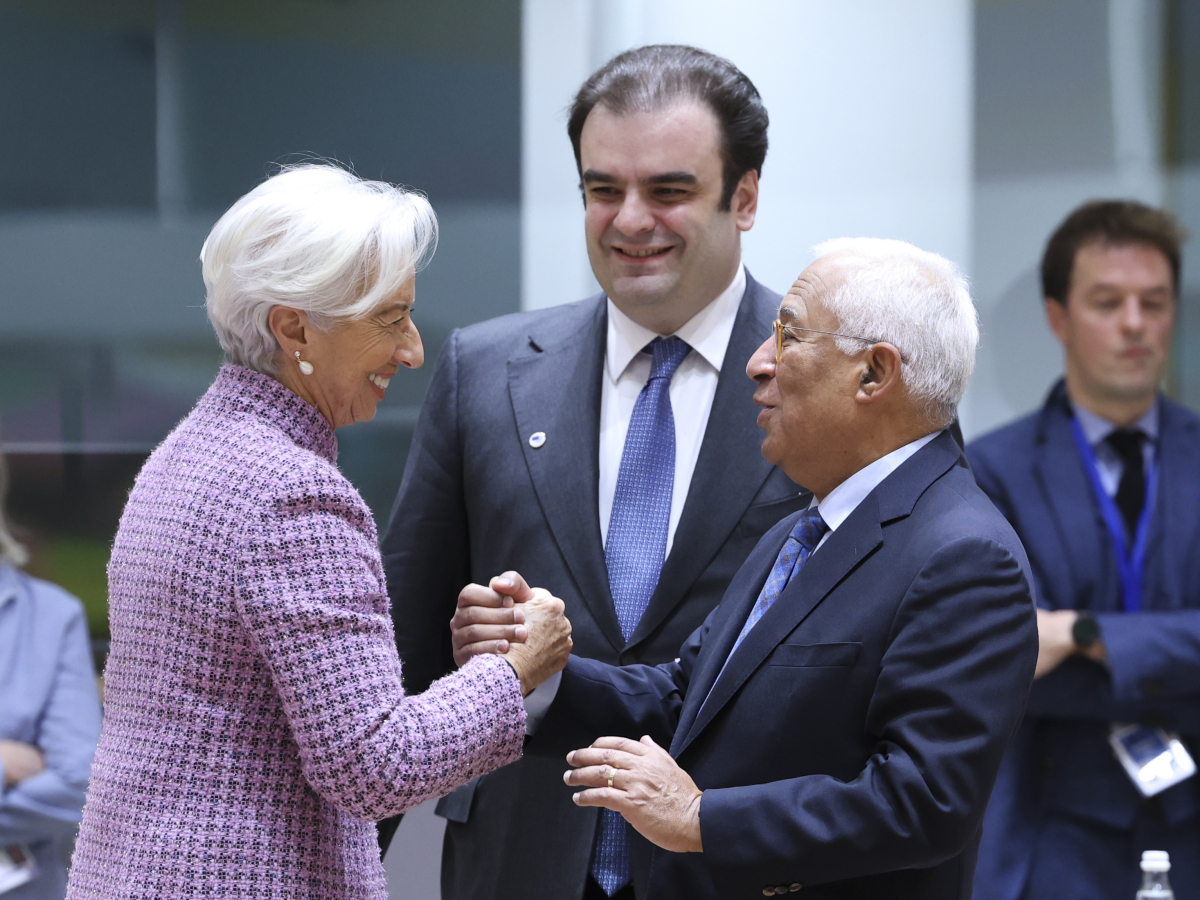
    European Council
    European Council -

    The appointment that could become effective in February and would mean Spain’s entry into one of the positions with the greatest capacity to influence the European economy. Last week, the path to Frankfurt had been cleared after the agreement between France and Germany to split two of the main responsibilities at the top of the bank: Berlin will take the position of chief economist and Paris will take the direction of market operations.

    In fact, Chancellor Friedrich Merz’s Government was the first to confirm the appointment of Markus Brunnermeier as a candidate to hold the economic directorship of the ECB. Currently a university professor in the United States, Berlin presents his selection as a “high-quality” candidacy from an academic and professional perspective. The move must also be understood as part of the institutional balance that accompanies the renewal of the top leadership: German support for the Spanish candidacy was thus accompanied by a position of weight for German interests within the body.

    In exchange for granting this position to Germany, France managed to secure responsibility for market operations, until now in the hands of Isabel Schnabel. It will be Laurence Boone, until now the General Director of Santander France, who will take up that position. Previously, she had been Minister of State for European Affairs of her country and Chief Economist of the Organisation for Economic Co-operation and Development (OECD).

    A Franco-German pact that, beyond the distribution of responsibilities, carried an implicit political message: Hernández de Cos’s candidacy gained ground over that of the Dutchman Klaas Knot, the other candidate who had been mentioned to succeed Lagarde. The allocation of the main positions within the executive structure made it possible to unlock negotiations in which the large capitals sought to preserve their influence in the functioning of the bank.

    Paris and Berlin’s backing cleared the way for the Spanish candidacy

    The candidacy of the former governor, backed by Moncloa in September and also by the Partido Popular, has been gaining supporters since Lagarde communicated her intention to leave the post early in order to facilitate a renewal of the institution’s top leadership. The operation, driven largely by French President Emmanuel Macron, before the next general elections in France, opened a window of opportunity to reorganize national balances within the ECB.

    In this context, Spain’s decision not to put forward a candidate for the presidency of the Eurogroup also revealed the strategy being followed by the Ministry of Economy, led by Carlos Cuerpo. Madrid had given up trying to contest a position it had attempted to win unsuccessfully on previous occasions—a decision that for months had been interpreted in Community circles as a way to focus its diplomatic efforts on renewing the presidency of the ECB.

    European leaders have taken advantage of the summit scheduled for this week in Brussels, initially convened to address the next European budget, to move forward with the ratification of the appointment. Now a path will open that will continue with the hearing before the European Parliament next December seven, while awaiting also to receive the approval of the ECB’s Governing Council, something that sources say is a "mere formality". The decision would leave two Spaniards at the head of the main economic and financial institutions of the European Union. It should be recalled that the former Vice President of the Government, Nadia Calviño, currently holds the presidency of the European Investment Bank (EIB).
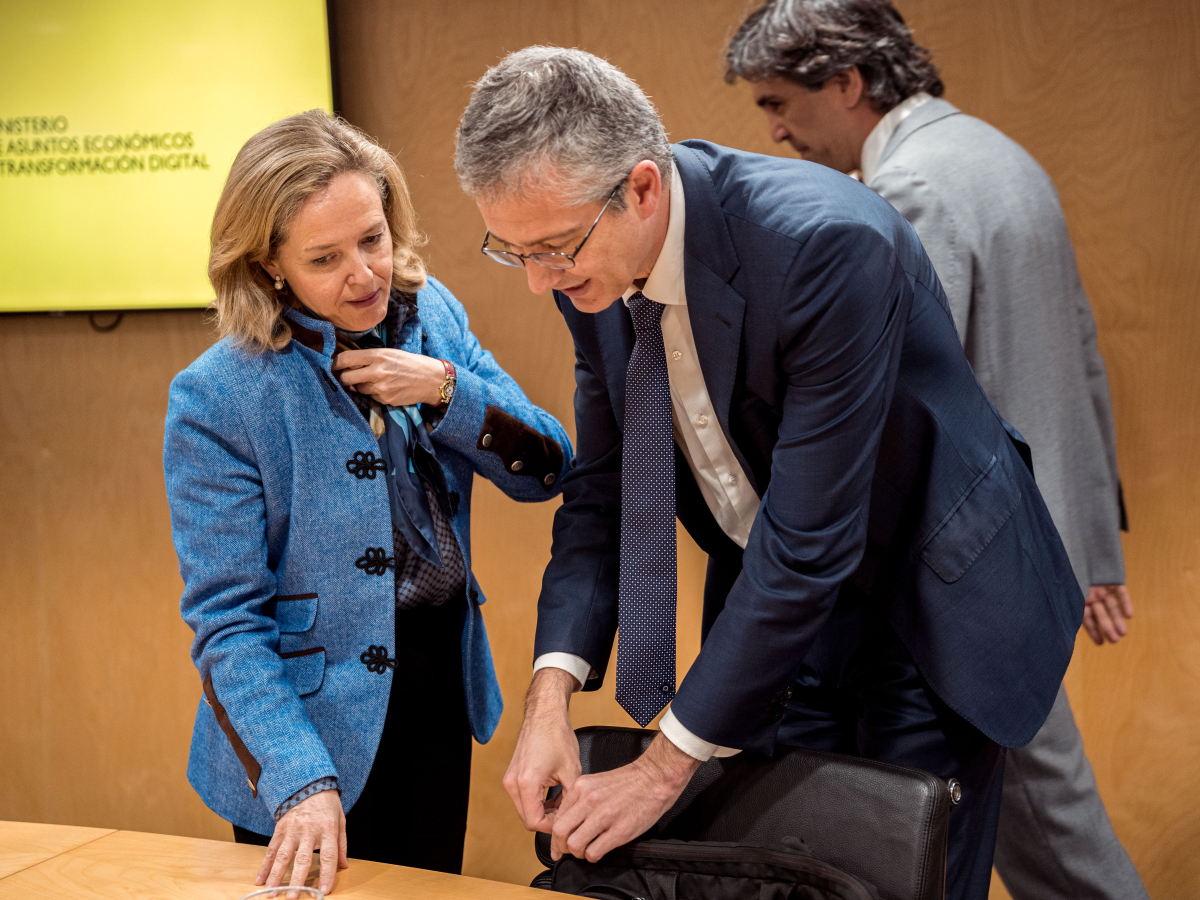
    EuropaPress | Nadia Calviño y Pablo Hernández de Cos
    EuropaPress | Nadia Calviño and Pablo Hernández de Cos -

    In an interview with DEMÓCRATA, Calviño herself sidestepped in February the question of directly commenting on Hernández de Cos as a possible replacement for Lagarde, but she assured that the "country has options to be present on the ECB’s Governing Council." "Spain has good candidates and has never held the presidency," she said at the time, after Luis de Guindos left as vice president of the institution. Asked directly about the now candidate, she referred to "excellent professionals who have carried out extraordinary work in the national and international sphere," without mentioning him explicitly.

    A position with direct impact on citizens’ economy

    Diplomatic sources point out that this appointment constitutes "probably" the European post "with the greatest power" that Spain has been able to hold so far. Hernández de Cos will lead monetary policy in the Eurozone, including interest rates, and will be responsible for making the decisions aimed at preserving the stability of the euro. All of this, they say, "with effects on the cost of mortgages and the price of credit for families."

    Therefore, the size of the position goes beyond institutional representation. The presidency of the ECB places its holder at the center of the decisions that shape the price of money, the financing of businesses and households, and the evolution of inflation in the countries that share the single currency. This is a responsibility with direct consequences for national economies and for the scope for action of the governments of the Eurozone.

    Pablo Hernández de Cos Fernando Sánchez - Europa Press
    Pablo Hernández de Cos Fernando Sánchez - Europa Press -

    The diplomats with the most experience in the Community institutions find a comparable precedent in the period of Javier Solana as Secretary General of NATO. A reference that makes it possible to gauge the leap that would be involved for Spain to access a position of this nature within the European institutional architecture.

    It should be remembered that, up to now, no Spaniard has chaired the European Commission or held the permanent presidency of the European Council. Only Manuel Marín served as interim president of the Community Executive between March and September 1999, after the resignation of the Santer Commission. The ECB presidency brings together three elements that no Spaniard had concentrated in a single responsibility until now: institutional leadership, powers over the euro, and the capacity for direct decision-making on the cost of money. A combination that would turn the eventual appointment of Hernández de Cos into one of the greatest milestones of the Spanish presence in European institutions.

    More key points, information and questions with FREN

    AI-GENERATED CONTENT

    What are the parliamentary procedures and formal steps remaining for Pablo Hernández de Cos to officially assume the presidency of the ECB?

    As of November 26, 2026, the political agreement to place Pablo Hernández de Cos at the head of the ECB still needs to be converted into a formal appointment. Remaining are the recommendation from the Council of the EU, consultations with the European Parliament and the ECB Governing Council, and the final decision of the European Council. The parliamentary procedure is consultative: it does not amount to an investiture nor does it grant the Eurochamber a legal veto.

    1. From political agreement to formal recommendation

    According to Demócrata, this November 26, European leaders have politically agreed to choose Hernández de Cos, after the Netherlands joined the consensus. The information placed the ambassadors' approval this afternoon, which would allow the official procedure to be channeled. That preparatory backing does not replace the legal act of appointment.

    The next formal step is for the Council of the European Union, where national ministers meet, to adopt a recommendation addressed to the European Council. It is important to distinguish them: the first proposes; the second, composed of heads of State or Government, appoints. The negotiated agreement among euro countries must be transferred to that recommendation.

    2. Hearing and opinion of the European Parliament

    The next announced parliamentary appointment is the hearing on December 7, according to information from Demócrata about the succession. Its purpose is to subject the candidate to scrutiny by the MEPs before the procedure concludes.

    The parliamentary phase includes the examination of the candidacy by the competent committee and the adoption of the Eurochamber's opinion. Therefore, the candidate's appearance and the subsequent institutional opinion must be distinguished: the hearing alone does not constitute the appointment.

    The consultation is mandatory but not binding. This means that Parliament must have the opportunity to express itself, although an unfavorable opinion would not legally block the designation. It is also not a vote of confidence equivalent to a Government investiture.

    3. Opinion of the ECB Governing Council

    The opinion of the ECB Governing Council, which brings together members of its Executive Board and governors of the national central banks of the euro area, is also pending. This consultation is different from the parliamentary one and can be processed in parallel.

    Its opinion is also not binding. Although press reports describe this phase as likely straightforward, it remains a step required by the procedure, not a dispensable consultation. This is explained by the Council of the EU.

    4. Final decision and start of the mandate

    Once both consultations are completed, it is up to the European Council, with decisive participation from the euro countries, to adopt the appointment by a reinforced qualified majority. With 21 participating States, at least 16 countries representing 65% of the population of the euro area are required, according to the explanation of the procedure.

    The formal approval is expected in December. Afterwards, the decision must be formalized and published, which will determine the effective start date. The succession is planned for February 2027, coinciding with the early departure of Christine Lagarde, announced for February 7; that date should not be confused with a legally fixed taking office.

    In short, Hernández de Cos has the announced political agreement but does not yet exercise the presidency. His term will be eight years, non-renewable, and will begin on the date established by the final decision.

    What are the powers and functions assigned by the European treaties to the president of the European Central Bank?

    The president of the European Central Bank (ECB) is a key figure in the institutional architecture of the Economic and Monetary Union. His powers are not defined in detail in a single isolated article but derive from the set of rules of the Treaties (especially the Treaty on the Functioning of the EU, TFEU) and the Statute of the European System of Central Banks (ESCB) and the ECB, annexed to the Treaties.

    Broadly speaking, the president's functions can be grouped into five blocks: leadership of the ECB and the ESCB, role in defining monetary policy, external representation, democratic accountability, and safeguarding the central bank's independence.

    1. Body of which he is a member and institutional position

    The Treaties configure the president as an ex officio member of the Executive Board of the ECB (along with the vice president and four other members). This Executive Board is the body responsible for the daily management of the ECB and for implementing monetary policy according to the guidelines and decisions of the Governing Council.

    Additionally, the ECB president is also a member of the European Council (with a voice but no vote in the political decisions of the heads of State or Government). This presence is intended to provide the ECB's technical perspective in high-level discussions on the Economic and Monetary Union.

    2. Competences in monetary policy

    The main objective of the ESCB, set out in the Treaties, is to maintain price stability in the euro area. The collective responsibility for defining monetary policy lies with the ECB Governing Council, composed of the Executive Board members and the governors of the national central banks of the euro area.

    Within this framework, the president has essential functions:

    • Presides over and directs the meetings of the Governing Council, where official interest rates, monetary policy guidelines, asset purchase programs, etc., are set. Although decisions are collegial, the president sets the agenda, leads the debate, and usually synthesizes the final position.
    • Participates in decision-making as a member of the Executive Board and Governing Council, with an individual vote. He does not have a “supervote,” but his political and technical weight is very high.
    • Drives and coordinates the execution of monetary policy, since the Executive Board, which he chairs, is responsible for applying the Governing Council's decisions day-to-day, including open market operations, liquidity provision, and operational management.
    3. External representation of the ECB and the euro

    The Treaties and the Statute assign the president a central function of external representation of the ECB and, by extension, of the euro's monetary policy:

    • He is the main spokesperson of the ECB before markets, governments, other EU institutions, and the media. His appearances and press conferences after monetary policy meetings are a key instrument for guiding expectations.
    • He represents the ECB in international forums (for example, G‑7, G‑20, Bank for International Settlements) when monetary and financial matters affecting the euro are discussed.
    • He participates in Eurogroup meetings when issues related to the monetary union are addressed, providing the central bank's perspective.
    4. Accountability to democratic institutions

    Although the ECB is independent, the Treaties require accountability mechanisms. The president is the central figure in this accountability:

    • He appears periodically before the European Parliament, particularly before the Committee on Economic and Monetary Affairs, to explain monetary policy decisions and answer MEPs' questions.
    • He presents the ECB's Annual Report to the European Parliament and the Council and participates in the debates generated by that report.
    • He maintains a structured dialogue with the Council and the Commission on economic and monetary developments, within the framework established by the Treaties.
    5. Guarantee of independence and proper functioning of the ECB

    The Treaties enshrine the independence of the ECB and national central banks from governments and institutions. The president, by his position, is the main practical guarantor of that independence:

    • He must reject instructions from national governments, EU institutions, or other actors, and ensure that the entire ESCB acts exclusively according to the price stability mandate.
    • He contributes to defining and enforcing the internal governance framework of the ECB, including codes of conduct, transparency rules, and risk management.
    • He coordinates the actions of national central banks within the ESCB to ensure coherent application of monetary policy decisions throughout the euro area.

    In sum, the European Treaties assign the ECB president a role of collegial but central leadership: he heads and coordinates the bank's decision-making bodies, represents the euro domestically and internationally, is accountable to democratic institutions, and protects the central bank's independence, all with the ultimate goal of safeguarding price stability and the proper functioning of the Economic and Monetary Union.

    Could you detail which specific articles of the Treaties and the ESCB Statute regulate these powers of the ECB president? How is the president of the European Central Bank appointed and dismissed, and what formal requirements do the Treaties impose? How does the role of the ECB president differ from that of the governors of the national central banks of the Eurosystem?

    What has been the professional and political career of Pablo Hernández de Cos before his appointment as president of the ECB?

    Pablo Hernández de Cos has developed a technical and institutional, non-partisan career focused on the Bank of Spain, the European Central Bank, and international financial supervisory bodies. Before the European agreement to place him at the head of the ECB, he had been governor of the Bank of Spain and director general of the Bank for International Settlements. It should be noted that the agreement announced on November 26, 2026, is still pending formal ratification, with incorporation planned for February 2027.

    Education and early years

    Born in Madrid on January 20, 1971, he holds a degree in Economics and Business Studies from CUNEF, a law degree from UNED, and a PhD in Economics from the Complutense University of Madrid. His specialization covers macroeconomics, fiscal and monetary policy, and financial stability, according to his institutional curriculum vitae.

    He joined the Bank of Spain in 1997 as an economist. During this first stage, he worked on monetary and financial studies, economic analysis, and forecasts. Between 1998 and 2004, he represented the institution in the ECB Public Finance Working Group; in 2000, he was also a national expert in its Directorate General for Economics.

    European experience and professional advancement

    Between 2004 and 2007, he worked in Frankfurt as an advisor to the ECB Executive Board. He then returned to the Bank of Spain to lead the Economic Policy Analysis Division, a responsibility he held until 2015. Simultaneously, he chaired the ECB Public Finance Working Group between 2010 and 2015.

    In 2015, he was appointed director general of Economics, Statistics, and Research at the Bank of Spain and acted as deputy governor in the ECB Governing Council. He also participated in European Union economic committees. These stages are recorded in his pre-governor career.

    His involvement in public policies included the Expert Committee for the Reform of the Spanish Tax System, which worked between 2013 and 2014. This was a technical collaboration, not a ministerial position.

    Governor and international supervisor

    He was governor of the Bank of Spain from June 2018 to June 2024. During those six years, he was part of the ECB Governing Council and General Council. He participated in monetary decisions during the pandemic, the subsequent recovery, and the inflation increase that led to interest rate hikes.

    Additionally, he chaired the Basel Banking Supervision Committee from January 2019 to June 2024. He was a member of the Financial Stability Board, alternate governor for Spain at the IMF, and vice president of the Spanish macroprudential authority, responsible for monitoring risks to the entire financial system.

    From the Bank for International Settlements to the ECB

    In November 2024, he was elected director general of the Bank for International Settlements, based in Basel. He assumed the position on July 1, 2025, for a five-year term, succeeding Agustín Carstens, according to the Bank of Spain announcement. He has also engaged in academic activities at IESE and collaborations with Bruegel and the Peterson Institute.

    What is his political background?

    There is no public record of party membership, elected positions, or responsibilities as minister or secretary of state. His institutional appointments and government support for his candidacy do not equate to a party career. Spain formalized his candidacy for the ECB on November 6, 2026; the subsequent European agreement culminates a central banking, not electoral, career, as contextualized by Demócrata.

    Play

    Test your knowledge with FREN!

    How much do you know about this topic? Answer the following 3 questions.

    Who has been confirmed as the next president of the European Central Bank?

    Question 1 of 3

    Which two countries agreed on the distribution of other key positions in the ECB to facilitate the appointment of Hernández de Cos?

    Question 2 of 3

    What position does Nadia Calviño currently hold, according to the news?

    Question 3 of 3