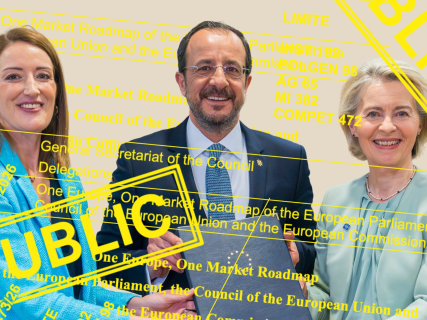

There was a plan. A prepared strategy. It ended up being signed in Cyprus. Now comes the moment of truth. During the informal summit of the Twenty-Seven in Nicosia, the three colegislators, Parliament, Council, and Commission, signed what is their particular wish list. “One Europe, One Market” is the title of the European Union's new white paper to strengthen economic resilience and the continent's global competitiveness.
The goal is set for the end of 2027. By then, Europeans expect to have completed the five axes of action planned. They address everything from regulatory simplification, market integration, trade expansion, energy decarbonization, and digital innovation. Under the Nicosia sun, and several gyros, Europeans have committed to making the necessary efforts to eliminate existing trade barriers while promoting an environment conducive to the development of artificial intelligence and green technologies.
A three-way commitment
“These measures will boost Europe’s economic growth, guarantee our digital transformation and strengthen industrial resilience,” stated the President of the European Commission, Ursula von der Leyen. For his part, the EU's Industry Commissioner, Stéphane Séjourné, believes that this roadmap is a call for “collective mobilization to unlock its full potential”. The Frenchman states that all “European institutions are stepping up with clear commitments and defined timelines, and a governance framework designed to monitor progress and maintain political momentum”.
Featured story
How the European competitiveness calendar stands after EUCO: key proposals, dates and deadlines
6 minutes
A strict legislative calendar for initiatives such as the digital euro and industrial regulation, in which Member States will play a fundamental role in accounting to the Community institutions. Far from wishful thinking, the Commission wanted to leave the summit with a roadmap under its arm that would be a unified commitment to ensure prosperity and strategic independence with a more efficient single market.
For Brussels, it is a priority to achieve a more integrated, fair, and strong market that serves as the central core of the European economy in the face of advancing technological progress and against powers like the United States and China. Therefore, the Commission proposes that foreign trade policy focus on the diversification of partnerships around the rest of the world, while reducing dependencies on strategic third countries. All of this must be accompanied by an industrial policy capable of boosting European productive and innovative capacity, respecting a “just transition” that creates quality jobs.
Brussels Plan
How to simplify the rules? The European Commission maintains its commitment to the so-called “omnibus packages”, despite President Ursula von der Leyen having confessed during a conference with business leaders from the Twenty-Seven that she was not satisfied with the results they were having. These plans highlight those aimed at the digital area, taxation, and energy products.
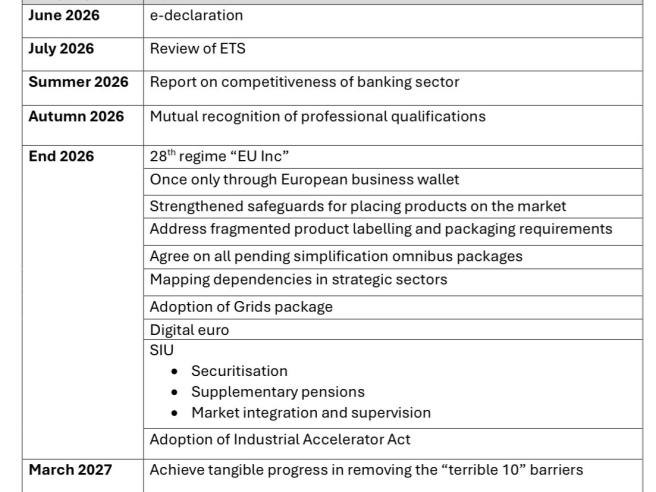
Now, to deepen the integration of the single market the recipe is another. With the aim of eliminating the “ten most harmful barriers” measures have been presented in recent months such as the “Regime 28”. This model aims to end twenty-seven legal systems for European start-ups through a harmonized jurisdiction, which will only have digital procedures and which introduces flexible financing options.
As well as the industrial accelerator law, in which the European Commission introduces a deep green turn in the way Europe manages its emissions while accelerating the decarbonization process. The new proposed approach is far from being solely environmental: it seeks to create a “business case” where the climate transition can serve as an engine of economic growth, with the aim of reassuring the sectors most reluctant to the community green strategy.

“A significant change in European economic doctrine”, they say at the Schuman roundabout about the new legislation, which imposes specific criteria in the continent’s public procurement processes. After discussing the scope and affected sectors for weeks, the necessary consensus was reached for the rule to prosper, limiting its content solely to electric vehicles, energy-intensive industries, and zero-emission technologies.
Norms such as the public procurement law and improvements in labor mobility and skills portability are also expected to help meet the proposed goals.
New silk roads
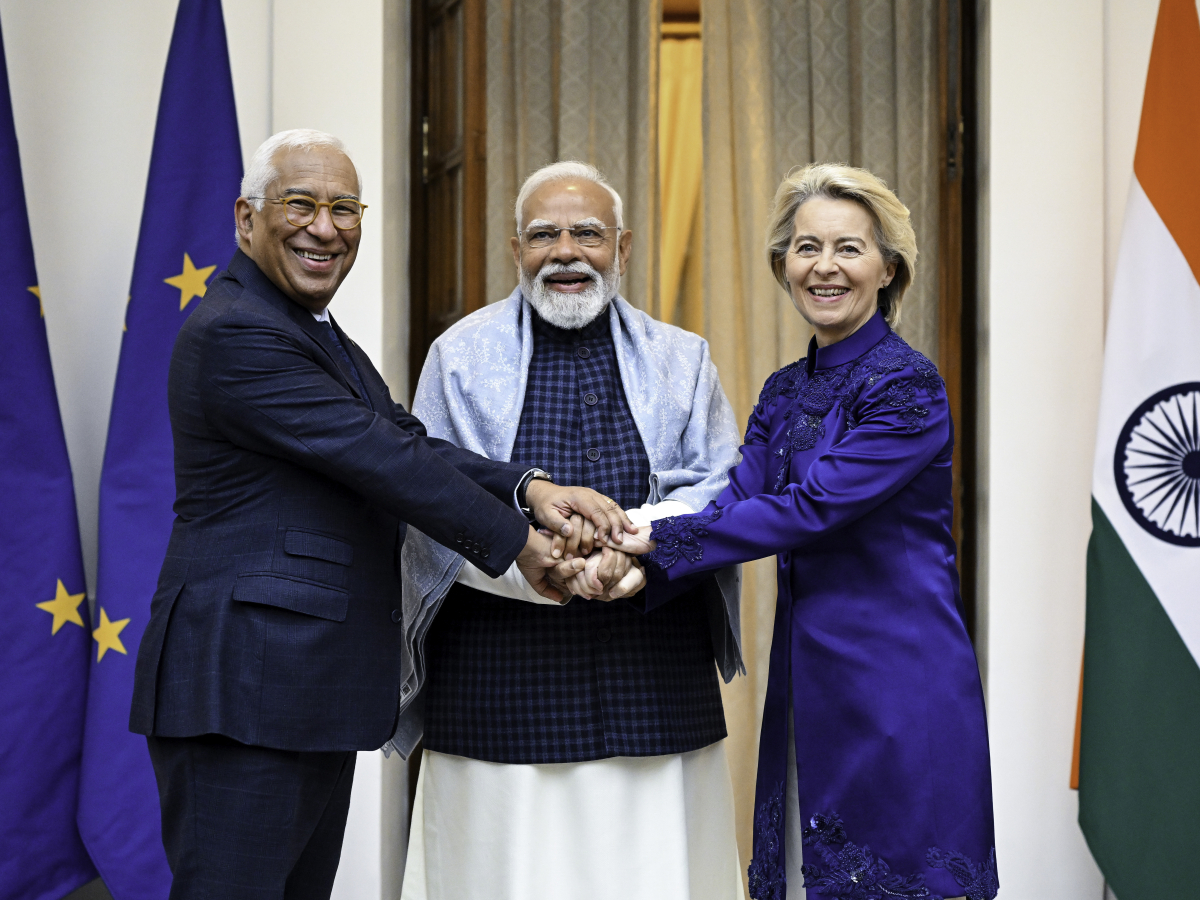
The Community executive plans to advance in trade agreements with key partners such as Mexico or, for example, the one reached with the Mercosur bloc, which will provisionally enter into force on May 1st, apart from Switzerland, India and Australia, as well as new ones with Thailand, Malaysia and the United Arab Emirates during the next two years. This chapter includes the review of the regulation of foreign direct investment.
Energy highways, the review of the carbon market (ETS) planned for June, as well as the promotion of new frameworks for renewable energies and energy efficiency by 2027 will be encouraged with the aim of safeguarding European decarbonization.
“More realistic trajectories, aid to companies beyond 2025 and work with all indicated parties,” Von der Leyen has hinted regarding the ETS review, on which she has proposed to reinforce its investment with 30 million euros. Italy directly asks to eliminate the ETS model, in operation since 2005. Germany maintains an ambiguous position, while Spain prepares to defend it firmly next July. This mechanism, which sets emission limits and allows the trading of pollution rights, has become one of the pillars of European climate policy.
The Commission had planned to reform it in the coming months to adjust its functioning, but the crisis has reopened a deeper debate about the European Green Deal as a whole. Some countries see the current context as an opportunity to slow down or redefine the energy transition.
The digital strategy
Together with this one, one of the most ambitious blocks is the one related to digital transformation. Among the objectives is the ratification of the digital euro before the end of the year, as well as accelerating the processing of the Digital Networks Act and the EU Cybersecurity Act. The second phases of technological laws such as the “Chips Act 2” and the “Quantum Act” come into play here, in addition to the creation of AI gigafactories from the end of 2026.
The formal proposal on these gigafactories is expected to be presented during the coming months, according to the European Commission's own calendar, the current second half of 2026. The idea is that the execution and the start of the projects will begin next autumn. These infrastructures are a key element within the industrial policy that seeks to strengthen Europe's capacity to produce, innovate and compete globally. They do not function in isolation, but are part of an ecosystem that includes other laws such as those for cloud development.
After this text received the approval of the ambassadors of the Twenty-seven, and was examined by the conference of presidents of the different parliamentary groups of the Eurochamber, the Commission has committed to promote the necessary regulations and for the co-legislators to agree to process them as absolute priorities to achieve quick agreements.
Once per quarter the three institutions will meet to review the progress achieved, identify obstacles and update the plan when necessary. It is not only about creating new laws, but about ensuring that Member States apply them rigorously so that they have a measurable impact on the economy.