The EU mobilizes its defense industry to shield the Arctic with drones, satellites, and underwater cables.

The community executive will promote an underwater connection with Japan and South Korea through Greenland and Canada, while tightening its coordination with NATO in the face of the growing influence of Russia and China.

P 070390 00 18 01 ORIGINAL 121272

P 070390 00 18 01 ORIGINAL 121272

Add DEMÓCRATA to Google

Ask FREN

Published

4 minutes

Most read

Elecciones 29N · Encuestas

La media de las encuestas

Media a 22 de noviembre de 2026 · 20 institutos

  • PP31,1 %
  • PSOE28,2 %
  • Vox18,6 %
  • Frente Amplio6,1 %
  • ERC2,6 %
01020304050ene 2024jul 2024ene 2025jul 2025ene 2026jul 2026

Media del último estudio de cada instituto en 30 días y su evolución semanal desde el 23J. Partidos con al menos un 2 %.

Todas las encuestas

Elecciones generales del 29 de noviembre · Demócrata

Brussels has completed this week its new look towards the Arctic, a strategic enclave for Europeans, even more so after the American president, Donald Trump, set his attention on it. It is an increasingly disputed space that the European Commission considers "vulnerable." In this new phase, the community executive will prioritize maritime and digital security, promoting investments in critical infrastructures, greater icebreaker capacity, and strengthening the European presence in the region.

One of the flagship measures is the commitment to the development of a submarine cable route that connects Europe with Japan and South Korea, crossing Greenland and Canada. The forecasts also include a direct submarine connection between Greenland and the European Union, through an investment of 107 million euros.

The president of the European Commission, Ursula von der Leyen, has stated that the Arctic region is currently immersed in a process of "change." "The new maritime routes and resources drive strategic competition," the German expressed this Tuesday. With the new strategy, she assures, the European Union "invests in greater security, resilient infrastructures, and economic opportunities."

The protection of submarine cables, a strategic priority

As part of the protection against possible sabotage, Brussels will also support the creation of a specific center to monitor, protect, and repair submarine cables in the North Atlantic and the Arctic. This will be complemented by investments in smart cable technologies, equipped with early warning systems to facilitate the detection of possible threats against these critical infrastructures.

However, European influence does not aim to be limited solely to the underwater framework. The new community orientation also includes strengthening surveillance and defense capabilities in a region whose access to trade routes and natural resources is becoming increasingly important. "To defend our interests, we are intensifying efforts in surveillance, infrastructures, military mobility, and defense technologies capable of withstanding extreme weather. Access to the maritime routes and natural resources of the Arctic is of strategic interest to the EU," details the head of community diplomacy, Kaja Kallas.
The European Union will also initiate additional purchases of satellites to deploy the polar option of the IRIS² constellation, with the aim of providing secure satellite connectivity for governmental use and ensuring coverage in remote areas where terrestrial or cable networks are nonexistent or have significant limitations.

The new strategy also establishes a community-wide authorization framework for satellite mobile service providers, thus simplifying the extension of communications in isolated areas. Through the Copernicus and Galileo programs, Brussels aims to improve maritime surveillance, emergency response, and environmental risk analysis, including permafrost degradation.

For its part, the Cloud and Artificial Intelligence Development Law will serve as a tool to attract computing capacity investments to European member states with Arctic territory.

European Commission
European Commission -

In this context, Greenland will have access to supercomputing resources optimized for artificial intelligence, technical support, and tools from the Destination Earth project, based on the development of digital twins of the Earth and oceans. These capabilities will allow for improved prediction of extreme climate phenomena and contribute to more sustainable management of natural resources.

Drones, autonomous systems, and new defense capabilities

The strategy also includes the launch of a pilot project for land observation for security and defense adapted to the particularities of the Arctic region, along with the expansion of the sensor network of the European Space Surveillance and Tracking (SST) system in the Arctic.

In parallel, Brussels seeks to promote the development of drone technologies and autonomous systems capable of operating in extreme temperature conditions and covering long distances. These tools will be intended, among other functions, for monitoring, rescue, and surveillance of strategic infrastructures.
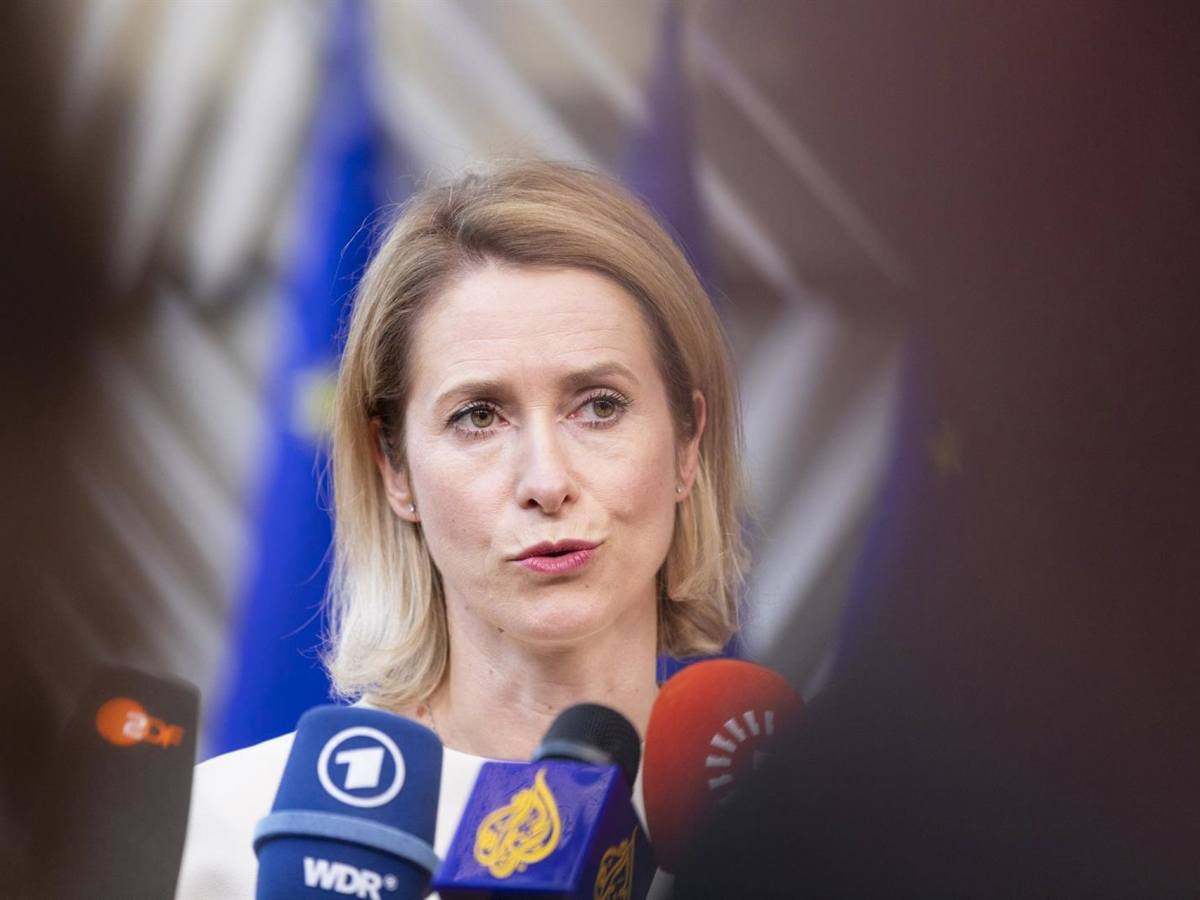
The High Representative of the European Union for Foreign Affairs, Kaja Kallas Nicolas Landemard / Zuma Press / Europa Press
The High Representative of the European Union for Foreign Affairs, Kaja Kallas Nicolas Landemard / Zuma Press / Europa Press -

The community executive also plans to resort to the European Defence Fund (EDF) to finance projects aimed at the development of aircraft prepared to operate in hostile environments, over-the-horizon sensors, and protection equipment adapted to extreme weather conditions. The consulted sources assure that European efforts will align with those of NATO through structured dialogues focused on four priority areas: military mobility, cybersecurity, resilience, and protection of marine and land infrastructures.

The EU places Arctic security at the center of its strategy

The geopolitical dimension constitutes, precisely, one of the main elements of the new community orientation. Brussels considers that the growing international competition for control of maritime routes, natural resources, and strategic infrastructures requires strengthening its capacity to act in the region.

In this sense, Kallas has argued that "Arctic security is Europe's security". "With the growing power and ambitions of Russia and China, the Arctic has become a battleground in the competition for global power," explains the High Representative of the Union for Foreign Affairs and Security Policy.

The head of European diplomacy also celebrates that the adopted text reflects "this new reality and places security at the center of its strategy," thus consolidating the community shift towards a greater European presence in a region increasingly decisive for the economic, technological, and defense interests of the Union.

More key points, information and questions with FREN

AI-GENERATED CONTENT

What is the legislative process to approve the new EU strategy on the Arctic and what parliamentary procedures remain pending?

The new EU strategy on the Arctic does not need to be approved through a legislative procedure: it is a joint communication from the European Commission and the High Representative, not a proposal for a regulation or directive. The initiative, presented on October 20, 2026, has already been adopted by its promoters. Therefore, there is no mandatory parliamentary vote pending to approve the strategy, although there may be debate, political oversight, and subsequent decisions to implement it.

What has been approved and why its nature matters

The initiative is called Joint Communication on Europe’s Northern Neighbourhood: A New Strategy for the Arctic. According to the Commission's presentation, it sets the European political orientation for the region. Its four priorities are security and resilience, climate change, prosperity, and Arctic people and communities, outlined on the strategy page.

The fundamental distinction is between adopting a strategy and approving the necessary rules to develop some of its measures. The communication sets priorities but does not itself constitute binding legislation. Therefore, it does not follow a mandatory sequence of amendments, readings, and negotiations between Parliament and Council to become law.

The role of each institution
  • Commission and High Representative: have completed the adoption and presentation of the communication. They do not need to submit another legislative proposal for the strategy to be politically formulated.
  • Council of the EU: may examine it and adopt conclusions supporting or guiding its priorities. Such political backing does not constitute a legislative approval necessary for the communication's existence.
  • European Parliament: may debate it, make recommendations, adopt a resolution, and oversee its implementation. It does not have to formally authorize this joint communication.
  • Consultative bodies: the European Economic and Social Committee and the Committee of the Regions may issue opinions but do not have veto power over the strategy.

This framework is reflected in the European Parliament's monitoring and its analysis documentation.

What parliamentary procedures are actually pending

There is no mandatory parliamentary approval pending for the strategy. Nor is there a specific date for a new debate or resolution on the communication presented today in the sources consulted. Possible parliamentary actions must therefore be distinguished from procedures already convened or legally required.

Moreover, the European Parliament already approved on November 26, 2025 a recommendation on diplomatic strategy and geopolitical cooperation in the Arctic, within procedure 2025/2116(INI). The vote obtained 510 votes in favor, 75 against, and 80 abstentions, according to the official parliamentary information. It was a prior political position, not the legislative approval of the new communication; its adopted text allows distinguishing both instruments.

What happens in Spain and with future measures

The strategy does not require ratification or approval by the Congress or the Senate. National monitoring may include political oversight but is not a condition for adopting the European communication.

What must be examined separately is each implementation measure: financing, infrastructure, security cooperation, or future regulatory proposals. Each will follow the applicable European or national procedure. In conclusion, the next step is development and political monitoring, not a pending vote to turn the strategy into law.

What are the powers and responsibilities of the President of the European Commission, Ursula von der Leyen, according to the Treaty on European Union?

The figure of the President of the European Commission, currently Ursula von der Leyen, is mainly regulated in Article 17 of the Treaty on European Union (TEU), along with some provisions of the Treaty on the Functioning of the EU (TFEU). From these, her powers and responsibilities within the Union's institutional system are defined.

1. General role according to Article 17 TEU

The TEU establishes that the European Commission promotes the general interest of the Union, ensures the application of the Treaties and measures adopted by the institutions, and exercises executive functions. Within this collegiate body, the President:

  • Sets the political guidelines of the Commission and determines the general political direction of its actions.
  • Organizes and directs the work of the Commission, ensuring coherence, effectiveness, and collegiality of decisions.
  • Performs representative functions of the Commission externally and within the EU institutional system, especially in the European Council and before the European Parliament.

2. Election and democratic legitimacy

The TEU also regulates her appointment, which conditions her political powers:

  • The European Council proposes a person for the Commission presidency, taking into account the results of the European Parliament elections.
  • The European Parliament elects the President by majority of its members.
  • If she does not obtain the majority, the European Council must propose another candidate.

From this procedure derives that the President of the Commission has a direct political legitimacy before the European Parliament, which strengthens her position within the College of Commissioners.

3. Internal direction of the Commission

The TEU grants the President a central role in the internal structure of the Commission:

  • Distributes portfolios and areas of responsibility among Commissioners.
  • Can reorganize functions during the mandate (reassign competencies or portfolios).
  • Proposes the appointment of Vice-Presidents and Executive Vice-President, who assume coordination over key areas.
  • Presides over College meetings, sets the agenda, and guides deliberation and adoption of collegial decisions.

Although decisions are adopted collegially, the President has decisive capacity to set legislative and political priorities, translating her political agenda into the Commission Work Programme.

4. Appointment and possible dismissal of Commissioners

According to the TEU, the President also plays a key role in the composition of the College:

  • Participates in the configuration of the team of Commissioners, based on proposals from Member States.
  • Can request the resignation of an individual Commissioner, with the College's approval, if she considers that the Commissioner no longer meets the necessary conditions or has engaged in conduct incompatible with the office.

This power to request resignations reinforces her authority over the team and helps ensure the ethical and political responsibility of the Commission as a whole.

5. Institutional and external representation

The TEU provides that the Commission presidency has a prominent role in representing the Union:

  • Represents the Commission at European Council meetings, participating in defining the EU's major political orientations.
  • Represents the Commission before the European Parliament, defends its political programme, presents the annual work programme, and participates in political control debates.
  • Externally, exercises a function of representing the Union in areas of its competence, together with the High Representative for Foreign Affairs and other institutional presidents.

6. Political responsibility before the European Parliament

The TEU establishes that the Commission, including its President, is collegially responsible before the European Parliament. This translates into:

  • The obligation of the President to account periodically to Parliament on the Commission's activities.
  • The possibility that Parliament adopts a motion of censure against the Commission as a whole, which would imply collective resignation, including the President.

This political responsibility limits and at the same time legitimizes the exercise of the President's powers, maintaining constant democratic control over the Commission's actions.

What legal requirements must providers meet to obtain authorization at the EU level to offer mobile satellite services in the EU?

To offer mobile satellite services in the EU, providers must pass the European selection and comply with authorization conditions, spectrum use, and deployment. The main detail is that the regime of Decision No. 626/2008/EC combines community selection with national authorizations: it does not by itself grant a single license to operate in all Member States. The proposal presented in 2026 aims to move towards Union-wide authorization but must be distinguished from the obligations of the existing regime.

1. Scope and admission to the European selection

Decision 626/2008/EC regulates systems using the bands 1,980–2,010 MHz for Earth-to-satellite communications, and 2,170–2,200 MHz for satellite-to-Earth. This procedure should not be extrapolated to any satellite service or frequency band.

Candidates must:

  • Be established in the European Union.
  • Identify the requested spectrum, not exceeding 15 MHz in each communication direction.
  • Commit to providing services over at least 60% of the aggregated land area of the Member States from the start of provision.
  • Commit to offering the service in all Member States, at most seven years after selection, covering at least 50% of the population and 60% of the territory of each State.
2. Technical capacity and deployment commitments

The selection requires demonstrating the technical and commercial viability of the project and its capacity to meet the planned milestones. Coverage, deployment speed, benefits for consumers and competition, and spectrum efficiency are evaluated.

The provider must fulfill commitments related to module integration, satellite launch and operation, frequency coordination, and service start. It is not enough to present an intention of coverage: the system must be executed according to the committed schedule and compliance maintained.

3. National authorizations and ongoing obligations

After selection, Member States must allow selected operators to use assigned frequencies, operate the system, and provide services, provided they meet applicable conditions. Rights and authorizations under the 2008 regime last 18 years from selection.

The operator must respect its commitments, submit annual reports to competent authorities, and comply with technical and spectrum coordination conditions. The European Electronic Communications Code, established by Directive (EU) 2018/1972, provides the horizontal framework: general authorization to provide networks or services and individual spectrum usage rights when applicable. Both levels are distinct.

4. Terrestrial infrastructure and other requirements

If complementary terrestrial components are used, their authorization is linked to the selected operator and satellite system; they do not constitute an autonomous authorization for a terrestrial network. The Court of Justice has confirmed the need for the applicant to be a selected and authorized operator to use the spectrum.

Additionally, depending on the service and country, obligations on interference, radio equipment and conformity, network security, data protection, consumers, emergency communications, and installations must be met. These conditions must respect the limits and proportionality principles of European law.

5. What changes with the 2026 proposal

The 2026 regulation proposal suggests selection and authorization at Union scale for the 2 GHz band. Its presentation does not automatically make its provisions enforceable: the transition depends on the approved text, its entry into force, and transitional provisions. For a provider, the practical conclusion is always to distinguish European selection, service authorization, and spectrum rights.

Play

Test your knowledge with FREN!

How much do you know about this topic? Answer the following 3 questions.

Which region is considered strategic and vulnerable according to the new European Union strategy presented this week?

Question 1 of 3

What type of infrastructures does the EU intend to strengthen in the Arctic to improve security and connectivity?

Question 2 of 3

Which EU program is mentioned to improve maritime surveillance and emergency response in the Arctic?

Question 3 of 3