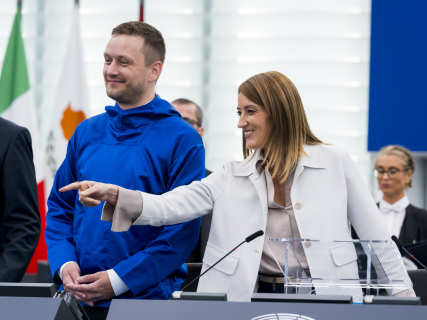

That the European Union wants to strengthen its presence in the Arctic is no surprise. However, the key to the community strategy now lies in a very specific geographical point: Greenland. The North American threats to its territorial integrity and the withdrawal of defensive forces driven by President Donald Trump have pushed Brussels to double down on its diplomatic commitment to the Danish island ahead of the upcoming political season.
In fact, the President of the European Commission, Ursula von der Leyen, has not wanted to wait for the starting gun of European political activity, marked by the known State of the Union Address. The leader will travel to the territory next week to hold several meetings, including with the Prime Minister of Denmark, Mette Frederiksen, and with the head of the Government of the Faroe Islands. A visit that comes to confirm, according to community sources, "the commitment of Europe to the Arctic, to its security and cooperation", areas that position the region as "a key priority for the European Union". From the meeting, the leaders will emerge with a joint declaration between the Danish island and Brussels, at a time when the political and strategic future of Greenland has gained increasing relevance for the Union.

Von der Leyen's visit comes, moreover, after the deployment of a mission from the Committee on Constitutional Affairs of the European Parliament to the island territory. The objective of the MEPs was to firsthand assess the needs of the Greenlanders and understand their priorities regarding the island's constitutional future, its relationship with Denmark and the European Union, and its strategic role in the Arctic.
"If the European Union really wants to consolidate its geopolitical ambition and its politically relevant stature in globalization, it is essential that it keeps in mind what is at stake in Greenland," points out the socialist MEP Juan Fernando López Aguilar, in conversation with Demócrata upon his return from the mission.
The European link, between financing and sovereignty
The trip of the MEPs also had a second reading: to take the pulse of Greenland regarding its relationship with the European Union. A relationship that, despite historical, economic, and political ties, is marked by a decision made more than four decades ago. "They do not like that the European Union unilaterally decides that Greenland is European Union, because they decided, for essentially economic reasons, to detach themselves from the common fisheries policy," exemplifies López Aguilar.
For the Canary Islands leader, one of the main assets that Brussels has in its diplomatic offensive is precisely European funding. As he acknowledges, Greenland "greatly appreciates the financial assistance from the European Union" and adds that "it is up to them, according to their self-government, to manage the increase of that assistance." Precisely, the island will play an important role in the composition of the next Multiannual Financial Framework (MFF), the Union's budget for the next seven years. López Aguilar indicates that, in the drafts currently being negotiated in the European Council, "Greenland more than doubles the financial allocation". "Of course, they greatly appreciate the solidarity expressed by all European institutions," indicates the MEP.
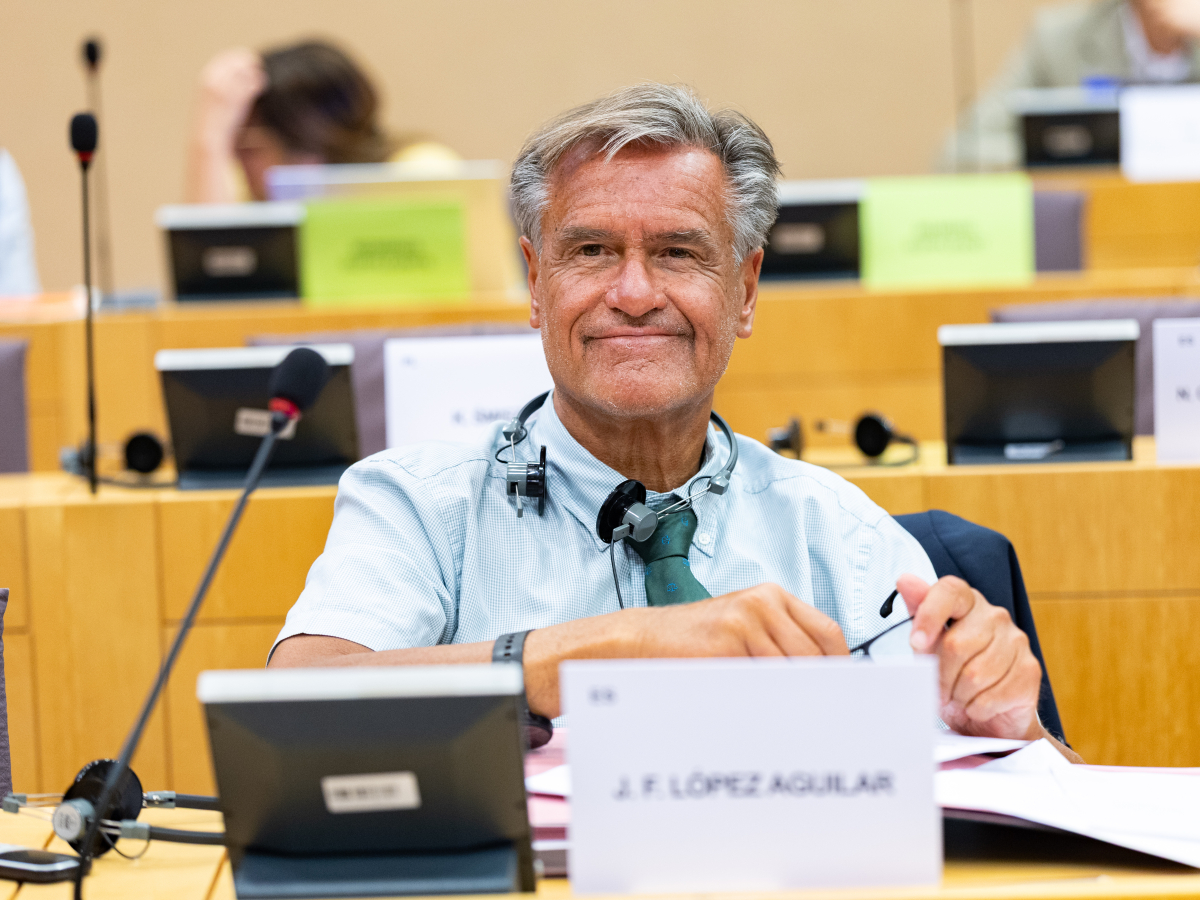
This increase in funding is part of a much broader discussion about the next European budget. The Socialist Group has been denouncing the new budgetary paradigm and the disappearance of the regional tier in the management of certain funds. In this context, López Aguilar emphasizes that, "as far as the funding of overseas territories is concerned, there is a significant increase that is fundamentally destined for Greenland."
It is, in practice, a kind of "financial diplomacy" with which Brussels seeks to maintain its capacity for influence in a territory that is no longer part of full European integration. The European Union does not have direct competences over Greenland precisely because the island decided to leave the European Economic Community in 1984, but it maintains funding, cooperation, and political support instruments that allow preserving and reinforcing the link. "If we want to remain present in Greenland as the European Union, we have to seduce and work towards a continuity of this objective; not to encourage its rupture or modification," advises López Aguilar.
Fishing, the red line of Nuuk
The reason that explains Greenland's willingness to maintain its distance from the European project has, in addition, an eminently economic component. Fishing continues to be the central element of the island's relationship with Brussels, to the point of conditioning a good part of its position on European integration. "For Greenland, the decisive policy is fishing, it is what people live on. Artisanal fishing and industrial fishing," explains the MEP.
The fundamental point is that Greenland was part of European integration since Denmark's entry in 1973, but in 1984 it held a referendum to modify its status and become a territory of the realm. As López Aguilar explains, behind that decision there was an essentially economic reason: the desire to detach from the Common Fisheries Policy (CFP). "They decided, for essentially economic reasons, to detach from the common fisheries policy. It imposes quantitative and qualitative restrictions on fishing modalities," he summarizes.
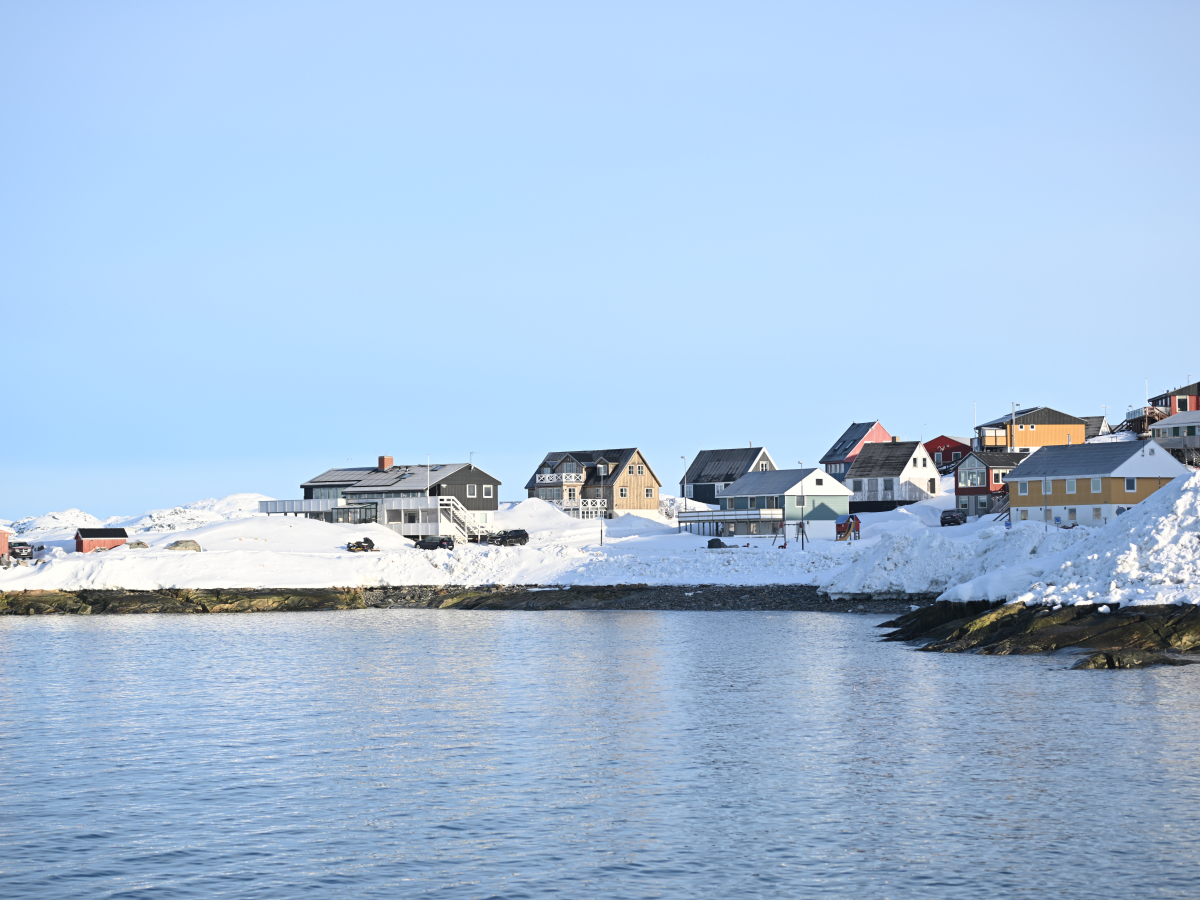
The socialist insists that, despite the process of economic diversification experienced in recent decades, especially with the growth of tourism, the MEPs have been able to ascertain during the mission on the ground that fishing continues to be one of the main sources of income and a structural element of the Greenlandic economy.
"Fishing, both traditional, even with harpoons from kayaks to whales, and industrial fishing, is fundamental to their economy," he points out. And he adds, with a smile, that "there is no one in Greenland who does not have a little boat". The fishing issue allows us to understand, therefore, why any European strategy for approaching Greenland must take into account the economic and political particularities of the island. The strengthening of European presence in the Arctic cannot be approached solely from a security or geopolitical perspective, but must also incorporate the economic priorities and the Greenlandic model of self-government.
A geopolitical issue that transcends Greenland
The conclusions of the parliamentary mission will materialize in a written report, but the political diagnosis conveyed by the MEPs already points to a central idea: for Greenlanders, it is unacceptable that the European Union takes for granted that their territory is part of the European project, despite the deep existing ties and the security umbrella they benefit from.
For this reason, López Aguilar believes that any strategy aimed at strengthening the bond must avoid ignoring precisely the reason why Greenland decided to abandon full integration. "We have to seduce; not incentivize their breakup," he summarizes.
The phrase takes on special relevance in the current geopolitical context. Greenland has become a strategic piece of the Arctic, a region where European, North American, and other powers' interests converge and where the thaw is opening new economic, commercial, and energy possibilities while increasing its strategic value. That is why Von der Leyen's upcoming trip, beyond the North American threats, takes on special relevance. The previous visit of the Commission president took place in 2024 and served as a precedent for the opening of a European Union office in Nuuk, the Greenlandic capital, a year later.
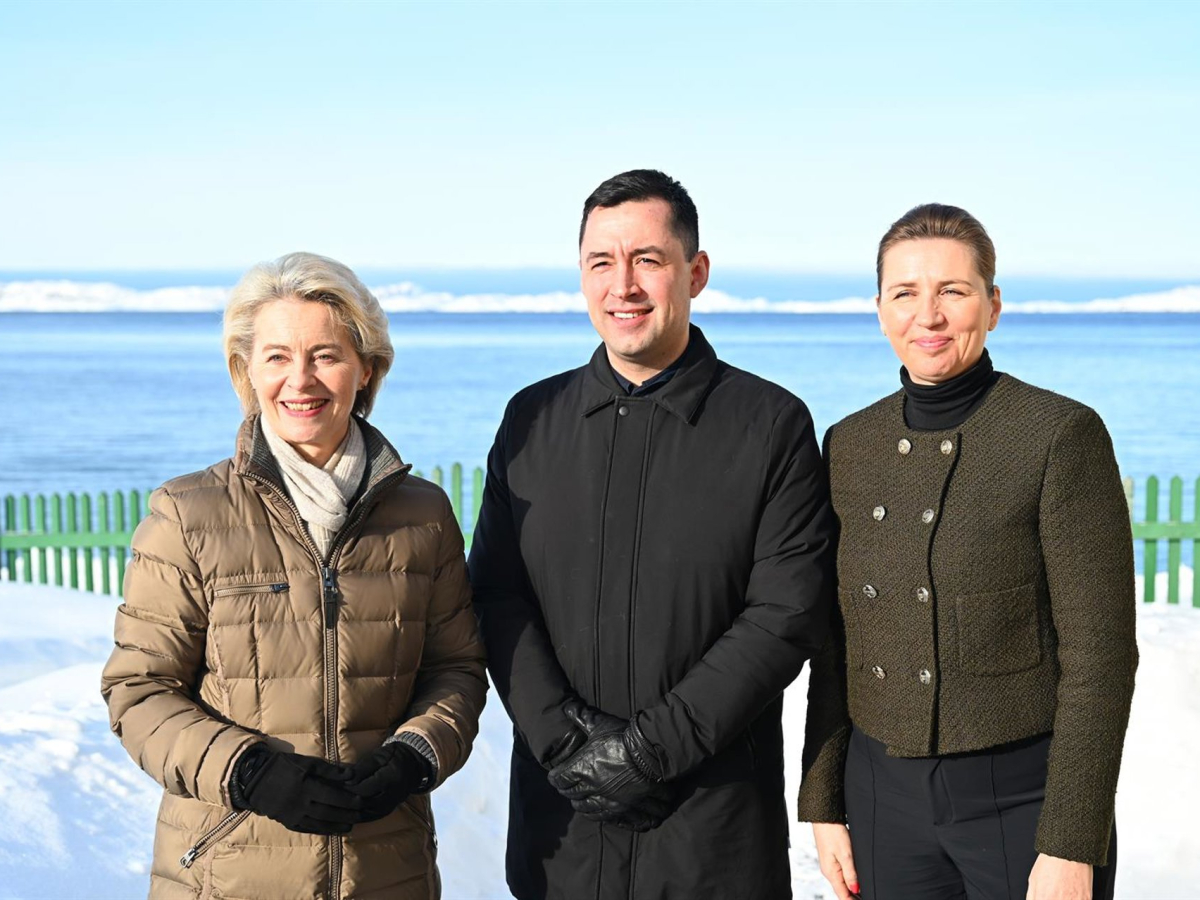
Since then, the community leader has been reminding of the strong collaboration existing between Europeans and Greenlanders, while insisting on a fundamental political premise: the future of Greenland is for its own citizens to decide. Now, Brussels seeks to turn that political statement into a strategy for greater presence on the ground. Funding, cooperation, security, and political dialogue are presented as the main tools to consolidate a relationship that the European Union considers increasingly strategic.
The challenge for Brussels will be, precisely, to maintain that balance between geopolitical ambition and respect for Greenlandic autonomy. The Union wants to be in the Arctic and considers Greenland an essential piece to do so, but its capacity for influence will depend on whether it can offer sufficient incentives to maintain the link without these being perceived as pressure to recover a European integration that Nuuk decided to abandon more than forty years ago.
In that scenario, Von der Leyen's visit represents something more than an institutional trip. It is a new signal that the Arctic has ceased to occupy a peripheral place in the community agenda and that Greenland is already at the center of the European strategy to reinforce its geopolitical presence in one of the regions that is most rapidly transforming the international balance.