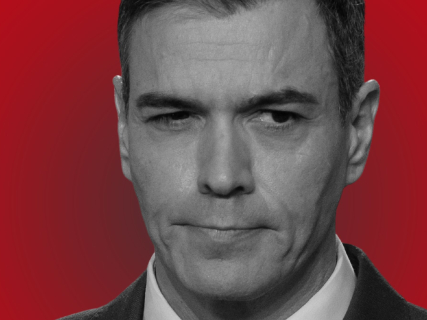

Scarcely minutes after the American president, Donald Trump, threatened Spain with commercial reprimands for its refusal to make use of the NATO base in Rota in the open conflict in the Middle East, reactions across the European continent began to occur. From the caution of the German chancellor, Friedrich Merz, to the shielding of the European Commission.
Brussels sets the pace and activates the discourse of unity
In this scenario, it has been Brussels who has set the script for the rest of the allies. The mantra that the commercial sources of the Community Executive repeated every time they were questioned involved explaining their competencies on the matter, appealing to protect the relationship between both powers. “It is more important than ever and clearly in the interest of both parties,” one of the officials expressed.
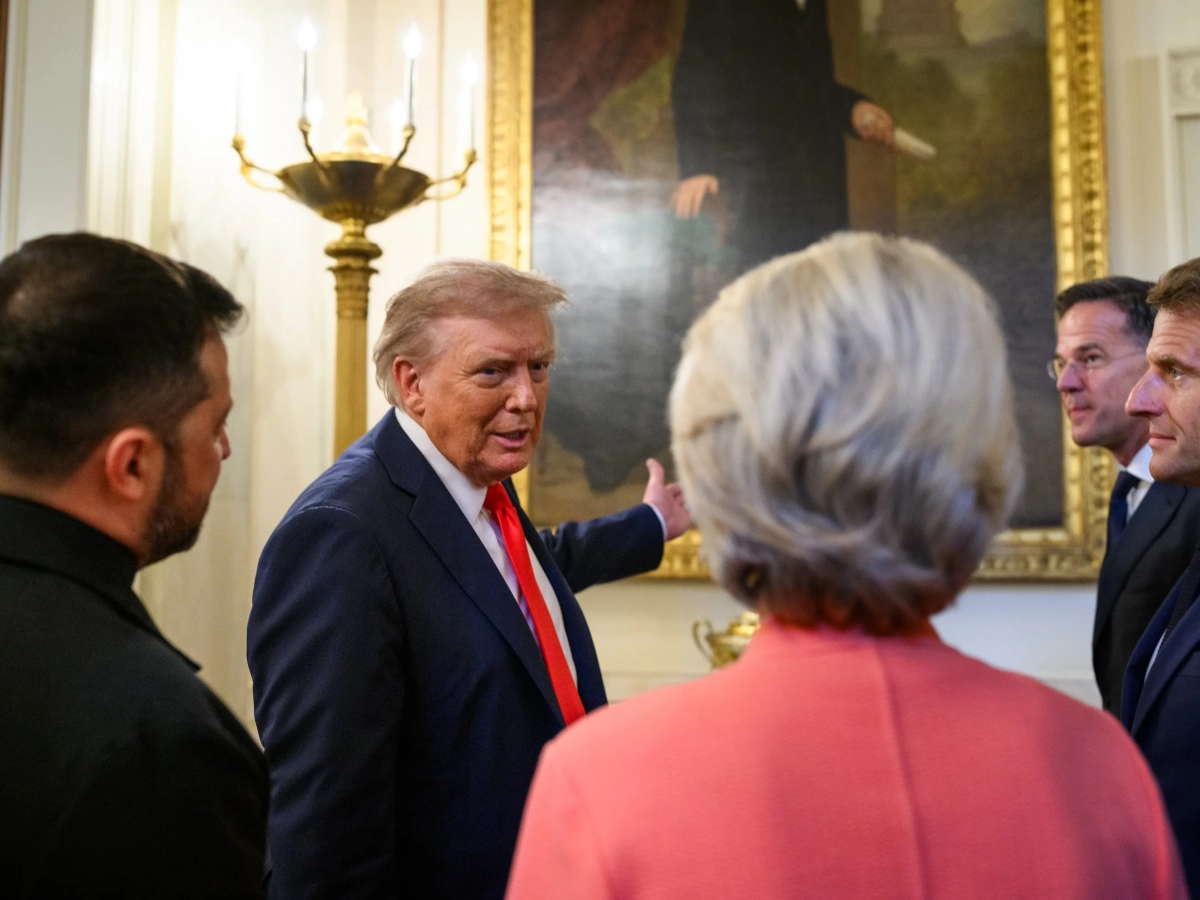
The Commission remains firm in its hope that Washington fully complies with the commitments acquired after the signing of the agreement in Turnberry (Scotland), by which the Union accepted the 15% tariffs against European products in exchange for a zero tariff for the United States. Of course, the same sources warn of their full “solidarity with all Member States”, even if it is necessary “to act”.
Featured story
How would the EU respond to a trade war between Spain and the US: "We are prepared to act"
4 minutes
In the words of the European industry chief, Vice-President Stéphane Séjourné, a commercial threat to one of the Twenty-Seven de facto constitutes a threat against the entire European Union. The President of the Commission, Ursula von der Leyen, would have conveyed the same to the leader of the Spanish Executive, Pedro Sánchez, in a phone call this Wednesday.
The Spaniard says he is very grateful for the solidarity also shown by the president of the European Council, António Costa. “The European Union will ensure that the interests of its Member States are fully protected,” the Portuguese said.
Support in Paris, prudence in Berlin
Following the same line, the president of France, Emmanuel Macron, has also contacted Sánchez. From the Élysée Palace they wanted to convey to their European partners their solidarity “in response to the recent threats of economic coercion launched” by the American. Despite respecting the decision of the Spanish, in Paris they do remain skeptical about the possibility that this measure violates the agreements reached with the Americans within the Atlantic Alliance.
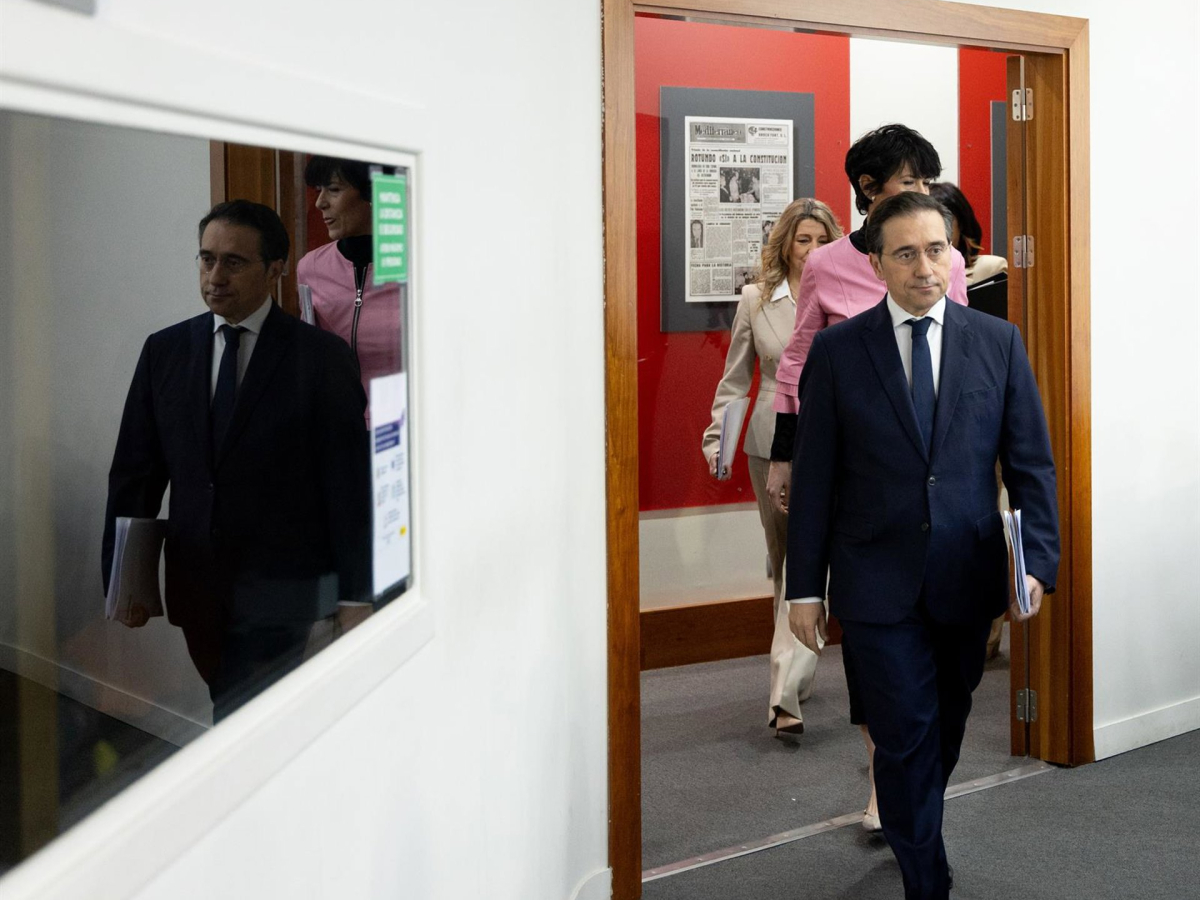
Despite the practically generalized support of community partners, in La Moncloa there is certain resentment regarding the strategy followed by the Bundeskanzleramt. Sánchez's people confess certain bewilderment. It has been the Minister of Foreign Affairs himself, José Manuel Albares, who has verbalized this disappointment in a telephone conversation held with his German counterpart. During the conversation he would have expressed his “surprise” at the fact that Chancellor Friedrich Merz did not defend Spain in the very Oval Office, where he personally heard Trump's words.
José Manuel Albares:“I don't imagine Chancellor Merkel or Chancellor Scholz with statements of that type. It was another Europeanist spirit”
According to the minister, “when one shares with a country a currency, a common trade policy, a common market, then one expects the same solidarity that Spain” has had with Denmark due to the “desires” of the United States to take over Greenland. The Government considers that this would not have happened under the mandate of Angela Merkel or Olaf Scholz. “I don't imagine statements of this type,” Albares has criticized.
The truth is that, after his face-to-face with the Republican, Merz assured that he had made it “very clear” that an isolated agreement cannot be signed “with Germany or an agreement with all of Europe, but without Spain”. “Here we are all together in the same boat, and I made that very clear to him during lunch,” he concluded.
The trade agreement, in parliamentary limbo
“The last trade negotiation took place last summer. We may like it more or less, but you cannot get out of that picture at this moment,” added the community vice-president, Teresa Ribera, reminding Trump of the rules of the game on the European trade board. Beyond that, as of today, the tariff agreement between both powers remains in a “parliamentary limbo” after the Parliament froze its ratification following a recent ruling by the American Supreme Court.
The socialist family in the European Parliament has requested to definitively discard this agreement after the escalation of discursive tension. Something that other parliamentary sources do not share, who have also rejected the possibility of holding a debate on the US–Spain issue during the next plenary session to preserve dialogue.
The truth is that, for the moment, the legal text is frozen in the Committee on Internal Trade due to the need for more clarity, stability, and legal certainty “before adopting further measures”. The legal services are evaluating the commitments of the United States after the North American Supreme Court questioned the legality of the tariffs imposed on Europe. The priority, parliamentary sources insist, is to avoid hasty decisions that could aggravate commercial tension. For his part, Trump has threatened a stronger reaction to those countries that “play with the ruling”.
Before the latest threat, on the contrary, in the Spanish Government they were indeed favorable to accelerating the measure, whose final approval was scheduled for next week. Now, in the European People's Party they look to the plenary session of March twenty-fifth as a viable date to give way to the legal text.
Business concern for imbalances in the balance
The Spanish business sector is concerned about the effects this situation may have on its productive fabric. In a statement, CEOE, Cepyme and ATA have underlined their confidence that commercial relations “are not affected in any way”. Furthermore, they advise the Sánchez Executive that, given the increase in global instability, it aligns with the European Union “when setting a position and adopting decisions of an international nature”.
Ribera shares the diagnosis of national entrepreneurs. In her opinion, the instability or tension generated “with this way of relating to third parties” is “deeply disturbing” for the economy, with consequences “immediate in the whole of everyone's economic activity”.
In data
Madrid-Washington Relationship
The United States continues to be a relevant commercial partner for Spain, although bilateral exchange reflects a growing imbalance in the balance.
In 2025, Spain exported goods and services to the US worth 16,716 million euros, sales that represent 4.3% of total Spanish exports, which last year reached 387,091 million euros.
In the imports chapter, the trend was different. Spain bought products from the United States worth 30,174.7 million euros, 7% more than in 2024. These acquisitions represent 6.8% of total Spanish imports, which in 2025 amounted to 444,164.4 million euros.
The European Union has an anti-coercion mechanism to respond to this type of threats, but community sources reason that they will not take further steps until the nature of these is specified. It is not a situation that catches by surprise in the offices of Brussels. On previous occasions, Donald Trump has already put the country in the commercial spotlight without his words materializing.