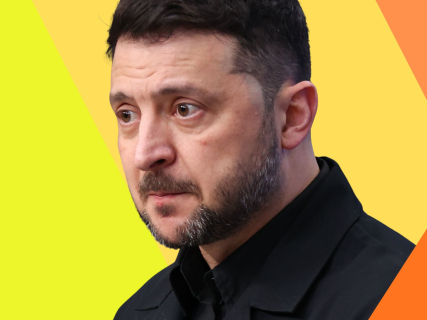
Zelensky seeks Trump's permission to turn Ukraine into a Patriot missile factory

The Ukrainian president claims from the United States the license to manufacture Patriot systems and their interceptor missiles, urges Europe to support the project to accelerate air defense production, and defends that Kyiv's industrial experience can become a pillar of NATO's rearmament against the Russian threat.

6 minutes

ILUSTRACIONES (1200 x 675 px) (1200 x 675 px) (1)

ILUSTRACIONES (1200 x 675 px) (1200 x 675 px) (1)

Add DEMÓCRATA to Google

Ask FREN

Published

Last updated

6 minutes

Most read

NATO sought in its Ankara meeting references with which to increase its arms production. The objective was to translate the multi-billion dollar efforts announced by the allies into real military capabilities that would reduce the strategic dependencies of the bloc and respond more quickly to security challenges. It is there that the Ukrainian president, Volodymyr Zelensky, believes that his country can contribute an essential part of the solution that Europe has been seeking for months.

As diplomatic sources from the Alliance acknowledged days before the summit, the development of the Ukrainian military industry has become one of the great technological laboratories of modern warfare. After more than four years of full-scale invasion by Russia, Kyiv has managed to multiply its drone production capacity, adapt its industrial processes to a high-intensity conflict, and accelerate battlefield innovation.

"The productive capacity is having direct consequences on the ground. Now we need to analyze how to coordinate what is being done," explained a source present at the preparatory meetings for the encounter. That was precisely the idea that Zelensky pursued this Tuesday during his intervention at the NATO Industry Forum, which was attended by political and business representatives from, as the organizers summarized, "from Arkansas to Ankara".

The drone revolution changes warfare

During his speech, Zelensky argued that Ukraine no longer only needs military aid, but is also in a position to offer knowledge, experience, and industrial capacity to its allies. "Drones and remote combat technology represent a revolutionary change in warfare technology," stated the Ukrainian leader, before quantifying the impact these systems are having on the conflict.

According to his explanation, the Ukrainian Armed Forces are currently capable of neutralizing up to thirty thousand Russian soldiers each month through drone operations. A statement he immediately qualified to avoid triumphalist interpretations. "We are not proud of it. We say it to show what the modern world is like," he pointed out.

The leader has defended that the experience acquired by Ukraine during these years constitutes a strategic knowledge from which all of Europe can benefit, especially at a time when NATO intends to accelerate the production of new military capabilities and reduce arms development times.

However, if Zelensky arrived with a priority message in the Turkish capital, it was to build a solid European defense against ballistic missiles, a challenge he described as "of global importance." In the opinion of the Ukrainian president, the European Union urgently needs to develop its own capacity to produce anti-missile systems and the interceptors necessary to ensure the protection of the continent. It is precisely in this area where the allies once again look to the United States.
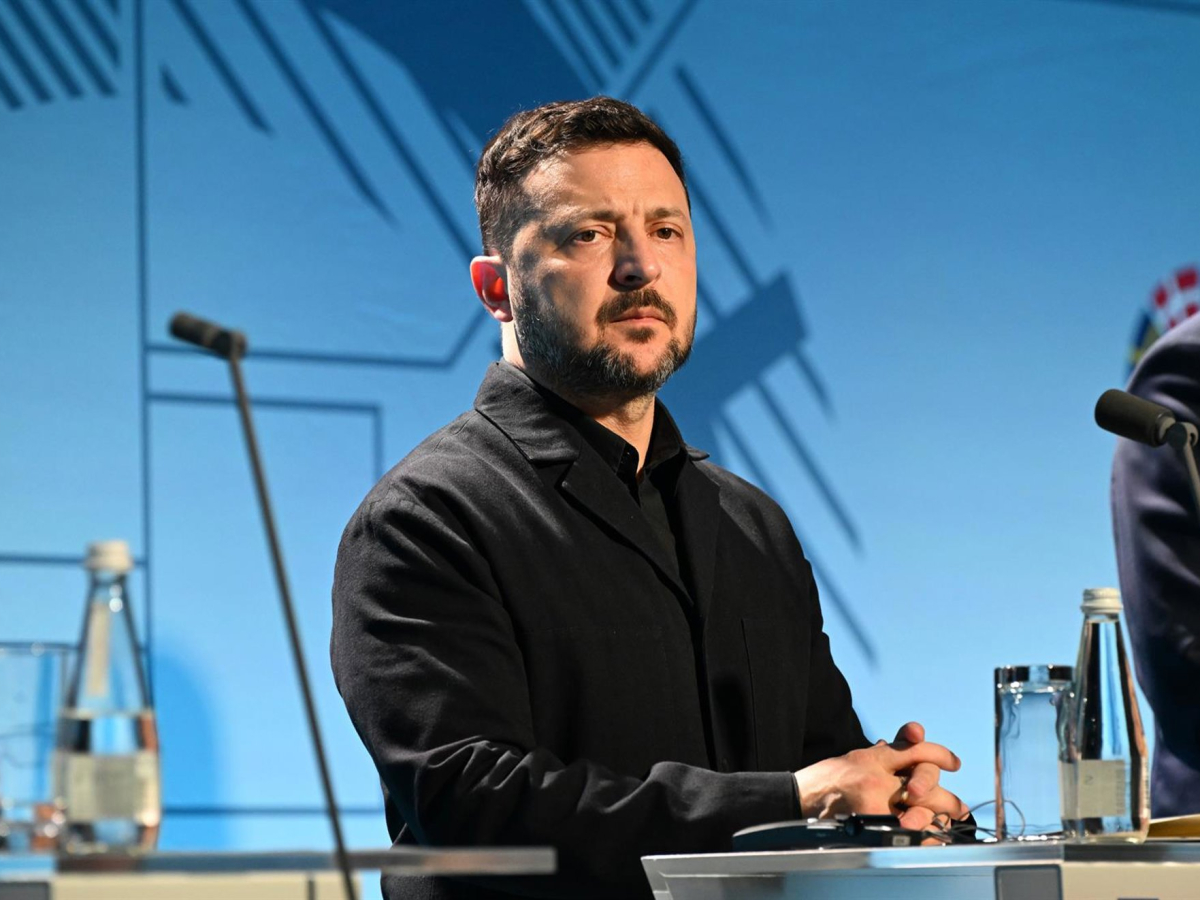
The President of Ukraine, Volodymyr Zelensky. Saara Peltola/Lehtikuva/dpa
The President of Ukraine, Volodymyr Zelensky. Saara Peltola/Lehtikuva/dpa -

Currently, Washington maintains absolute leadership in the manufacturing of the Patriot system, considered by Kyiv as one of the most effective air defense systems in the world. However, Zelensky warned that US production capacity is insufficient to meet growing international demand.

"Current production is not enough to meet the demand for protection against ballistic missiles," he stated.

Therefore, Ukraine has requested licenses from the United States to locally manufacture Patriot components and systems, a request for which it also sought political support from European partners. "We ask our European friends to support our efforts to make this happen," he expressed. Precisely, this issue could be addressed again during the bilateral meeting that Zelensky will hold this Wednesday with US President Donald Trump, a meeting that generates enormous expectation among the delegations present in Ankara.

Europe cannot wait until 2030

Beyond cooperation with the United States, Zelensky has sent a message especially aimed at European industry. The Ukrainian president urged allied countries to develop their own missile defense systems and accelerate production timelines to the maximum, avoiding exclusive dependence on external suppliers. What Kyiv proposes is the implementation of affordable, scalable, and mass-produced systems, capable of responding to current threats without waiting for the development of programs that will not be operational for several years. "We cannot wait until 2030 or beyond," he warned.

"That protection is needed today, not in a few years," insists Zelensky, for whom industrial pace has become an element as decisive as the weaponry itself, as the speed at which defensive systems are produced directly conditions the capacity to resist Russian attacks.
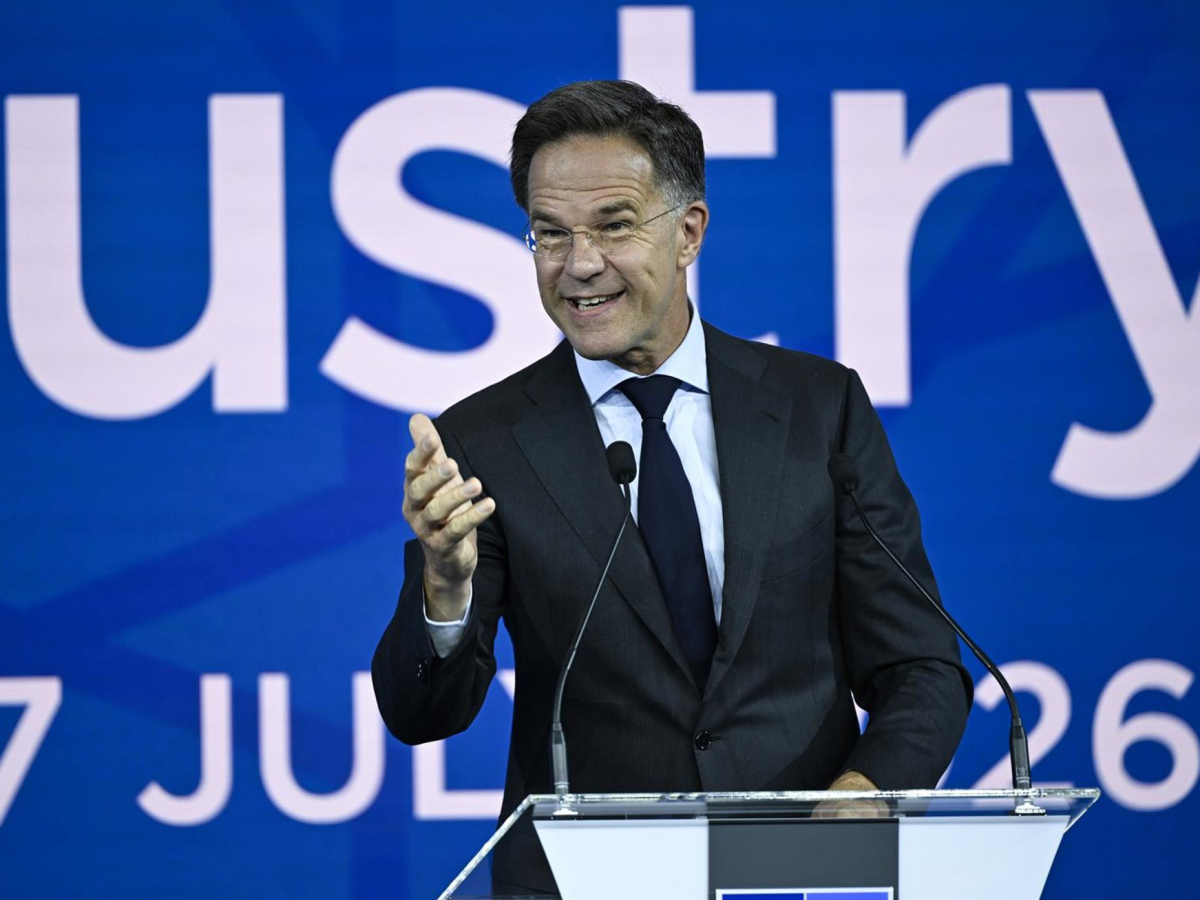
The Secretary General of NATO, Mark Rutte Emmi Korhonen/Lehtikuva/dpa
The Secretary General of NATO, Mark Rutte Emmi Korhonen/Lehtikuva/dpa -

The Ukrainian leader also took advantage of the forum to make a direct request to the allies. "Please, help us get more air defense missiles. This is our top priority right now," he stated before the political and industrial leaders present. As he explained, Ukraine already has sufficient capacity to produce a large part of the rest of the military equipment it needs, but continues to depend on its partners when it comes to strengthening air defense. "We are capable of doing practically everything else ourselves, but when it comes to air defense, we need the determination of our partners," he assured.

For his part, the Secretary General of NATO, Mark Rutte, reiterated the Alliance's commitment to strengthening the protection of Ukrainian territory. "We must ensure that Ukraine's cities and critical infrastructure are protected," he affirmed.

Furthermore, he confirmed that the acquisition of new PAC-2 and PAC-3 missiles manufactured in the United States continues to advance, an issue that will be discussed again during the planned talks with Donald Trump this Wednesday. These announcements confirm how air defense has become one of the main issues on the allied agenda following the increase in Russian attacks with long-range ballistic missiles and drones recorded in recent months.

Von der Leyen claims European industrial return

Among the attendees at the forum was also the President of the European Commission, Ursula von der Leyen, who has claimed the need to massively increase European investment in defense. During her speech, she recalled the main initiatives promoted by Brussels, including the ReArm Europe program, which will mobilize up to 800 billion euros by 2030, as well as the SAFE instrument, endowed with more than 100 billion euros for joint acquisitions of military equipment.

Von der Leyen insisted that these investments must also translate into a strengthening of the European industrial fabric. "With this taxpayer money we want a return on investment. We want good jobs in Europe and we want research and development in Europe," she stated. Her speech reinforces the message shared throughout the day by allied leaders: Europe needs to produce more, faster, and with greater strategic autonomy.
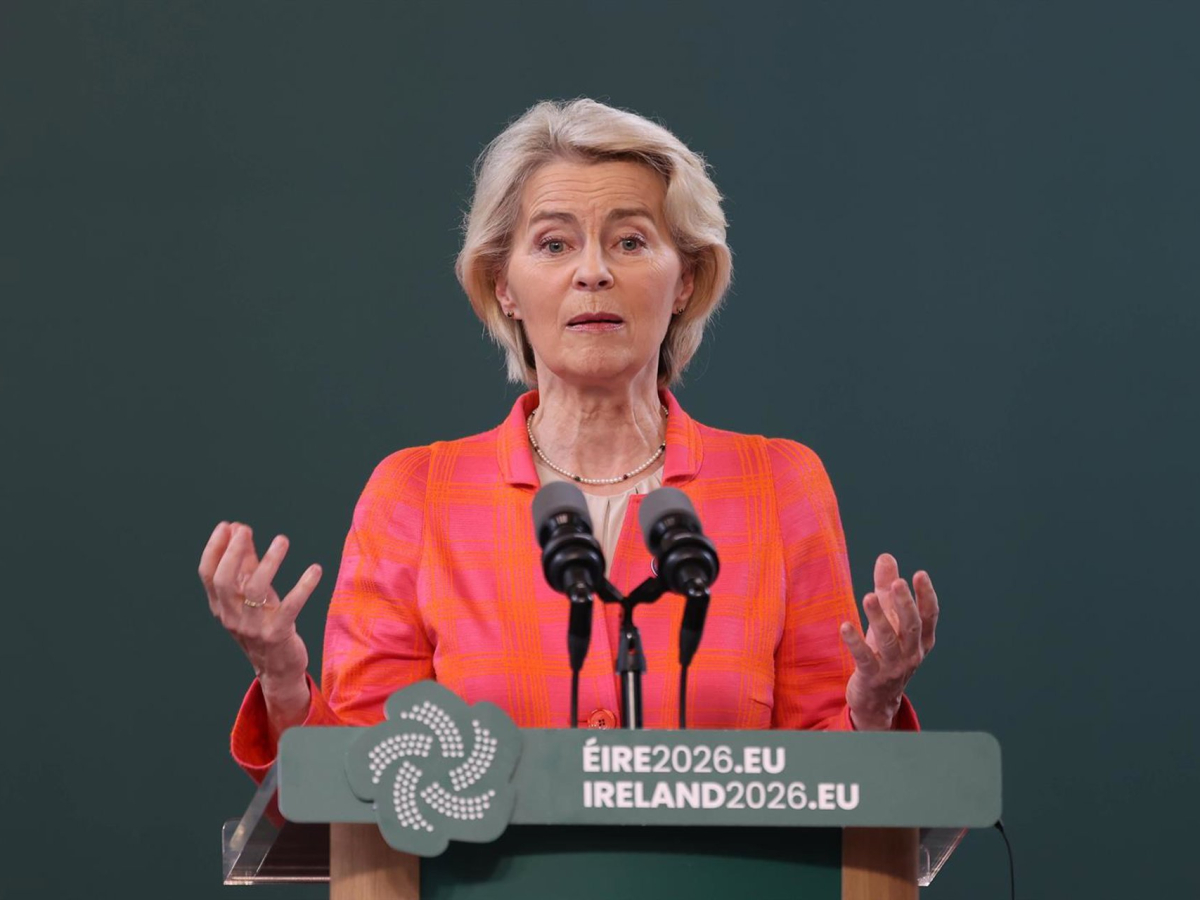
The President of the European Commission, Ursula von der Leyen, holds a press conference in Cork (Ireland). Liam Mcburney/PA Wire/dpa
The President of the European Commission, Ursula von der Leyen, holds a press conference in Cork (Ireland). Liam Mcburney/PA Wire/dpa -

All these announcements have been followed with attention from Moscow. The spokesman for the Russian Presidency confirmed that the Kremlin remains attentive to all information coming from Ankara, especially to conversations related to the supply of Western weaponry and the strengthening of the European military industry.

Meanwhile, Zelensky does not give up on the idea that Ukraine's integration into the Western security architecture constitutes a "natural" step to ensure the continent's stability. From the entourage of President Vladimir Putin, however, the message remains the same. "Ukraine constantly asks for new types of weapons, both defensive and offensive. This will not in any way prevent the special military operation from continuing until its objectives are achieved," said sources close to the Kremlin.

With this exchange of messages, a day concluded in which the defense industry ceased to be an exclusively economic matter to become one of NATO's main strategic battlefields, where the capacity to manufacture large-scale weaponry is already emerging as a decisive factor for the future security balance in Europe.

More key points, information and questions with FREN

AI-GENERATED CONTENT

What is the parliamentary process for Ukraine to obtain U.S. licenses and produce Patriot missiles locally?

Ukraine can only produce Patriot missiles locally with a U.S. license if two levels of process are met: on one hand, that of the U.S. executive branch (State Department, Pentagon, White House) and, on the other, the oversight and possible intervention of the U.S. Congress, which is the closest to what you call the “parliamentary process.” I specialize in Spanish politics, not in the technical details of U.S. procedures, but broadly speaking, we are talking about a very regulated arms export and technology transfer regime (ITAR) in which Congress has the right to be notified, block, or condition such agreements. It is usually not a single “Patriot-Ukraine law,” but rather a fit within framework defense laws and military appropriations that Congress approves each year.

General framework: arms export and co-production in the U.S.

In the United States, the export of systems like Patriot and any associated technology transfer is governed by defense export control regulations, known as ITAR (International Traffic in Arms Regulations) and the Arms Export Control Act. This means that:

  • Patriot missiles and their technology are listed as highly sensitive defense material.
  • Any license transfer to produce them in another country involves transfer of know-how, blueprints, software, and industrial processes, not just the sale of units.
  • Therefore, the Executive must process it as a very sensitive export agreement, subject to enhanced Congressional scrutiny.

Role of the U.S. executive branch

Although you ask about the “parliamentary process,” in the U.S. case the initial push comes from the Executive. Simplified, the key steps would be:

  • 1. Political and strategic negotiation: the White House and State Department decide if the license transfer to Ukraine fits with U.S. security strategy and non-proliferation restrictions.
  • 2. Pentagon evaluation: the Department of Defense analyzes military risks, technological dependency, sensitive information security, and compatibility with other commitments (e.g., NATO allies also using Patriot).
  • 3. Preliminary approval and agreement formulation: it is defined whether the model will be licensed production by a U.S. contractor (Raytheon/Lockheed) on Ukrainian soil, joint co-production, advanced maintenance, etc.
  • 4. Formal notification to Congress: agreements of this level and amount are notified to the relevant Congressional committees (Foreign Relations, Armed Services, Appropriations, etc.).

U.S. Congress intervention

The “parliamentary process” itself is articulated in several layers, which do not always imply approving a specific law just for Ukraine, but rather using mechanisms Congress already has:

  • Review of sales and transfers: for relevant defense agreements, Congress has a period (usually 15 to 30 days, depending on the operation type and country) to examine the Executive’s notification. If it does not act, the agreement can proceed; if it opposes, it must record that opposition through resolutions.
  • Disapproval resolutions: either chamber can present a resolution to block or limit a defense transfer. In practice, these only succeed if there is a clear majority against the operation.
  • Defense authorization laws: the large annual defense policy law (NDAA) can include:
    • Specific authorizations for industrial cooperation with Ukraine.
    • Limits or conditions on the transfer of certain Patriot technology.
    • Mandatory Executive reports before allowing co-production.
  • Military appropriations and aid laws for Ukraine: through spending laws, Congress can:
    • Partially finance the construction of production lines in Ukraine.
    • Link those funds to compliance with security, oversight, and industrial secrets protection conditions.

Conditionality and safeguards

In a licensing scenario for Ukraine to produce Patriot, it is very likely that the U.S. Congress would require:

  • Very strict information security agreements to prevent technology leaks to third parties.
  • End-use clauses (end-use monitoring) that limit where and how the system can be used, even if manufactured in Ukraine.
  • Ongoing oversight: periodic reports to Congress and the possibility to suspend the license if political or security conditions change.

Limitations of this explanation

As an assistant specialized in politics and parliamentary activity in Spain, not in U.S. defense regulations, this explanation is based on the general functioning of the U.S. system as publicly known, without going into very specific technical details of ITAR regulation or specific contracts between companies and governments. For a fine-grained follow-up of a real agreement with Ukraine, one would have to analyze, case by case, the wording of the annual defense laws and aid packages for Ukraine approved by Congress, as well as official notifications from the State Department to the Legislature.

What differences would there be between Ukraine only buying Patriot missiles from the U.S. and also being able to produce them under license? What role could NATO play in a possible co-production of Patriot missiles in Ukraine? What political risks would the U.S. Congress face if it authorized Ukraine to manufacture Patriot missiles locally?

What are the competencies of the NATO Secretary General and how is this figure chosen?

The NATO Secretary General is the highest civilian and political official of the Alliance, responsible for coordinating and directing the daily work of the organization, politically representing the allies, and facilitating consensus among them. He chairs the main political bodies (especially the North Atlantic Council) and acts as NATO’s spokesperson before governments, parliaments, public opinion, and international organizations. His selection is not done by public vote nor by a formal procedure established in the treaties, but through political negotiation among allied countries until consensus is reached on a single candidate.

Main competencies of the Secretary General

Political leadership and consensus facilitation

The central function of the Secretary General is to act as the highest political authority of NATO and coordinator of the decision-making process:

  • Chairs the North Atlantic Council, which is NATO’s supreme decision-making body, where ambassadors of member states sit and, periodically, foreign, defense ministers or heads of state and government.
  • Helps build consensus among all allies by moderating discussions, proposing compromise formulas, and ensuring all national sensitivities are considered, from great powers to smaller countries.
  • Defines and organizes the political agenda of meetings, prioritizing strategic matters (security crises, enlargements, relations with partners, military adaptation, etc.).
Internal management and coordination of NATO

Besides his political role, the Secretary General directs the administrative and diplomatic apparatus of the organization:

  • He is the head of NATO’s International Secretariat, which groups civilian officials from all allied countries and prepares analyses, proposals, and working documents.
  • Oversees the implementation of political decisions adopted by the Council and other committees, coordinating the work of various divisions (defense, planning, operations, public policies, etc.).
  • Maintains constant relations with NATO’s military commands, particularly with the Supreme Allied Commander Europe (SACEUR), to ensure coherence between political leadership and operational planning.
External representation and communication

Another key facet is international representation:

  • Acts as NATO’s spokesperson to the media, explaining decisions, positions, and Alliance operations.
  • Represents NATO in relations with non-member states, international organizations (European Union, UN, OSCE, etc.), and multilateral forums.
  • Maintains political dialogue with partner countries, including Mediterranean and global partners, which is especially relevant for members like Spain, deeply involved in the southern dimension of allied security.

It is important to emphasize that the Secretary General is not NATO’s military chief nor does he directly command military operations: that responsibility lies with the military commands, particularly the SACEUR, traditionally a U.S. general.

Procedure for electing the Secretary General

Absence of a formal legal process

The North Atlantic Treaty does not establish a detailed legal mechanism to elect the Secretary General. The selection is based on a consolidated political practice:

  • There is no open public candidacy nor formal campaign; the process proceeds through discreet diplomatic negotiations among allied capitals.
  • The decision is made by unanimous consensus in the North Atlantic Council: all member states must accept the proposed candidate.
Candidate profile and balance distribution

In practice, Secretaries General tend to be:

  • Former heads of government or former foreign or defense ministers of a member country, with broad political experience and international reputation.
  • From European countries, maintaining a transatlantic balance: the Secretary General is European, while the SACEUR is American.

States propose names informally; support is explored, possible vetoes are measured, and when a consensus candidate emerges, the Council appoints him. The term is usually four years, although it can be extended by agreement of the allies if considered convenient for political or strategic continuity reasons.

Spain, as a full ally, participates in this consensus process through its representation to NATO and political coordination between the Government and other member states, defending profiles that respond to shared strategic priorities, including attention to the southern flank and the Mediterranean.

What legal and regulatory requirements govern the transfer of military technology and the production of Patriot systems in third countries?

The transfer of military technology and the production of Patriot systems in third countries are governed by a framework of U.S. regulations (ITAR), international export control regimes (Arms Trade Treaty, Wassenaar Arrangement), EU law, and Spanish legislation on foreign trade of defense and dual-use material. In practice, any co-production or licensed manufacture of Patriot outside the U.S. requires very strict ITAR licenses, plus export authorizations from the receiving country (in Spain, under Law 53/2007 and its regulation). Additionally, embargo criteria, diversion risk, and respect for human rights apply, which in the Spanish case have resulted, for example, in a reinforced embargo on Israel and massive license denials.

1. Applicable U.S. and international framework for Patriot

Patriot systems are classified as U.S. military material and their export and technology transfer are governed by the International Traffic in Arms Regulations (ITAR), as summarized in ACAMI’s technical analysis on dual-use technology transfer, which highlights the centrality of ITAR licenses, non-reexport clauses, and specific licenses for technical technology transfer of know-how and software (ACAMI report).

Patriot sales contracts to third countries (such as the 730 PAC-3 MSE missiles approved for Saudi Arabia) are processed through the U.S. Defense Security Cooperation Agency (DSCA), which notifies Congress and conditions the operation on compliance with the export control regime, including end-use control and possible reexport, as reported by Democrata regarding Saudi Arabia (sale to Saudi Arabia).

At the multilateral level, Spain and the EU apply the Arms Trade Treaty, which requires denying transfers when there is a clear risk of war crimes or serious human rights violations; this framework is expressly mentioned in Law 53/2007 and its regulatory development. Additionally, the Wassenaar Arrangement and other non-proliferation regimes are integrated into the catalog of controlled products and technologies, both for military material and dual-use products.

2. EU rules on export and dual use

The EU has been strengthening its export control framework for military technology and equipment. The Council has reviewed the implementation of Common Position 2008/944/CFSP (criteria on human rights, regional stability, diversion risk, etc.) and announced improvements in traceability, end-user verification, and control of intangible technology transfers (Council note).

For dual-use products and technologies, Regulation (EU) 2021/821 applies, which is expressly referenced by the 2014 Spanish Regulation. Internally, the European Parliament and Council have agreed on a new instrument to strengthen Europe’s defense preparedness, including a general license for intra-EU transfer of defense products and reinforcing the requirement that the “design authority” remain in the EU (European Parliament agreement, EDIP program and provisional EDIP agreement), very relevant for debates on reindustrialization and European co-production of air defense capabilities.

3. Spanish framework: Law 53/2007 and 2014 Regulation

In Spain, the basic regulation is Law 53/2007 on control of foreign trade of defense and dual-use material (Law 53/2007), developed by Royal Decree 679/2014, which approves the Regulation on control of foreign trade of defense material, other material, and dual-use products and technologies (RD 679/2014).

This regulation, amended several times (e.g., by RD 414/2022 and orders updating its annexes in 2024 and 2025), establishes that:

  • Specific authorization is required for exports and shipments of defense material, as well as for transfers of components, technology, and production techniques derived from a licensed production agreement, a key definition for any co-production of systems like Patriot.
  • Exports of products that, even if not listed, could be destined for prohibited military uses, weapons of mass destruction programs, or embargoed countries are subject to licensing.
  • Exports of dual-use products and technologies follow Regulation (EU) 2021/821, including controls on brokering, technical assistance, and transit.

The decision authority is the Secretary of State for Trade, after a report from the Interministerial Board Regulating Foreign Trade of Defense and Dual-Use Material (JIMDDU), which applies the criteria of the Arms Trade Treaty and the EU Common Position. Democrata has documented how JIMDDU has blocked 219 licenses with Israel since October 2023 and 151 since the formal embargo entry into force (embargo on Israel). A specific legal analysis details the prohibition of defense and dual-use material transfers originating from or destined to Israel contained in RDL 10/2025 (RDL 10/2025 analysis).

Organic Law 14/2022 also strengthened the criminal regime for dual-use arms smuggling (LO 14/2022). The regulation itself empowers the Government to update control lists by ministerial order (e.g., the 2024 and 2025 orders adjusting Annex I.1).

The Ministry of Economy details in its public guides the regime for defense material and intra-community transfers, with procedures and evaluation criteria (diversion risk, armed conflicts, human rights, etc.) (defense material guide, intra-community FAQs). Sector studies like those from BDO explain how this framework applies to complex defense and dual-use operations (BDO analysis), and the Ministry of Defense portal centralizes information on foreign trade of the national industry (Defense foreign trade).

4. Licensed production of Patriot and co-production

In this context, any program to produce Patriot missiles outside the U.S. combines three regulatory layers:

  • ITAR layer (U.S.): requires export licenses for missiles, their components, and especially for technical data and know-how. The ACAMI report highlights that transferring manufacturing processes, designs, or software requires specific licenses, strongly limited to NATO allies and with strict non-reexport clauses.
  • EU layer: applies common export criteria, sanctions regimes, and dual-use control, as well as recent mechanisms to facilitate European production while avoiding unwanted technological dependencies.
  • Spanish layer (when there is national industrial participation): requires processing licenses for transfer of components or technology linked to licensed production agreements, evaluated by JIMDDU according to Law 53/2007 and RD 679/2014, and subject to additional restrictions derived from embargoes such as that on Israel.

In practice, even initiatives like the one announced by Ukrainian President Volodymyr Zelensky — U.S. license to manufacture Patriot missiles in Ukraine and production already authorized in Germany — depend on that combination of ITAR and European controls; Democrata has followed this debate in several pieces (license for Ukraine). In parallel, Spain has increased its defense exports by 18% in the first half of 2025, with a significant weight of technology transfer, but maintaining denials when there are risks to security, regional stability, or human rights (export report).

All this means that any offset agreement, manufacturing license, or co-production linked to Patriot must be designed case by case, reconciling U.S. ITAR requirements with European and Spanish arms control commitments.

For a broader overview of Spanish defense industrial policy and its implications in high-tech programs, the industrial and technological plan for security and defense approved by the Council of Ministers can also be consulted (defense industrial plan).

Finally, the Ministry of Defense maintains general information on foreign trade of defense material and its fit within Spanish industrial policy (annex modification, annex I.1 update), complementing this regulatory framework.

In sum, the transfer of military technology and licensed production of Patriot operate in a highly restrictive and politicized legal environment, where technical decisions on know-how, offsets, and co-production are conditioned by geopolitical balances, embargoes, and human rights commitments of the U.S., EU, and Spain.

What specific role does JIMDDU have in authorizing or denying licenses related to Patriot programs involving Spanish companies? How would a possible co-production of Patriot missiles on Ukrainian territory affect Spain from the perspective of reexport controls and EU criteria? What legal differences exist between the Spanish embargo on Israel regulated by RDL 10/2025 and other arms embargoes the EU applies to countries like Iran?

Play

Test your knowledge with FREN!

How much do you know about this topic? Answer the following 3 questions.

Which air defense system does Ukraine want to manufacture locally under a U.S. license?

Question 1 of 3

What argument did Zelensky use to justify Ukraine's ability to produce military material?

Question 2 of 3

What is Zelensky's main request to allies regarding air defense?

Question 3 of 3

Hola, soy Fren. ¿Cómo te ayudo?