Hantavirus: what it is and why it is trending again after several deaths in Venezuela

Hantavirus has once again become one of the most popular searches after the authorities in Venezuela confirmed the death of three people from this disease and are investigating two other suspected deaths. Although it is a rare virus, the spike in interest has led many users to wonder what it is, how it is transmitted, and what the real risk is.

1 minute

WhatsApp Image 2026 05 04 at 16.15.09

WhatsApp Image 2026 05 04 at 16.15.09

Add DEMÓCRATA to Google

Ask FREN

Published

Last updated

1 minute

Most read

The interest in hantavirus has skyrocketed this Tuesday after the Ministry of Health of Venezuela confirmed three deaths from this disease in the state of Anzoátegui. Health authorities are also investigating two other deaths recorded in Barinas to determine if they are also related to the virus.

According to the Venezuelan government, the confirmed cases correspond to the same family and, for the moment, there is no evidence of transmission between people in that country. Authorities have deployed health teams to reinforce epidemiological surveillance in the affected areas.

What is hantavirus and how is it transmitted

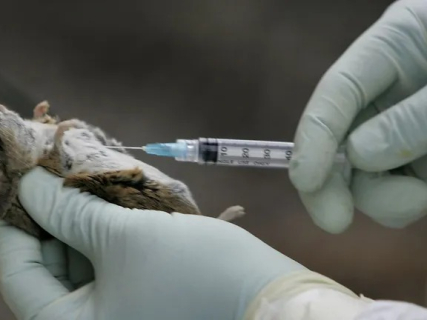
Hantavirus is a group of viruses that is primarily transmitted from certain rodents to humans. Transmission usually occurs by inhaling particles from the urine, feces, or saliva of infected animals, although it can also occur through direct contact with them or, less commonly, through bites.

In most known variants, there is no transmission between people. The most relevant exception is hantavirus Andes, a strain detected in South America where human-to-human transmissions have been documented under very specific circumstances.

What are the symptoms

Initial symptoms can be confused with other viral infections. Fever, intense muscle pain, fatigue, headache, and gastrointestinal discomfort are usually the first manifestations.

In the most severe cases, it can progress to hantavirus pulmonary syndrome, with severe respiratory difficulty that requires urgent hospital attention. There is no specific antiviral treatment or widely used vaccine, so early diagnosis and supportive measures are essential.

Is there a risk in Spain?

In Spain, the risk to the general population is considered very low. In recent months, health authorities activated monitoring protocols following the international outbreak associated with the cruise MV Hondius, which was controlled after monitoring contacts and the absence of new related cases.

The newly confirmed hantavirus outbreak in Venezuela is independent of that episode and, according to Venezuelan authorities, there are also no indications of transmission between people in the cases detected so far.

More key points, information and questions with FREN

AI-GENERATED CONTENT

What is the legislative process for declaring an international health alert due to outbreaks of infectious diseases such as hantavirus?

The declaration of an international health alert, technically an “international public health emergency of international concern” (PHEIC), is not a Spanish legislative act but a decision by the WHO within the framework of the International Health Regulations (IHR 2005), published in Spain through the revision of the IHR (2005). Spain applies it through its public health, epidemiological surveillance, and inter-administrative coordination regulations, especially the Law 33/2011, General Public Health Law, the Royal Decree 2210/1995, National Epidemiological Surveillance Network, and specific rules such as Order SCO/3870/2006 and the Resolution of March 25, 2014 on points of entry. A hantavirus outbreak would follow this same scheme: detection and notification by Spain, evaluation and possible declaration by the WHO, and internal deployment of plans and measures based on this regulation.

1. International framework: International Health Regulations (IHR 2005)

The IHR (2005), adopted by the 58th World Health Assembly, is the WHO's central legal instrument for managing global health risks. According to the text itself, its purpose is to “prevent the international spread of diseases, protect against such spread, control it, and provide a proportionate public health response”, avoiding unnecessary interference with international traffic and trade.

Procedurally, the IHR establishes:

  • Obligations of the States Parties to detect, assess, and notify unusual events that may constitute a public health emergency of international concern (PHEIC).
  • The existence of a National Focal Point, which in Spain is designated by Order SCO/3870/2006, responsible for urgent communication with the WHO about these events.
  • The use of the “decision instrument” in Annex 2 to assess whether an event (such as an emerging infectious disease outbreak) should be notified as a possible PHEIC.

The decision to declare a PHEIC is the responsibility of the WHO Director-General, after consulting the affected State and an IHR Emergency Committee. Therefore, it is not a Spanish legislative decision, although Spain is legally bound by the temporary recommendations adopted.

2. Implementation in Spain: key internal regulations

Spain has “internalized” the IHR through several regulations:

  • National Epidemiological Surveillance Network: created by Royal Decree 2210/1995, it collects and analyzes epidemiological information to detect health problems of national or international interest and support control decisions.
  • National Focal Point for the IHR: Order SCO/3870/2006 designates the Directorate General of Public Health as the authority responsible for acting as the Focal Point with the WHO and the European early warning and response system.
  • Points of entry for international emergencies: the Resolution of March 25, 2014 publishes the Council of Ministers Agreement that designates Spanish ports and airports as “points of entry with capacity to attend to public health emergencies of international concern,” in application of Article 20 and Annex 1 of the IHR.
  • Law 33/2011, General Public Health Law: strengthens surveillance systems and creates the Public Health Surveillance Network with an early warning and rapid response system. According to the consulted excerpt, a State Plan for Preparedness and Response to Public Health Threats is foreseen, approved by royal decree, which must include the mechanisms for declaring a state of public health emergency of state importance and its governance.

Additionally, the COVID‑19 experience was regulated through Law 2/2021 and the declaration and successive extensions of the state of alarm, and its closure was formalized with the Council of Ministers Agreement published in Order SND/726/2023, which declares the end of the “health crisis situation caused by COVID‑19.”

3. Practical sequence in an outbreak such as hantavirus

Applying this framework, the institutional path would be, simplified:

  • Internal detection and notification: the National Epidemiological Surveillance Network (RD 2210/1995) collects suspected or confirmed hantavirus cases through doctors and laboratories.
  • Evaluation by Spanish authorities: Public Health services (regional and state) assess whether the event is unusual or serious and if it may constitute a threat beyond our borders.
  • Communication to the WHO: the National Focal Point (Order SCO/3870/2006) urgently transmits the information to the IHR Contact Point at the WHO, in accordance with Articles 5 to 7 of the IHR cited in the order.
  • Evaluation and possible declaration of PHEIC by the WHO: the WHO, applying the IHR decision instrument, determines whether the hantavirus outbreak is a “public health emergency of international concern” and issues temporary recommendations.
  • Regulatory and coordination response in Spain: depending on severity, Spain activates preparedness and response plans (Law 33/2011), uses the network of designated points of entry (2014 Resolution), and if necessary, could resort to extraordinary instruments such as the state of alarm (practically configured during COVID‑19 according to Law 2/2021 and alarm royal decrees).

4. Difference between international alert and internal measures

In summary, the declaration of the international emergency is an act of the WHO under the IHR (not a “Spanish law”), while the relevant “legislative process” in Spain refers to:

  • Framework laws (Law 33/2011, Law 2/2021 during COVID‑19) and royal decrees that establish plans, surveillance networks, and mechanisms for declaring public health emergencies of state importance.
  • Council of Ministers agreements and ministerial orders that specify crisis situations (such as Order SND/726/2023 on the end of the COVID‑19 crisis) or designate points of entry (2014 Resolution).

All this is articulated with the obligations of the IHR, so that a hantavirus outbreak in Spain would be managed internally with these tools while, in parallel, the WHO decides whether to elevate the event to a public health emergency of international concern.

What specific role does the Spanish National Focal Point have when the WHO considers declaring an international emergency for a disease like hantavirus? What mechanisms does the State Plan for Preparedness and Response to Public Health Threats foresee to coordinate autonomous communities in the face of an international alert? How did the legal management of the COVID‑19 pandemic in Spain differ from what the International Health Regulations foresee for other emergencies?

What powers does the Ministry of Health of Venezuela have in managing epidemiological outbreaks?

The specific and updated details of the powers of the Ministry of Popular Power for Health of Venezuela in managing epidemiological outbreaks are not found in the sources I work with, which focus on the institutional and regulatory context of Spain. I can only provide a generic reference, based on how these ministries are usually organized in Latin American systems, but without guaranteeing that it exactly matches the current Venezuelan legal framework. Therefore, any mention of typical functions should be taken only as general guidance and not as an accurate description of the Venezuelan case.

Scope of available information

My specialization is politics, parliamentary activity, and regulation in Spain (central government, Cortes Generales, and, to a lesser extent, the European sphere when directly connected to Spain). Venezuelan regulations, presidential decrees, or organic laws of the health sector of that country, nor detailed official information about its administrative structure, are not available. This prevents a legally rigorous description of which legal articles define the powers of the Venezuelan Ministry of Health regarding epidemic outbreaks.

Therefore, I cannot indicate, for example, which organic law, presidential decree, or internal regulation exactly establishes the attributions on epidemiological surveillance in Venezuela, nor how functions are distributed among central administration, states, and municipalities, nor what the formal procedures for declaring health emergencies specific to that legal system are.

Typical functions of a health ministry in epidemiological outbreaks

Even without being able to enter the Venezuelan case precisely, it is possible to explain, by analogy, what powers health ministries usually assume in Latin America and Spain when facing epidemiological outbreaks. This can serve as a general framework to understand what type of responsibilities are reasonable to expect, although it should be contrasted with Venezuela's own regulations:

  • Epidemiological surveillance: design and coordination of mandatory disease notification systems, consolidation of data from hospitals and health centers, and analysis of outbreak evolution.
  • Declaration of alerts and risk levels: issuing health alerts, instructions to healthcare services, and sometimes recommending declaring health emergency states to competent authorities.
  • Clinical and public health protocols: development of guidelines for diagnosis, treatment, and isolation of cases, as well as contact tracing and community prevention measures.
  • Interinstitutional coordination: relations with other ministries (interior, education, transport, defense), regional and local authorities, and international organizations such as PAHO/WHO.
  • Management of health resources: planning of beds, intensive care units, human resources, procurement and distribution of medicines, vaccines, and personal protective equipment.
  • Public communication: informing the public about risks, prevention recommendations, information campaigns, and combating health misinformation.

Differences between countries and need to contrast official sources

Although these functions are common in many health systems, the specific distribution of powers can vary significantly between centralized and federal countries, or between those with very decentralized systems. In Spain, for example, the Ministry of Health shares many responsibilities with the autonomous communities, which directly manage healthcare and apply many epidemiological control measures.

In Venezuela, there could be a division of functions between the central level (ministry), state governments, and municipalities, or the participation of specialized institutes for disease research and control. Without direct access to Venezuelan legislation and official documents such as health laws, sanitary regulations, or national emergency response plans, it is not possible to describe this distribution accurately.

What information I can provide and how to deepen it

Within my scope, I could help you to:

  • Conceptually compare how powers are organized in Spain regarding epidemiological outbreaks (Ministry of Health and autonomous communities) with what is known about other countries.
  • Explain Spanish regulatory frameworks on health emergencies, such as public health laws or states of alarm decrees, which can serve as comparative references.
  • Provide context on international health cooperation in which Spain participates and how alerts are coordinated with other countries and the WHO.

To know rigorously the specific powers of the Ministry of Health of Venezuela, it would be necessary to directly consult the current Venezuelan legislation, the official website of the ministry itself, as well as documents from international organizations that describe the institutional architecture of that country's health system.

What powers does the Ministry of Health in Spain have regarding epidemiological outbreaks and how are they coordinated with the autonomous communities? Which Spanish laws regulate the management of health emergencies and epidemiological outbreaks? How was the COVID-19 pandemic legally declared and managed in Spain by the central government?

What requirements must be met for a disease to be considered community transmission by health authorities?

In epidemiology, health authorities say that a disease has become community transmission when it is no longer limited to imported cases or a few clearly locatable outbreaks and there is sustained circulation within the population, with many cases whose source of infection can no longer be traced. WHO, ECDC, and the Ministry of Health share the same basic idea: it is a more advanced stage than sporadic cases or small clusters. It is not a legal figure, but a diagnosis of the epidemiological situation that guides surveillance and control decisions.

Central idea of “community transmission”

The operational definition collected by the WHO and the ECDC, and used by Spain during COVID-19, can be summarized as follows: there is community transmission when the majority of new cases can no longer be linked to travel to affected areas, to an imported focus, or to well-defined chains of transmission, and when multiple unrelated outbreaks are observed in different parts of a territory. This logic is reflected in explanatory analyses based on official documents, such as those from Maldita or the general press, for example Diario de Sevilla.

Technical criteria usually considered

Documents from the WHO and the ECDC (cited in pieces like the one from Maldita) do not provide a single legal definition, but describe a set of signals that, combined, lead to speaking of community transmission:

  • Large number of unrelated cases, without a clear link to a known index case or travel to endemic areas.
  • Multiple independent outbreaks in different areas of the country or region, without demonstrable epidemiological connection between them.
  • Sustained local transmission over time, with growth or maintenance of cases over several weeks, beyond what would be expected from occasional importations.
  • Detections in sentinel surveillance systems (e.g., in samples from patients with influenza-like illness) without clear individual traceability, indicating the virus circulates diffusely in the community.
  • Increasing proportion of cases in which, after contact investigation, the origin is classified as “unknown” or “undeterminable.”

The ECDC also differentiates between imported cases, local transmission, and community transmission, and for notification purposes in the EU relies on Implementing Decision 2012/506/EU, which sets definitions of clinical, laboratory, and epidemiological cases for communicable diseases (Decision 2012/506/EU).

How Spain applies it

The Ministry of Health uses this same conceptual framework in its National Health System Communicable Diseases Surveillance System, coordinated with the Carlos III Health Institute and the ECDC, as reflected in the official surveillance report (2023 surveillance system report). In practice, three major situations are distinguished:

  • Imported cases or closely linked to a specific focus (travel, occupational exposure, animal, etc.). Example: in swine flu A(H1N1)v detected in Catalonia it was noted that “no other cases or evidence of community transmission have been detected,” despite suspicion of person-to-person contagion (Demócrata and [link]).
  • Limited local transmission or by clusters, when outbreaks occur around imported cases but chains are still traceable. This has been seen, for example, in analyses of Ebola or MERS outbreaks collected by the WHO ([link], [link]).
  • Community transmission, when control of chains is lost and sustained circulation is documented. A close example is the decision of the European Regional Verification Committee to consider measles transmission re-established in Spain because “sustained virus circulation in the country cannot be ruled out” (Demócrata).

Comparison with other recent scenarios

News about mpox illustrate well the difference between countries with and without community transmission. In Spain, the Coordination Center for Health Alerts and Emergencies has emphasized that mpox clade Ib cases are imported and the risk of sustained transmission is considered low, while the WHO lists several African countries where community transmission of that clade has been confirmed (Gaceta Médica, Infosalus, [link]).

Something similar happens with hantavirus: both the Ministry and the ECDC and WHO insist that “there is no evidence of sustained community transmission nor a high risk for the general population in Spain or Europe,” and that described cases are very limited chains associated with close contacts ([link], [link], Infosalus, Redacción Médica, Gaceta Médica, [link], [link], [link]).

Final keys

In summary, health authorities assume a disease is community transmission when there is sustained, diffuse, and difficult-to-trace circulation within the territory, with numerous cases not linked to importations or specific foci. This category change usually implies strengthening surveillance, adapting testing strategies, and, if applicable, broader public health measures on the general population.

How does the Ministry of Health practically decide when to move from talking about imported cases to community transmission in a specific outbreak? What political and management implications does it have for Spain when a disease is considered community transmission? Can you compare how the transition to community transmission was managed in COVID-19 with the current measles situation in Spain?

Play

Test your knowledge with FREN!

How much do you know about this topic? Answer the following 3 questions.

Where have hantavirus deaths recently been confirmed according to the Ministry of Health of Venezuela?

Question 1 of 3

What is the main route of hantavirus transmission to humans?

Question 2 of 3

What initial symptoms can a person infected with hantavirus present?

Question 3 of 3

Hola, soy Fren. ¿Cómo te ayudo?