
The Director-General of the World Health Organization (WHO), Tedros Adhanom Ghebreyesus, has celebrated the 80th anniversary of the WHO Constitution and has emphasized that, "in a tumultuous and divided world," its principles are today "more important than ever."
"The Constitution remains our guide. The WHO continues to be the place where countries come together to face health challenges that none of us can solve alone," Tedros has stated, asserting the organization's role as a multilateral forum for global health.
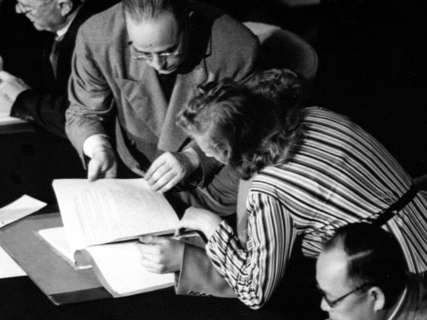
In his speech, he recalled that the Constitution was signed in July 1946, when countries emerging from the devastation of World War II chose cooperation over confrontation. "They signed the WHO Constitution, founded on a bold and radical idea: that health is key to peace and security, and that health is a human right," he noted.
The head of the WHO also wanted to recognize the key figures who made that foundational text possible. He recalled that Dr. Thomas Parran, the U.S. Surgeon General, was the one who convened and presided over the International Health Conference of 1946 in New York, the setting in which the delegates concluded and endorsed the Constitution.
Tedros explained that, at the San Francisco Conference of 1945, where the UN was established, the Chinese diplomat Szeming Sze first proposed creating a global organization specifically dedicated to health. Together with the Brazilian Geraldo de Paula Souza, he managed to materialize that proposal. "Their collaboration embodied a principle that still defines the WHO: progress is achieved when countries work together," he emphasized.
He also mentioned another pioneer, the Pole Ludwik Rajchman, whom he described as "the man who conceived the broadest ideas of international health work that developed between the two World Wars." Rajchman was the medical director of the Health Organization of the League of Nations and later played a decisive role in the creation of UNICEF, as the Director-General recalled.
Likewise, Tedros has highlighted the figure of Dr. Brock Chisholm, the first Director-General of the WHO, emphasizing that he was the one who brought the Constitution into practice: "He transformed its foundational vision into action, leading the Organization during its early years and contributing to establishing the institution we know today."
The head of the WHO has also wanted to emphasize the contribution of various African leaders in the drafting of the Constitution, including Dr. Joseph Nathaniel Togba and Dr. Aly Tewfik Shousha Pasha, whose participation was key to ensuring a truly global perspective.
To conclude, Tedros has recalled the collective and diverse nature of the project that gave rise to the WHO. "The Constitution of the WHO was never the work of a single nation. It was developed through international collaboration and was signed by representatives from all regions of the world. Different cultures. Different political systems. Different histories. United by a single conviction: health is a fundamental human right," he concluded.