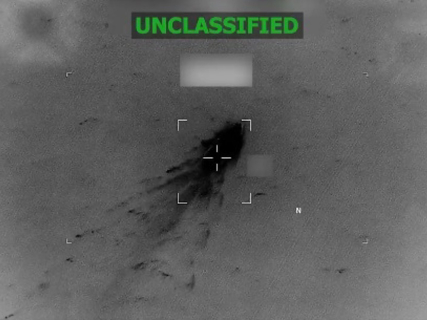

The organization Amnesty International has urged on Monday for a thorough investigation into the possible involvement of the United States in an attack that occurred at the beginning of 2026 against an Ecuadorian vessel, an incident after which eight of its crew members remain missing. The event is framed within Washington's policy of bombing boats in the Pacific Ocean and the Caribbean Sea under the argument that they would be linked to drug trafficking, a practice that, since September 2025, has already left more than 200 dead.
According to the NGO, "On January 20, 2026, the fishing boat 'Fiorella' disappeared in international waters, after having set sail from the port of Jaramijó, Ecuador, seven days earlier. Since then, the whereabouts of eight of its ten crew members are unknown," and it has emphasized that "the indications suggest that the United States may have assaulted the vessel as part of its most recent anti-drug policy 'Southern Spear', for which more than 60 ships have been attacked in the region, and more than 200 people have been killed since September 2025."
The reconstruction of the itinerary carried out by the evidence lab of Amnesty concludes that "the 'Fiorella' left the port of Jaramijó, in the province of Manabí, and sailed through Ecuadorian waters towards the Galápagos Islands, which belong to Ecuador." Representatives of the entity traveled to Manta and Jaramijó to collect testimonies from the families of the eight missing, who "are searching for their loved ones and demanding answers from the Ecuadorian authorities since January," and maintained contacts with official responsible parties, in addition to reviewing "statements extracted from the administrative file prepared by the Port Captaincy of Manta (belonging to the Ecuadorian Navy)."
After setting sail on the night of January 13 with ten people on board and alternating between international waters and the Exclusive Economic Zone of Ecuador and the Galápagos Islands, Amnesty states that "on the fourth day of navigation, the vessel 'Fiorella' would have begun to be the subject of sustained monitoring by aircraft, patrols, and drones with U.S. insignia." "The captain of the ship, Juan Carlos Valencia, communicated daily with his family, through satellite messages, his growing concern about this surveillance," the organization has pointed out, indicating that in the following days the captain warned both his relatives and the owners of the boat about the repeated presence of aircraft, drones, and a U.S. patrol boat.
According to the account collected by Amnesty, on January 19, the day before the disappearance, the crew observed drones, planes, and a patrol vessel again. One of the two survivors claimed to have seen several drones and "a large vessel with an American flag," while the other described "a patrol, two planes flying low that bore a blue symbol similar to NASA's."
In the early hours of January 20, the day on which the trace of the ship was lost, "two fishing boats, each with two crew members, detached from the mother ship Fiorella to lay several kilometers of longline with baited hooks, a common task in high-seas artisanal fishing." "One of those boats, the 'Primer Mandamiento,' remained at a considerably greater distance from the 'Fiorella' than the other: about 15 nautical miles (almost 28 kilometers). Around 6:00 a.m., the crew of the 'Primer Mandamiento' finished placing the longline and prepared to have breakfast," the NGO explained, specifying that, about seven hours later, these fishermen heard on the radio "shouts from the other boat: 'Captain, captain, captain!'". Immediately afterward, all communications ceased.
The occupants of the 'Primer Mandamiento,' "the only ones who managed to return alive," stated before the Port Captaincy that they observed a large column of smoke in the direction where the 'Fiorella' was located, unable to confirm whether it was a fire on the mother ship. Amnesty warns that "there has been no news from the 'Fiorella' and the second detached boat since then."
Amnesty demands accountability for attacks on boats
In this scenario, the director for the Americas of Amnesty International, Ana Piquer, has pointed out that "the families of the eight people whose whereabouts are unknown fear that it is a case of enforced disappearance at the hands of the United States." She has demanded that "the U.S. and Ecuadorian authorities must confirm or deny whether there was participation of state agents from either of the two countries, carry out all necessary actions to determine the fate and whereabouts of the victims, and present credible evidence that demonstrates what happened to them."
Piquer has criticized the lack of progress: "It's as if the ship had vanished and no one cared how it did or what happened to the people on board. Did it fly away? More than six months after what happened, the Ecuadorian authorities must clearly respond what actions they have taken to establish the facts, what they know, what they do not know, and how they plan to address the valid claims of the families of the disappeared," insisting that "the criminal investigation into these events must advance until identifying the possible responsible parties and bringing them to justice."
For his part, the director of advocacy for the Americas of Amnesty International USA, Daniel Noroña, has emphasized that "cooperation in security matters between the United States and Ecuador," two closely allied countries under the respective governments of Donald Trump and Daniel Noboa, "must be based on the protection of Human Rights and the strengthening of the rule of law." He added that "both countries must review the existing bilateral security agreements to ensure that they do not contribute to impunity or hinder access to justice for the victims and their families."
In relation to Washington, Piquer maintains that "the Department of Justice and the investigative authorities of the U.S. Armed Forces have the responsibility to investigate and establish possible criminal liabilities, not only in relation to Fiorella, but to all attacks on vessels at sea." Likewise, he has asked the U.S. Congress to promote "a legislative investigation into this serious incident, with hearings and reports that allow for clarifying the facts and determining the possible involvement of public agencies or private entities under its command." To conclude, he has demanded that "moreover, all States must suspend international cooperation in matters of Intelligence and military equipment that may be intended for this type of illegal operations."