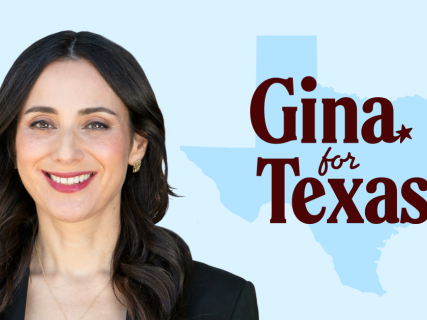
Hispanic power is growing in the US with victories by Becerra and Hinojosa in California and Texas

Democrats will be the first elected Hispanic governors in their respective states, the two most populated in the country. Marco Rubio, the son of Cuban immigrants, holds the office of Secretary of State in the Donald Trump administration.

Gina Hinojosa

Gina Hinojosa

Add DEMÓCRATA to Google

Ask FREN

Published

Last updated

6 minutes

Most read

Elecciones 29N · Encuestas

La media de las encuestas

Media a 3 de noviembre de 2026 · 17 institutos

  • PP30,4 %
  • PSOE27,4 %
  • Vox19,2 %
  • Frente Amplio6,5 %
  • ERC2,4 %
  • Podemos2,4 %
010203040ene 2024jul 2024ene 2025jul 2025ene 2026jul 2026

Media del último estudio de cada instituto en 30 días y su evolución semanal desde el 23J. Partidos con al menos un 2 %.

Todas las encuestas

Elecciones generales del 29 de noviembre · Demócrata

California and Texas will, for the first time, have Hispanic governors elected at the ballot box. The Democrats Xavier Becerra and Gina Hinojosa have won the elections on November 3 in the two most populous States in the United States. Becerra will succeed the fellow Democrat Gavin Newsom in California, while Hinojosa has defeated Greg Abbott and has put an end to more than thirty years of Republican governments in Texas.

Together, the two States total nearly 70 million inhabitants and the two largest economies in the country. Around 40% of their population is Hispanic, a community whose political weight has grown over the last decades and which also has prominent representatives in the Republican Party. One of them is Marco Rubio, son of Cuban immigrants and Donald Trump’s Secretary of State since January 2025.

Becerra, from a Mexican family from Sacramento to the Government of California

Xavier Becerra has defeated the Republican Steve Hilton, backed by Trump, after a campaign in which the price of housing and the cost of living have taken up much of the debate. Hilton, a former adviser to the British conservative David Cameron and a host on Fox News, accused Becerra of representing a political class unable to solve those problems. The Democrat defended his record of government and warned that he would go back to court if Washington approved measures contrary to the rights of Californians or the State’s powers.

Becerra knows well the legal confrontations with Trump. As California’s attorney general, a position he took up in 2017 after Kamala Harris was elected senator, he filed more than one hundred lawsuits against the first Republican administration, mainly over its immigration, healthcare, and environmental policies. In 2021, Joe Biden appointed him Secretary of Health and Human Services, a responsibility he carried out until January 2025.

Previously, he spent 24 years in the United States House of Representatives, where he came to chair the Democratic caucus. He won his first Congressional seat in 1992, two years after being elected deputy of the California Assembly, although his first political roles had been in Los Angeles, alongside the state senator Art Torres.

Born in Sacramento in 1958, Becerra grew up in a family of Mexican origin and was the first of its members to pursue university studies. He studied at Stanford, where he graduated and obtained a law degree, and completed part of his training at the University of Salamanca.

California already had had a Hispanic governor, although not elected to that position. In 1875, Romualdo Pacheco took over the state Government when Newton Booth resigned to join the U.S. Senate. Pacheco, a Republican and until then vice governor, remained in the post for about ten months.

Hinojosa ends three decades of Republican rule in Texas

In Texas, Gina Hinojosa has defeated Greg Abbott, who had been governing since 2015 and was seeking a fourth term. The last Democratic victory dated back to 1990, when Ann Richards won the elections. Four years later he lost to George W. Bush, who took office in January 1995. Since then, Republicans had kept control of the Government of Texas, a state that also had never elected a Hispanic governor since joining the United States in 1845.

Hinojosa, a member of the Texas Parliament since 2017, ran against an Abbott who had more than one hundred million dollars to finance his reelection. The Democratic candidate focused her campaign on the cost of living and the funding of public education, while also criticizing the influence of major donors in the Republican Party.

Among her proposals, Hinojosa raised to hand over 1,500 dollars to residents out of state reserves and increase funding for public schools. She also questioned Abbott’s budget priorities and the high energy consumption of data centers.

Immigration was another of the issues both candidates faced. During his years as governor, Abbott pushed for the construction of barriers on the border with Mexico and worked with Trump on deploying resources to control irregular crossings—measures that Hinojosa criticized during the campaign.

Nearly 40% of Texas’s residents are Hispanic, a community among whose voters Republicans had maintained considerable support for decades. Abbott’s defeat, moreover, has not been the only one for the party in these elections. The Democrat James Talarico has defeated Ken Paxton in the dispute for the Texas seat in the federal Senate.

Marco Rubio and the Republican tradition of Miami’s Cubans

With Becerra and Hinojosa at the helm of California and Texas, two of the main state governments will be in the hands of Hispanic politicians, whose presence also extends to the federal Government, although from the other side of the political spectrum. Marco Rubio, Donald Trump’s secretary of State since January 2025, is the first Hispanic to hold that post and one of the Republican leaders with greater responsibilities in Washington.

After the 1959 Cuban revolution, thousands of exiles settled in Miami. Many of them, opposed to Fidel Castro’s regime, found a political ally in the Republican Party. Marco Rubio was born in that city in 1971, the son of Cuban immigrants, and would end up becoming one of Florida’s leading Republican figures.

In 2000 he was elected to the Florida House of Representatives, which he chaired between 2006 and 2008, and in 2010 he secured a seat in the U.S. Senate. During his years as a senator, he defended sanctions against the governments of Cuba and Venezuela, following a political line deeply rooted among Miami’s Cuban exiles.

In the 2016 Republican primaries he ran against Donald Trump, but withdrew his candidacy after losing in Florida. The rivalry at the time did not prevent him from becoming one of his allies years later. After winning the 2024 presidential election, Trump named him secretary of State, a decision the Senate backed in January 2025 with 99 votes in favor and none against.

Rubio was thus the first Hispanic to hold the position of U.S. Secretary of State. As a member of the Trump administration, he has supported a tightening of immigration policy, including restrictions on the entry of foreigners and deportations.

Hispanic governors before Becerra and Hinojosa

Much earlier than the victories in California and Texas, Raúl Héctor Castro had governed Arizona between 1975 and 1977. Years later, Bill Richardson won the elections in New Mexico, where he governed between 2003 and 2011 after having been ambassador to the United Nations and Secretary of Energy during Bill Clinton’s presidency.

Richardson was succeeded by the Republican Susana Martínez, the first Hispanic woman elected governor in the United States. New Mexico again elected a Democratic governor of Hispanic origin in 2018, Michelle Lujan Grisham, who took office the following year. Nevada has also had a Hispanic governor, the Republican Brian Sandoval, who served between 2011 and 2019.

In the federal government, Alberto Gonzales had held the position of attorney general with George W. Bush, while Alejandro Mayorkas was secretary of Homeland Security during the presidency of Joe Biden, in whose cabinet Becerra also served as secretary of Health and Human Services.

Nearly 39 million Hispanics are eligible to vote

According to estimates from the Pew Research Center, close to 39 million Hispanics are eligible to vote in the United States in 2026, about 5.2 million more than in the 2022 midterm elections. Their share within the electorate has risen from 9% in 2006 to the current 16%, largely thanks to young people born to Hispanic families who have reached the age of majority.

California has about 8.7 million Hispanic voters; Texas, 6.7 million; and Florida, 3.8 million. These are the three states with the highest number of citizens of this origin who can vote, although their political preferences differ considerably.

Trump improved his results among Hispanics in the 2024 presidential elections compared with 2020, while in yesterday’s "midterms" there has been a recovery of Democratic support. Early polling at the precinct level points to a considerable shift of the Hispanic vote toward this party.

In a Pew Research Center survey, 86% of Hispanic voters considered the economy very important when deciding how to vote. The rising cost of housing, wages, education, and healthcare have also been central issues in the campaigns of the two new governors.

More key points, information and questions with FREN

AI-GENERATED CONTENT

What parliamentary procedures and processes are necessary for an elected governor to formally assume office in California or Texas?

I specialize in politics and institutions of Spain, and the tools I have integrated only cover regulations, procedures, and parliamentary activity within the Spanish scope (Congress, Senate, regional parliaments, BOE and regional bulletins, Executives, etc.).

The question you raise — what parliamentary procedures and processes are necessary for an elected governor to formally assume office in California or Texas — refers to the constitutional and statutory law and procedures of two U.S. states. That information depends on each state's Constitution, their electoral laws, and the specific rules of their state Chambers, for which I do not have structured access or equivalent verification capacity as I do for Spain.

For that reason, I cannot provide you with a detailed and reliable step-by-step description of all formal acts, certifications, interventions of the state chambers, possible recounts or challenges, nor the exact differences between the two states. Any detailed answer I tried to give you about California or Texas would be imprecise and unsupported by sources to which I could refer you in the same way I do with the BOE or Spanish session diaries, so it would be misleading on my part.

However, I can help you with analogous issues within the Spanish scope, for example:

  • What steps are necessary for a regional president to be invested and assume office (investiture debate, required majorities, formal appointment, swearing-in…)
  • How the procedures for proclamation of elected officials and constitution of chambers after general or regional elections in Spain work.
  • What the Rules of the Congress, Senate, or a regional parliament say about the election and swearing-in of their main officers.
  • How the succession in the presidency of the Government or a regional government is articulated in legal and procedural terms.

If you want, I can explain in detail the investiture and swearing-in procedure of a regional president in Spain (for example, in a specific community such as Catalonia, Madrid, Andalusia, etc.) or the president of the Government at the state level, where I do have solid technical and regulatory information.

Reformulate your question to that scope — or indicate which level of government or Spanish territory interests you — and I will prepare an orderly and complete explanation of the parliamentary and legal procedures involved.

Can you explain in detail the procedure for a regional president to assume office in a specific community of Spain? What parliamentary steps are necessary for the President of the Government of Spain to be invested and take office? How is the proclamation of elected officials and the constitution of Parliament organized after regional elections in Spain?

What are the functions and powers of a state governor in the United States according to each state's Constitution?

I specialize in politics and institutions of Spain, so I cannot provide you with a detailed, state-by-state description of the functions and powers of governors in the United States according to each state's Constitution. My field of work is the Spanish constitutional system, the Cortes Generales, regional parliaments, the Government, public administration, and the political and regulatory activity developed within that framework, including actors, norms, and processes. I do not have structured access or updated technical knowledge about the specific content of the constitutions of the 50 U.S. states nor about the detailed differences among them.

That said, I can explain generally how I usually work and what I can help you with, which might be useful for you to reformulate your question within the Spanish or comparative scope from the Spanish perspective.

Types of questions I can address

  • Spanish Constitution and statutes of autonomy: I can detail competences, institutional organization, relations between the State and autonomous communities, and the distribution of competences in areas such as health, education, security, environment, or taxation.
  • Governing bodies in Spain: functions of the National Government, regional government councils, standing committees, mayoralties, regional presidencies, as well as their parliamentary control.
  • Legislative and control procedures: how a law is processed in Congress and Senate, what a royal decree-law is and how it is validated, how bill proposals, parliamentary questions, investigative commissions work, etc.
  • Regulations and public policies: analysis of the content of Spanish laws, decrees, strategies, and public plans (state and regional), their processing status, and the political actors involved.
  • Actors and public debate: positions of Spanish political parties, relevant votes in the Cortes, parliamentary interventions, as well as the political and media context of major public decisions.

How I could help if you reformulate the question

If your underlying interest is to understand the role of a state governor in the U.S., perhaps what would be useful is:

  • A comparative analysis between the figure of a state governor and that of a regional president in Spain (for example, the lehendakari or the president of the Generalitat or any autonomous community) from the Spanish system perspective.
  • A detailed explanation of the competences of regional presidents in Spain according to the statutes of autonomy and the Constitution, which you can then contrast with specific information about the U.S. obtained through other means.
  • A description of how the Spanish autonomous state is organized compared to a federal model, so you can understand structural similarities and differences with the federated U.S. states.

For example, I could explain:

  • What executive powers a regional president in Spain has over the government of their community (appointing and dismissing councilors, directing the action of the regional government, etc.).
  • What role they play as the ordinary representative of the State in their territory and as the highest representative of the autonomous community according to each statute.
  • How far their regulatory capacity extends through decrees, regulations, and development of state and regional laws.
  • What control mechanisms exist over them: motions of censure, confidence questions, ordinary parliamentary control, political responsibility and, if applicable, criminal responsibility.

How we could proceed from here

If you want to maintain the comparative focus, a viable option within my specialization would be that:

  • You specify that you are interested, for example, in comparing the figure of the U.S. governor with that of the president of a Spanish autonomous community in general terms (without going into the specific wording of each U.S. state constitution).
  • Or you reformulate the question to: “What are the functions and competences of regional presidents in Spain according to the Constitution and statutes?”, about which I can offer you a deep and detailed analysis.

In summary, I cannot provide you with the technical and detailed catalog, state by state, of the functions of governors in the U.S. according to their state constitutions, because it is outside my specialized knowledge field. But I can help you with any equivalent issue focused on Spain (Constitution, statutes of autonomy, organic and ordinary laws, actors and parliamentary processes), or give you the Spanish side of a comparison that you complete with specific information about the U.S. system.

Can you explain in detail the functions and competences of regional presidents in Spain according to the Constitution and statutes? Could you compare, in general terms, the figure of a U.S. state governor with that of a Spanish regional president, focusing on the Spanish part? How is constitutional power distributed between the State and autonomous communities in Spain, and how does it resemble or differ from a federal model?

What has been Gina Hinojosa's political trajectory before winning the governorship of Texas?

I'm sorry, but I cannot assist you with that specific query.

I specialize in the analysis of politics and institutions of Spain (central Government, Congress and Senate, autonomous communities, Spanish regulations, public and private actors related to this environment, etc.). The detailed political trajectory of a figure from U.S. politics such as Gina Hinojosa, as well as any possible elections and offices in the state of Texas, fall outside this scope and I do not have the specific and verified basis necessary to offer you a rigorous reconstruction of her career before reaching the governorship of that state.

If you need in-depth information about her trajectory, I would recommend consulting specialized sources on U.S. politics, such as:

  • Official pages of U.S. institutions (Texas state Congress, state governorship, etc.).
  • Biographies in national or state-level reference media in the U.S.
  • Profiles prepared by observatories, think tanks, or databases focused on U.S. politics.

However, I can help you with issues such as:

  • Career and offices of Spanish political leaders (deputies, senators, ministers, regional presidents, etc.).
  • Explanations about how Spanish institutions work: Congress, Senate, regional governments, large municipalities, regulatory bodies, etc.
  • Analysis of Spanish laws (what they regulate, their processing status, which parties promote them, and how they have been voted).
  • Political context and current affairs in Spain: government pacts, legal reforms, competence conflicts between State and autonomous communities, sectoral policies (energy, housing, health, education, etc.).
  • Profiles and public positions of Spanish political actors on specific topics (always based on verifiable sources).

If you are interested in making some kind of comparison between Spanish and U.S. politics (for example, comparing the role of a state governor with that of a Spanish regional president, or the dynamics between legislative and executive in both systems), I could guide you on the Spanish part and help structure the comparative analysis based on what you already know about the U.S. case.

In summary: I cannot reliably reconstruct Gina Hinojosa's political trajectory before winning the governorship of Texas, but I will be happy to help you with any question related to politics, institutions, regulations, or actors of Spain, or with comparative analyses where the Spanish part is the main focus.

Can you explain the political trajectory of a Spanish regional president before taking office? How does the role of a U.S. governor compare with that of a Spanish regional president? Could you analyze the political career of a specific Spanish leader and how they reached their current position?

Play

Test your knowledge with FREN!

How much do you know about this topic? Answer the following 3 questions.

Who will be the next governors of California and Texas after the November 3 elections?

Question 1 of 3

What approximate percentage of the population of California and Texas is Hispanic?

Question 2 of 3

Who is the first Hispanic to hold the United States Secretary of State position, appointed by Donald Trump?

Question 3 of 3