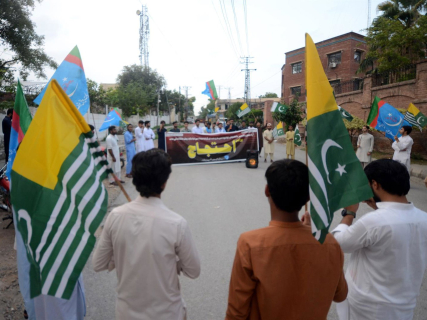

The second stage of the disputed local elections in the Pakistan-administered Kashmir concluded this Sunday in a climate of new accusations of fraud between the two most voted parties: the ruling party, the Pakistan Muslim League (N), which leads the provisional count, and the opposition Pakistan People's Party (PPP). The day unfolded without the extreme violence recorded in the first round, which left, according to Kashmiri organizations, more than 30 dead due to the repression by security forces.
Tensions in this area of Kashmir controlled by Islamabad, which neighboring India describes as occupied territory, have been dragging on for decades. In recent weeks, they have intensified again, taking advantage of the electoral context, when local groups have accused the Pakistani government of maintaining a policy of marginalization and economic abandonment in a region considered one of the major energy hubs of the country.
The main protest movement in the area, the Joint Action Committee (JAAC), which released the death toll from the first round on June 27, was banned by the regional government the previous month. Amnesty International has called for a thorough and transparent investigation into these events, while local businesses have closed during the second voting, pending what may happen in the third phase scheduled for August 10.
In the first round, the Pakistan Muslim League-N secured nine of the 13 seats at stake and, according to exit poll data released by GEO TV, this Sunday it would have achieved around ten of the 14 positions in dispute. The PPP, led by Bilawal Bhutto, has denounced large-scale electoral fraud, and Bhutto has turned to social media to hold alleged extremist elements linked to his opponent responsible for shooting at electoral workers from his party.
The death of a man in Muzaffarabad, the regional capital, has been confirmed. The Government of Pakistan claims he died of a heart attack while trying to intervene in a fight between supporters of both parties, and denies that he was shot, as the PPP initially stated.
As in previous calls, the main opposition party in the country, the Movement for Justice of Pakistan, led by the imprisoned former Prime Minister Imran Khan, has chosen to boycott these elections. The party claims that they were destined to become an exercise in fraud orchestrated by the Pakistan Muslim League (N), founded by Khan's nemesis, the former Prime Minister Nawaz Sharif.