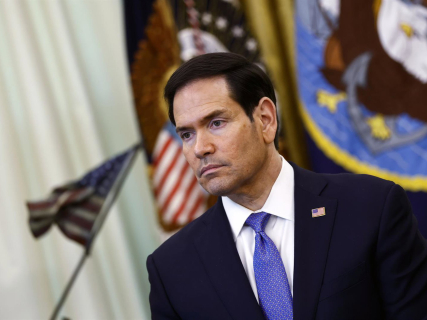

A committee of the United States House of Representatives has brought to the table a particularly sensitive issue for Spain: the sovereignty of Ceuta and Melilla. According to El Confidencial, the body has urged the US Secretary of State, Marco Rubio, to become involved in a possible mediation between Spain and Morocco over the status of both cities.
The initiative is part of a report that analyzes different international hotspots and that, strikingly, questions the situation of the two Spanish autonomous cities in North Africa.
A petition that reopens a sensitive debate
The document raises the need for Washington to explore avenues of dialogue between Madrid and Rabat, in a move that introduces the United States into an issue that Spain considers non-negotiable: its territorial integrity.
Ceuta and Melilla have been part of Spain for centuries and have legal recognition within the Spanish constitutional order. However, Morocco has historically maintained its claim over both territories.
The role of the United States in North Africa
The request to the Secretary of State reflects the United States' interest in reinforcing its role as an actor in the strategic balance of North Africa, a key region due to its proximity to Europe, its migratory relevance, and its weight in international security.
It is not the first time that Washington has positioned itself on territorial issues in the area. The recognition of Moroccan sovereignty over Western Sahara during the Trump Administration set a precedent that continues to condition relations in the region.
Political and Diplomatic Impact for Spain
The inclusion of Ceuta and Melilla in this report may have political consequences, by introducing the debate into the international agenda. For Spain, the issue of both cities is a matter of national sovereignty, so any attempt at external mediation could be interpreted as an interference.
The Spanish Government has repeatedly defended that Ceuta and Melilla are not subject to negotiation, equating them to the rest of the national territory.
A delicate balance with Morocco
The relationship between Spain and Morocco goes through constant phases of cooperation and tension, especially in matters such as immigration, security, and foreign policy. The appearance of this issue in a US Congress report adds an element of pressure at a time when both countries are seeking stability in their relations.
The initiative does not imply binding decisions, but it does show that the debate on Ceuta and Melilla transcends the bilateral sphere and is beginning to be placed on the international stage.