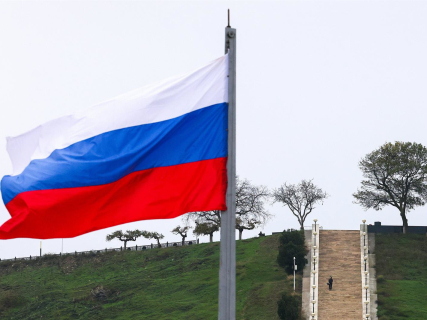










The Russian Ministry of Foreign Affairs has called this Monday for the chargé d'affaires of Estonia in Russia, Marek Juhtegi, to be summoned for consultations in order to convey a formal protest regarding the decision of the Estonian Government to close all land border crossing points for a period of six months starting from December 1.
In its note, Moscow has condemned Estonia’s “russophobic” stance and said that the authorities in Tallinn appear to have “not seriously reflected on the consequences of this measure.” According to the statement, “the closure of the state border will, above all, deal a new blow to the Estonian economy and will turn against Tallinn itself, as well as against its allies in the EU and NATO.”
The Ministry described this decision as “Estonia’s latest anti-Russian maneuver,” which would be added to “the long list of hostile actions undertaken by this Baltic state over the years.” In its view, Estonia “continues to actively support the Kiev regime, allowing in a covert manner for Ukrainian drones to use its airspace to carry out attacks against the northwest of Russia; a fact that the Russian side has repeatedly documented with objective evidence.”
For this reason, Russian diplomacy has once again warned Tallinn that “such provocative and extremely dangerous actions could trigger an open war with Russia.” Along the same lines, it has assured that “Estonia’s hostile actions do not end there” and has accused Tallinn of trying to “obstruct the movement of Russian cargo ships in the Baltic Sea (...) with the aim of imposing a naval blockade on our country.”
The text also recalls that “in October, Estonia imposed a total ban on the transit of Russian and Belarusian grain through its territory” and denounces that “Estonia is stepping up repressive measures against Russian-speaking residents and dissidents who refuse to blindly follow the official narratives of the authorities, intended to vilify Russia in all areas.”
According to Moscow, “to resolve the so-called Russian issue, Tallinn has not only resorted to the prohibition of the Russian language at all levels, but also to criminal prosecution and the deportation of those people who sympathize with our country and seek to preserve their right to access their native language and culture,” methods which it describes as characteristic of a “police state” that “does not hesitate to resort to coercive measures and threats.”
For all these reasons, the Ministry considers Estonia's political line toward Russia to be "unjustified" and a "form of absolute hostility toward the country," which "will continue to destabilize the situation in the region and will negatively affect both the well-being of Estonia's residents and the already precarious economic situation of this Baltic state."
The decision to close the border crossings occurred days after Estonia denounced the continuation of hostile actions attributed to Moscow, including "sabotage acts" and "hybrid operations" which, according to Tallinn, affect both the Baltic country and across Europe as a whole.
According to the Estonian prime minister, Kristen Michal, once the six months provided for have elapsed, the Executive will analyze whether it is necessary to introduce additional adjustments with the aim of safeguarding national security and public order. "In general, Russia's hostile activities do not show signs of decreasing," he said on Friday at a press conference reported by the public broadcaster ERR, where he emphasized that "Estonia is acting with firmness and serenity."
After these statements, the country's president, Ulle Madise, drew attention to the risks of legislating driven by "emotions" and raised doubts about whether the response adopted was "correct," "proportionate" and "beneficial for Estonia at the international level."