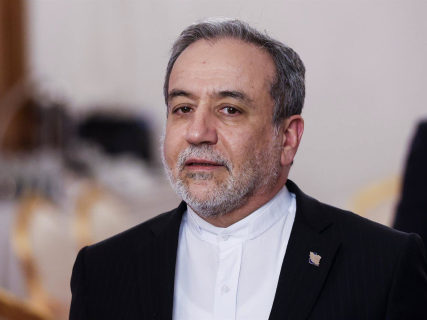

Iranian Foreign Affairs minister Abbas Araqchi has indicated this Saturday that the reopening of the Strait of Hormuz is conditional on the United States meeting the demands put forward by Iran, insisting that security in the Persian Gulf must rest with the states of the region themselves.
Araqchi has emphasized that Tehran remains willing to engage in talks with Washington, but he has reiterated that the resumption of traffic through Hormuz is linked to compliance with Iranian demands, stressing that "there is no solution to the current situation unless the United States acknowledges its mistakes and fulfills its previous commitments".
In statements to the press gathered by the ISNA agency, the head of Iranian diplomacy has pointed out that the reopening of the maritime passage would not be "difficult" if the White House accepted Iran's "reasonable conditions", which, he has argued, are "compatible" with International Law.
In this way, he has reiterated that his position remains "clear": "until Iran's demands are met, the issue of the Strait of Hormuz and its reopening is not on the table. At the same time, we have always stated that just as we are prepared to defend ourselves, we are also willing for dialogue".
Along these lines, Araqchi has argued for keeping diplomatic channels open between Tehran and Washington and has expressed his confidence that the "blockade will be lifted through a rational approach". Regarding the recent visit of a delegation from Qatar to the Iranian capital, he has said that this involves "usual diplomatic efforts" and that "the existing intermediaries between Iran and the United States are constantly taking part in exchanges, conveying ideas and proposals during their meetings".
At the same time, the minister has stressed that stability in the region must be supported by the "capabilities" and the "cooperation" of the Gulf states bordering the Persian Gulf, arguing that "the main lesson from past wars is that regional security must be endogenous, and discussions on this issue have already begun".
Araqchi's words are set against the backdrop of the conflict unleashed on February 28, when the United States and Israel launched a military offensive against Iran. In response, Tehran carried out attacks against targets on Israeli territory and against bases of the U.S. forces deployed in several countries in the region.
Although in mid-June both parties signed a memorandum with the aim of stopping hostilities, armed clashes were resumed afterwards and the confrontation remains open, with episodes of intermittent violence.
The war has had a strong impact on maritime traffic through the Strait of Hormuz, a key corridor for global crude oil and liquefied natural gas trade, whose near-total shutdown has contributed to driving up international fuel prices.