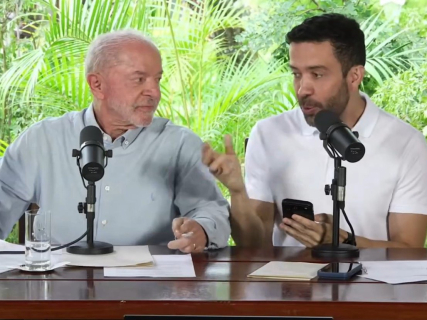

The President of Brazil, Luiz Inácio Lula da Silva, came out this Saturday in defense of the fiscal adjustment plan that his Executive wants to set in motion to balance the accounts of the State, in the face of the pressures that, according to what he denounces, the financial market is trying to impose on him.
In a live broadcast through social networks, Lula questioned the adverse reaction of investors after his re-election and after presenting in Congress, and securing the approval of the Senate, his first adjustment initiatives to contain the country’s strong fiscal deficit and large public debt.
"The market knows because it knows me: I was the president who generated the largest primary surplus in this country. What I can’t keep accepting is that this gang of wealthy young people from Faria Lima (a wealthy neighborhood of São Paulo) spend the day questioning the seriousness of the Government", he emphasized.
With these words, Lula went after the attitude of the markets, underscoring that part of the business community is not worried about social inequality, but about defending its own benefits.
"I am the one who cares about the poor; my Government does, and you, who voted for me, also care. It is not the financial system that will teach me to govern the country", he said, in statements collected by the Brazilian state agency.
Lula justifies his measures to control the budget
The Brazilian head of state also responded to criticism coming from some left-wing leaders, who in recent days had questioned the cuts aimed at reducing public spending, arguing that it is essential "to control the budget".
"In fact, there was no tax reform. What happened was an adjustment so that the budget of the Union allows us to have control over the budget next year. If we don’t have control over the budget, we can’t govern", he defended.
In addition, he underscored that he is "aware of the promises he made during the campaign" and has guaranteed that he will not push for cuts in education, health, or in social programs. He specified that the adjustment will be limited to restricting part of the tax exemptions that large companies benefit from, with the aim of increasing revenue, thus rejecting committing an "electoral fraud", as his detractors reproached him.