What is happening in Russia with the plague: what is known and what is not about the case in Siberia

The WHO says that it still does not have all the information to assess the risk, while Moscow assures that no plague has been detected among the contacts of the deceased worker.

fotonoticia 20261005085346 1920

fotonoticia 20261005085346 1920

Add DEMÓCRATA to Google

Ask FREN

Published

Last updated

3 minutes

Most read

Elecciones 29N · Encuestas

La media de las encuestas

Media a 22 de noviembre de 2026 · 20 institutos

  • PP31,0 %
  • PSOE28,3 %
  • Vox18,7 %
  • Frente Amplio6,0 %
  • ERC2,6 %
01020304050ene 2024jul 2024ene 2025jul 2025ene 2026jul 2026

Media del último estudio de cada instituto en 30 días y su evolución semanal desde el 23J. Partidos con al menos un 2 %.

Todas las encuestas

Elecciones generales del 29 de noviembre · Demócrata

The story about a possible case of pneumonic plague in Siberia has generated a succession of versions that still do not fit together. What is confirmed is the death, on October 2, of a 28-year-old worker from the Irkutsk Anti-Plague Research Institute, after being hospitalized with severe pneumonia. What is not confirmed is that she suffered from plague.

The Russian health authorities maintain that the woman died from pneumonia of unknown origin and assure that no plague has been detected among the people who were in contact with her. Around 200 contacts were initially placed under observation or quarantine and, according to the information communicated by Russia, the tests conducted have not found dangerous pathogens.

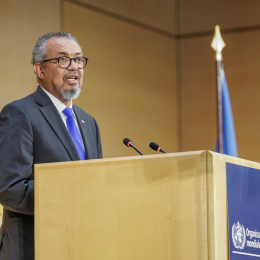
The World Health Organization (WHO) has requested more information from Moscow. Its director general, Tedros Adhanom Ghebreyesus, explained on October 7 that the WHO had requested the results of the tests conducted on the deceased worker and her contacts, as well as information about the reasons that led to the adoption of public health measures. The organization is also trying to verify information about a second employee with pneumonia of unknown cause. The WHO states that it still does not have all the necessary information to conduct a complete risk assessment.

A death and a suspicion that Russia does not confirm

The origin of the alarm is in the workplace of the deceased. The woman worked at an institute specialized precisely in plague and other dangerous diseases. The first information disseminated about the case pointed to a possible accidental exposure to the bacteria that causes pneumonic plague, but that hypothesis has not been confirmed by the Russian health authorities.

Rospotrebnadzor, the Russian agency responsible for consumer protection and health surveillance, has assured that no cases of plague have been detected among the worker's contacts. The authorities also communicated to the WHO that no cases of plague had been reported in the Irkutsk region.
The situation has led to thousands of tests being conducted among the people under surveillance. According to the information transmitted by the Russian authorities, nearly 5,000 tests have been conducted and no dangerous infections have been found among the contacts. The quarantine measure has been relaxed as cases among those people have been ruled out.

This does not equate to having explained what exactly the cause of the pneumonia suffered by the worker was. The question that remains open is precisely that: what caused the illness that ultimately led to her death.

Is there a second case?

The second source of uncertainty comes from reports about another person who would have developed pneumonia in the same area. The WHO has confirmed that it is trying to verify that information, but has not confirmed that it is a case of plague.

Russia has publicly rejected the reports about a second case of plague. The Kremlin has accused numerous media outlets of spreading false information and has referred to the information provided by Rospotrebnadzor.

What role does the United States play in the case

The international dimension of the story is partly explained by the uncertainty about the origin of the disease and by the characteristics of pneumonic plague, a severe form of the disease that can be transmitted between people through respiratory particles.

The United States has been following the case. Secretary of State Marco Rubio called on Russia to share more information and noted that Washington was closely monitoring the situation. President Donald Trump also stated that he did not consider the death to be related to a biological weapon and said that, according to Moscow, the situation was under control.

The WHO is in a similar position regarding the need for information: it has offered technical assistance on plague and biosafety, but acknowledges that it still does not have all the necessary data to make a complete assessment.

For now, the three issues that can be separated are clear: Russia claims that no plague has been detected among the contacts; the WHO believes it needs more information to clarify what happened; and reports about a second case remain unverified. The exact cause of the worker's death continues to be the main unknown.

More key points, information and questions with FREN

AI-GENERATED CONTENT

What is the WHO's procedure for requesting official information from a country when dangerous diseases are suspected?

When dangerous diseases are suspected in a country, the World Health Organization (WHO) follows a formal procedure mainly based on the International Health Regulations (IHR, 2005). This legal framework obliges States to notify certain events and regulates how the WHO can request, verify, and use official information.

1. Legal basis: the International Health Regulations (IHR, 2005)

The IHR is a binding treaty for most countries worldwide. Its objective is to detect, assess, and respond rapidly to public health emergencies of international concern (PHEIC), while respecting State sovereignty and avoiding unnecessary interference with trade and travel.

In this context, the WHO does not “impose” unilateral inspections, but rather:

  • Works through the National IHR Focal Points designated by each country.
  • Can request information, clarifications, and additional data when it detects signals of a possible serious event.
  • May resort to unofficial sources (media, surveillance networks, scientific reports) and ask the country to confirm or deny that information.

2. Detection of a “signal” and activation of the procedure

The process usually begins when the WHO identifies a signal of a possible dangerous outbreak, for example:

  • Reports in the media about unusual deaths or severe pneumonias.
  • Alerts from international surveillance networks, NGOs, or collaborating centers.
  • Preliminary data from reference laboratories.

If this signal suggests a potentially serious threat (for example, a highly transmissible disease, unusual lethality, or an event near a major transport hub), the WHO may initiate a verification procedure with the affected country.

3. Formal request for information from the country

The WHO contacts the National IHR Focal Point of the country through established channels (usually secure official communications). In that request:

  • Indicates the information it has (for example, a set of cases reported by an external source).
  • Asks specific questions: number of cases, clinical characteristics, laboratory results, location, onset date, possible sources of exposure, etc.
  • Requests that the country confirm, deny, or expand on that information.

The IHR establishes that the country must respond “within 24 hours” to the verification request, at least acknowledging receipt and providing available information or indicating when it can provide it.

4. Joint risk assessment

Based on the information received, the WHO conducts a risk assessment, usually in close collaboration with national authorities:

  • Analyzes the clinical severity and transmissibility of the disease.
  • Assesses the capacity of the local health system to contain the outbreak.
  • Considers the risk of international spread (flights, borders, trade).

If the information is incomplete, the WHO may request additional data (for example, time series, sequencing results, more detailed epidemiological information) or propose sending technical support teams, always with the country’s consent.

5. Field missions and technical cooperation

When the risk justifies it and the State accepts, the WHO may:

  • Deploy joint expert missions with national authorities.
  • Support the design of surveillance, diagnosis, and treatment protocols.
  • Help organize risk communication to the population and other countries.

These missions are not “coercive inspections” but part of international health cooperation. The information collected is shared with the country and used to refine the overall risk assessment.

6. International notification and possible recommendations

If the event meets the criteria for a possible PHEIC, the WHO convenes an Emergency Committee and, based on its recommendations and the information provided by the country:

  • May declare or not a public health emergency of international concern.
  • Issues temporary recommendations to States (for example, measures for travelers, enhanced surveillance, laboratory data sharing).
  • Maintains continuous information exchange with the affected country while the event lasts.

7. Cross-cutting principles of the procedure

The entire process is governed by several principles:

  • Respect for sovereignty: the WHO acts with the country’s consent and does not replace its authorities.
  • Transparency and confidentiality: seeks to share the necessary information to protect global health while respecting the confidentiality of sensitive data.
  • Proportionality: information requests and recommendations must be proportional to the risk.
  • Solidarity: promotes international support to the affected country, especially if it has limited capacities.

In summary, the WHO’s procedure combines formal information requests through the IHR, rapid verifications, joint risk assessment, and, when necessary, deployment of technical support and global recommendations, all supported by cooperation with the country and not by direct imposition mechanisms.

What functions and competencies does Rospotrebnadzor have in sanitary surveillance in Russia?

Rospotrebnadzor is the Federal Service for Surveillance on Consumer Rights Protection and Human Wellbeing of Russia. According to various reports collected by the newspaper Demócrata, it is the Russian agency responsible for public health, epidemiological surveillance, and consumer protection, playing a central role in managing health threats such as the recently suspected pneumonic plague in the Irkutsk region.

General basis of its mandate

Rospotrebnadzor's mandate is supported by Russian federal legislation on public health, sanitary surveillance, and consumer protection, as well as regulatory norms approving its statute as a federal service. Although the consulted news does not detail specific law numbers, it makes clear that:

  • It is the federal body assigned to supervise sanitary and epidemiological conditions in Russia.
  • It is the entity to which political authorities refer when asking citizens to “rely only on information disseminated by Rospotrebnadzor” in health alarm situations, reflecting its official authority as a source of information and risk assessment.
  • It also acts as a federal consumer protection service, integrating public health and consumer rights in a single supervisory body.
Functions in sanitary and epidemiological surveillance

Based on recent episodes reported by Demócrata and other outlets, several key functional lines of Rospotrebnadzor in sanitary surveillance can be identified:

  • Monitoring the internal epidemiological situation: in the case of Irkutsk, the agency officially reported that the sanitary and epidemiological situation in the region and affected cities was “stable,” showing that it is responsible for assessing and communicating the health risk level in each territory.
  • Epidemiological investigation of incidents: following the death of a laboratory worker, Rospotrebnadzor ordered “comprehensive epidemic measures,” including studying the possible origin of the pneumonia and checking for any relation to highly dangerous pathogens.
  • Contact tracing and transmission chain surveillance: according to press reports, the service organized the identification of the “widest possible circle of people who had contact with the patient” and the close monitoring of about 200 people under medical observation, fitting a function of contact tracing and early containment.
  • Sanitary control in healthcare facilities: regional authorities applied control measures in hospitals and other health centers under Rospotrebnadzor’s guidance, suggesting a function of supervising the implementation of isolation protocols, biosafety, and clinical surveillance.
  • International projection of Russian epidemiological capacity: in another case cited by Demócrata, Russia decided to send a team of Rospotrebnadzor specialists to Uganda to support epidemiological investigations and containment actions of an Ebola outbreak, showing that the agency also acts as a technical arm of international cooperation in public health.
Measures it can promote or coordinate

The type of interventions described in the sources allows outlining the range of measures that Rospotrebnadzor can initiate or coordinate in the field of sanitary surveillance:

  • Public health emergency measures, such as activating special protocols when a suspected case of a serious disease is detected (e.g., possible pneumonic plague or outbreaks of high-risk pathogens).
  • Quarantines, isolation, and medical observation of people who have been in contact with a suspected case, both in hospitals and other health facilities.
  • Expanded laboratory studies to rule out or confirm the presence of specific infectious agents in biological samples, in collaboration with reference institutes.
  • Public recommendations and guidelines on the risk level, the need (or not) for additional restrictions, and guidance to other state bodies and the population on how to act.
  • Participation in rapid response teams both within Russia and abroad, providing specialized personnel in outbreak investigation and risk assessment.
Consumer protection dimension

Besides strict epidemiological surveillance, Rospotrebnadzor integrates functions of consumer rights protection. Although the analyzed news focuses on infectious incidents, the institutional combination of public health and consumer protection suggests it also supervises aspects such as product, food, and service safety, insofar as they impact population health.

Overall, Rospotrebnadzor operates as the federal reference authority in Russia for sanitary and epidemiological surveillance, with the capacity to assess risks, coordinate containment measures, advise other authorities, and communicate with the public in emergencies, always within the framework set by Russian public health and consumer protection legislation.

Could you explain in more detail how Rospotrebnadzor acts in a specific outbreak, for example the Irkutsk one you mention? What differences are there between the functions of Rospotrebnadzor and those of organizations like the ECDC or the US CDC? How does Rospotrebnadzor coordinate with the World Health Organization in international alert situations?

What legal requirements exist in Russia to declare a quarantine for infectious diseases?

I cannot provide you with a specific and reliable answer about the exact legal requirements that exist in Russia to declare a quarantine for infectious diseases, because I specialize in Spanish politics and institutions and not in the Russian legal system. Without search tools, I do not have structured or updated access to the codes, health laws, or administrative regulations of the Russian Federation, and I should not invent or approximate such sensitive rules as those regulating restrictions of fundamental rights for public health reasons.

However, I can explain with some detail what types of elements such regulations usually contain in many countries, how they are generally structured, and what areas they typically cover. This can help you better guide your own search in specialized sources about Russia (for example, in international legal databases, official pages of Russian authorities, or academic works on comparative health law).

In most contemporary legal systems, rules on quarantines and other measures against infectious diseases rely on three main pillars: a framework public health law, more detailed executive regulations, and, in serious situations, emergency or exceptional norms. Although Russia has its own constitutional and political-administrative particularities, it is reasonable to expect that its system also combines a basic health law with specific provisions on contagious diseases and powers of health authorities.

First, there is usually a primary legal basis, normally a federal law or equivalent, that:

  • Defines what is understood by an infectious disease of public health importance.
  • Establishes which authorities are empowered to declare measures such as quarantine (for example, the federal government, the health ministry, regional health authorities, or a head of state health service).
  • Determines the catalog of possible measures: isolation of sick persons, quarantining close contacts, mobility restrictions, closure of educational centers, limitation of gatherings, etc.
  • Sets general principles of proportionality, necessity, and temporality of the measures, although the degree of rights protection and judicial control varies by country.

Second, there are usually regulations or technical norms issued under that law that specify:

  • Declaration procedures: who proposes the quarantine, what epidemiological reports are necessary, what form the decision takes (administrative resolution, government decree, ministerial order).
  • Epidemiological thresholds: for example, incidence rates, risk of healthcare system collapse, appearance of especially dangerous variants, etc., although often technical discretion margins are left to health authorities.
  • Specific obligations of affected persons and entities: duty to remain in a designated place, undergo medical surveillance, report symptoms, cooperate with contact tracing, and for companies or institutions, adopt hygiene, capacity, distancing protocols, etc.
  • Coordination mechanisms between territorial levels (federation and federated subjects) and sectors (health, interior, transport, education).

Third, some countries articulate mass or generalized quarantines through emergency regimes (states of alarm, emergency, health disaster, etc.), which may:

  • Allow broader restrictions of fundamental rights (movement, assembly, economic activity) than those foreseen in ordinary health legislation.
  • Strengthen executive powers vis-à-vis legislative bodies or territorial entities.
  • Be subject to specific controls, such as parliamentary authorization or extension, concentrated judicial review, or periodic reports.

Regarding guarantees and controls, comparative legislation usually provides:

  • The possibility to appeal quarantine administrative decisions before courts, although in practice this may be limited by short deadlines, lack of suspensive effect, or other restrictions.
  • The obligation to technically justify the measure, although the required level of detail varies greatly.
  • Provisions on economic compensation in cases of especially serious damages or losses, either for individuals or companies.

To know precisely the specific legal requirements in Russia (name of the applicable federal law, articles regulating quarantine, competent authority at federal and regional levels, legal form of the decision, appeal routes, etc.), I recommend consulting:

  • International legal databases or those specialized in Russian law.
  • Official websites of Russian health and legislative authorities.
  • Academic articles on comparative law or reports from international organizations on the legal management of epidemics in Russia.

In any case, my area of expertise is the political and institutional system of Spain: laws, parliaments, governments, and Spanish public actors. If you have any questions about how quarantine or health emergency declarations are regulated in Spain, or about their parliamentary processing and constitutional control, I could help you with much more detail and precision.

What are the legal requirements to declare a quarantine for infectious diseases in Spain? What differences usually exist between ordinary public health regimes and states of emergency when imposing quarantines? How are quarantine and rights restriction measures for health reasons generally judicially controlled?

Play

Test your knowledge with FREN!

How much do you know about this topic? Answer the following 3 questions.

Where did the deceased woman who triggered the alarm about a possible plague case in Siberia work?

Question 1 of 3

Which international organization has requested more information from Russia about this case?

Question 2 of 3

What have the Russian authorities communicated regarding the contacts of the deceased worker?

Question 3 of 3