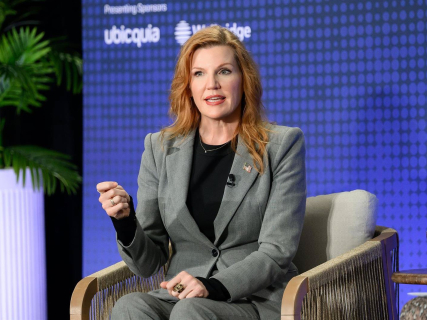

The U.S. Secretary of State, Marco Rubio, has announced this Friday the appointment of Kirsten Davies as the new national head of Cybersecurity, a change at the helm of the office that oversees the protection of the country’s digital infrastructures, arriving after the recent succession of technical incidents that have affected air traffic, banks, and Microsoft services.
"Congratulations to the new national director of Cybersecurity, Kirsten Davies; I look forward to working together to strengthen cybersecurity in the United States," the head of U.S. diplomacy said in a brief message published on social media, thereby confirming the change in leadership of the agency without detailing the reasons for the departure of his predecessor, Sean Cairncross.
Until now, Davies held the position of director of information systems in the Department of Defense. Her move to the national Cybersecurity directorate comes after a week marked by large-scale technological disruptions: a widespread outage of Microsoft services —such as Outlook, Teams, and Copilot— that lasted nearly 24 hours and reached more than 70 countries, the blocking of the Federal Aviation Administration’s (FAA, for its English-language acronym) telecommunications systems that forced the temporary halt of takeoffs in the United States, and problems at financial entities such as JPMorgan Chase.
The succession of these episodes —which led U.S. President Donald Trump to declare a national emergency about the network and to ask the population this Thursday to stay calm, ruling out the need to stock up on food or water— has sparked public concern. However, both the White House and the Department of State have insisted that there is no connection between the incidents and no signs pointing to a coordinated external cyberattack.
Rubio had already assured on Wednesday from Manila that Washington has "no proof" and no grounds to think that the disruptions in Microsoft and the FAA are linked to the actions of cybercriminals or foreign powers, attributing them to "isolated" technical problems. Nevertheless, he acknowledged that it is "concerning" to string together daily reports about technological failures and admitted the risks to national security arising from the growing dependence on digital systems.
For his part, Trump reduced the drama this Thursday in an interview with the Fox News network about incidents recorded in banks, telecommunications and air traffic control, which he referred to as “individual events” linked to processes of technological modernization. At the same time, he defended awarding a single large public contract, endowed with 12,000 million dollars (10,940 million euros), to comprehensively renew the air traffic control system of the United States.