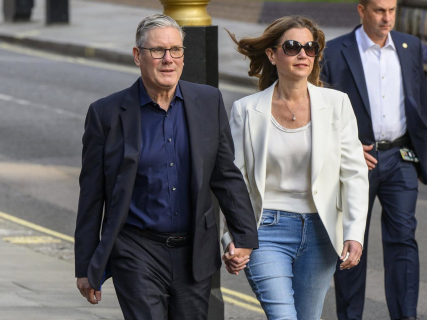

The British Prime Minister, Keir Starmer, acknowledged this Monday the existence of “frustration” towards his figure after the poor results of the Labour Party in the municipal elections, although he ruled out resigning and committed to reversing the situation. He insisted that, if he were to leave office now, he would only “plunge the United Kingdom into “chaos”.
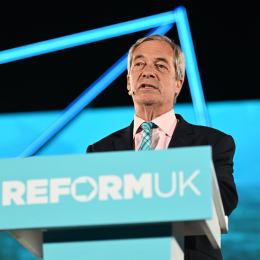
“There is frustration across the country with the 'status quo', which is not working. There is frustration because politics is not working for too many people. And yes, there is also some frustration with me; I acknowledge that,” Starmer stated at a press conference dedicated to analyzing the Labour setback in the local elections, in which the far-right party Reform, led by Nigel Farage, managed to advance positions.
Turn to the Action of the Executive and the Labour Party
The head of Government stressed that this citizen discontent has been "accumulating for many, many years among people who feel their lives are not improving," which is why he reiterated his intention to change both the Executive's action and the internal direction of the Labour Party, where the results have revived doubts about his leadership.
“I am not going to hide the fact that I have detractors, even within my own party. Nor am I going to hide the fact that I have to prove them wrong. And I will,” he maintained, recalling that his critics already questioned his ability to prevail in the July 2024 elections. “I had those who said we could not change this party and turn it into a party capable of winning an election. And I proved them wrong,” he added.
Starmer flatly rejected the possibility of resigning and contrasted his position with the recent stage of the conservatives, marked by a succession of four prime ministers in five years, between 2019 and 2024, which, in his opinion, worsened the country's problems. “I take responsibility for not having left, for not having plunged our country into the chaos that the conservatives sank it into again and again, a chaos that caused lasting damage to this country,” he stated, emphasizing that Labour “would never be forgiven for inflicting that on the country again.”
Recovering youth confidence and rebuilding ties with Europe
In his speech, the prime minister admitted that part of the wear and tear of his Government is due to the disaffection of young people, who consider that they have been "failed a great deal," especially regarding job opportunities and access to housing.
Faced with this scenario, he defended the need to offer "hope" to new generations and the prospect of a "better future", linking that objective to closer ties with Europe so that "they can work, travel and study" more easily. He recalled that these possibilities were diminished after the United Kingdom's exit from the European Union, which was completed at the beginning of 2020.
“The last government was defined by the breakdown of our relationship with Europe. This Labour government will be defined by the rebuilding of our relationship with Europe, by putting Britain at the heart of Europe,” he declared, arguing that this shift would strengthen the British economy, trade, and defense.
Starmer vindicated that the “Labour bet” involves placing oneself “shoulder to shoulder” with the countries that “most share the interests and values” of the United Kingdom. “For our young people it also means something more, because Brexit robbed them of the possibility of working, studying, and living easily in Europe,” he pointed out.
The Labour leader advanced that at the next summit with the EU, still without a fixed date, he intends to mark "a new direction". "I want to offer something better to our young people, give them back that hope, that freedom and that sense of possibilities," he stressed, proposing that "an ambitious youth experience program" be a central part of the new agreement with Brussels. He presented this plan as "a symbol of a stronger relationship and a fairer future with our closest allies."