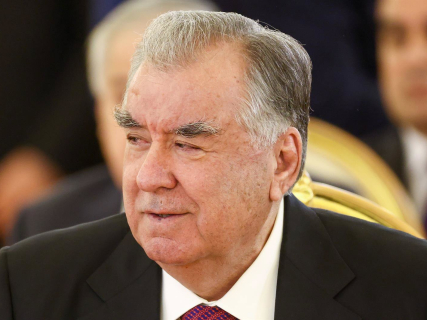

Tajikistan has officially announced this Monday its intention to leave the International Criminal Court (ICC), becoming the most recent country to activate the withdrawal process. The decision, which will take effect within twelve months, has been strongly questioned both by the Presidency of the Assembly of States Parties to the Rome Statute and by the European Union (EU), which have asked Dusambé to reconsider its position.
The Presidency of the Assembly of States Parties to the Rome Statute has shown its “concern” about Tajikistan’s decision and has highlighted that steps of this kind “risk undermining the collective pursuit of justice and weakening global efforts to end impunity.”
“The ICC is fundamental to the international system of accountability, and its effectiveness depends on sustained and unequivocal support from the international community,” it argued.
The body also underscored that “the pursuit of justice is strengthened through unity of purpose” and urged Tajikistan to “remain a State Party committed to the Rome Statute and continue to participate in a constructive manner within the framework of the Assembly of States Parties,” according to a statement issued after it received Dusambé’s official notification.
In the same note, the Presidency emphasized that the States Parties to the Rome Statute “have the right to raise their concerns in the Assembly” and encouraged Tajikistan to “participate in a constructive exchange on this matter.” It also recalled that “withdrawal from the Rome Statute does not exempt a State Party from obligations undertaken during the period in which it remained a party to the Statute.”
“The Presidency also recalls that Tajikistan has contributed to the collective work of the Assembly of States Parties in support of the ICC as an independent and impartial judicial institution,” it added.
For its part, the EU’s High Representative for Foreign Policy, Kaja Kallas, said that the bloc regrets the decision taken by the Tajik authorities and recalled that, during the years of membership in the ICC system, Dusambé showed its “commitment to a rules-based international order, multilateralism, and international justice.” “These are fundamental values shared by the European Union and Tajikistan, and they form the core of our relations,” she explained.
In her statement, Kallas has insisted that "The TPI is the cornerstone of the international criminal justice system. It plays an essential role in ensuring accountability for the most serious crimes of concern to the international community as a whole, where this is not possible at the national level, as well as in defending the rights and dignity of victims," while emphasizing that the court "has no objective against sovereign States, nor does it pose a threat to their sovereignty."
The head of European diplomacy has added that "The EU strongly urges Tajikistan to reconsider this decision and to reverse its withdrawal," reaffirming the bloc's "unwavering support" for the TPI and its "firm commitment" to the Rome Statute and "to universality, integrity, and the full implementation of the system established by that Statute," according to the communiqué released by her office.
Kallas has taken the opportunity to call on "all States" to "ensure full cooperation with the court and protect its independence, its impartiality, and its effective functioning," arguing that "all States share the interest in strengthening the rule of law and promoting accountability for the most serious international crimes."
The High Representative has also expressed the EU's "regret" for the decisions adopted in 2026 by Niger, Burkina Faso, Mali, Chad, Venezuela and Nauru, as well as Tajikistan, to initiate its withdrawal from the Rome Statute. She has emphasized that "The EU maintains its commitment to work with all States Parties and with its partners around the world to support the court, as well as to preserve and respect its independence and the integrity of the Rome Statute."
Finally, she has underlined that "withdrawal does not exempt a State from the obligations arising from the Statute during the period in which it was a party to it," including "the obligation to cooperate with the court in relation to investigations and criminal proceedings initiated before the date on which withdrawal takes effect."
"The EU will continue working with Tajikistan in order to strengthen our shared commitment to International Law, accountability and multilateral cooperation," Kallas has stated, who has emphasized that both the Union and its member States "maintain steadfast support for international criminal justice and an unwavering determination to fight impunity."
Tajikistan signed the Rome Statute in November 1998 and ratified it in May 2000, being the first State that emerged from the former Soviet Union to do so. In November 2025, the ICC asked Dusambé for explanations for not arresting the President of Russia, Vladimir Putin, during a visit to the country, despite the arrest warrant issued against him in connection with the invasion of Ukraine.