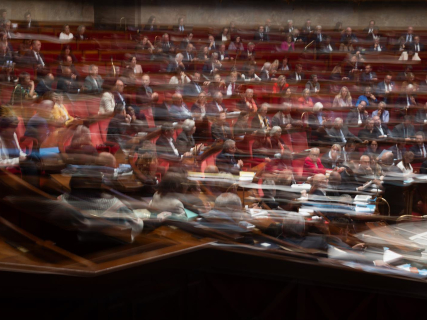

The National Assembly of France rejected during the night of Wednesday, with 458 votes against and none in favor, the first block of the draft budget for 2027, corresponding to the chapter on state revenues. All parliamentary groups voted against, except for two deputies who opted to abstain.
With this first part ruled out, and in accordance with the Chamber’s internal rules, the entire draft is considered rejected at first reading, so that the second section, relating to the expenditure section, will not be debated.
The proposal initially presented by Prime Minister Sébastien Lecornu provided for an investment of 54 billion euros and a public deficit equivalent to 5% of Gross Domestic Product (GDP). However, the amendments introduced during the parliamentary process substantially altered that budget balance.
After this first setback in the National Assembly, the text will now continue its legislative journey in the Senate. Sources close to the head of the French government played down the drama of the outcome and underlined that "after the reading in the Senate, the time for compromise will arrive," according to Franceinfo.
From the Prime Minister’s circle they insisted that this parliamentary development responds to "the classic scenario" observed in the last three budget cycles, and they likened this initial stage to "a warm-up" in which each group sets its red lines and political strategy, which results in a document that is impossible to accept in a first vote.
The deputies’ decision is also made amid a climate of strong social tension in France and coincides with the convening, for this same Thursday, of large-scale mobilizations throughout the country against the loss of purchasing power, the increase in the cost of living, and the deterioration of public services.