
The United States Senate has taken a new step towards the approval of a strengthened sanctions package against Russia, focused on hitting harder the income that Moscow obtains from the sale of hydrocarbons. The plan foresees trade reprisals against the main buyers of Russian energy, as well as new restrictions aimed at high-ranking officials and Russian oligarchs, financial entities, and the so-called "ghost fleet," used to evade economic sanctions.
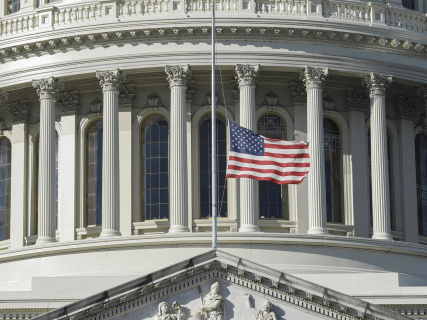
The processing of this set of measures surpassed a key vote in the Upper House with 86 supports and only 12 votes against, the result of an agreement between Republicans and Democrats. The session coincided with the funeral of Senator Lindsay Graham, one of the main advocates for tightening sanctions against Russia in the Capitol and who recently passed away.
"We are proud to announce an agreement on legislation to prevent buyers of Russian oil and gas from continuing to fuel Vladimir Putin's war machine and to continue restricting the Iranian regime's ability to support terrorism and develop its nuclear program," a group of Republican and Democratic senators stated in a joint statement about the agreement reached.
The text opens the door to primary and secondary sanctions against Russia and against those who support the Russian war effort in Ukraine, by authorizing the president to set specific tariffs on imports from countries that acquire most of the Russian oil or gas and that contribute to circumventing the already existing sanctions against Moscow.
"The bill limits these tariffs to the five largest importers of Russian crude oil or gas and to the five main countries that contribute to the evasion of the sanctions applied to the Russian energy sector," the statement detailed, in a move aimed at India and China.
"To be completely clear, China and India are the main culprits," Democratic Senator Richard Blumenthal told reporters, emphasizing Beijing's role as a financier of the Russian invasion of Ukraine.
The legislative package also includes a clause to prevent the expiration of the sanctioning authority that limits the financing of Iran's energy and arms sectors, thereby also strengthening sanctions against Tehran, a demand made by Donald Trump to the senators.