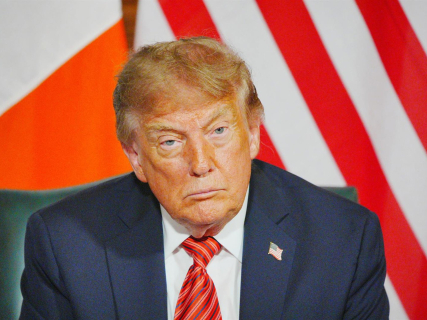

The president of the United States, Donald Trump, assured this Saturday that he trusts in reaching an agreement with Cuba and that, in that scenario, he does not believe it will be necessary to resort to military intervention. "I would say that Cuba and we will reach an agreement. I don't think we need the military," he stated before reporters at the White House. Trump did not explain what conditions that eventual pact would have nor did he announce a timeline for the negotiations.
The statement represents a lowering of the tone compared to some of the warnings issued by the U.S. Administration in recent months, but it does not in itself imply a formal change of policy towards Havana. Washington has intensified economic pressure against the Cuban government during 2026 and in January Trump declared a national emergency related to Cuba, accompanied by a mechanism to impose additional tariffs on countries that supplied oil to the island. In May, the White House also approved new sanctions against Cuban authorities and entities.
Trump talks about agreement after months of pressure
The words come just four days after Trump used his speech before the United Nations General Assembly to assure that "freedom will come to Cuba" and defend his government's pressure policy. The White House then presented the Cuban authorities as a threat to U.S. interests and reiterated its opposition to the political system of the island. The Cuban delegation left the room during part of the U.S. president's speech.
Reuters has also reported that the Secretary of State, Marco Rubio, is involved in talks with Cuba, at a time when Washington combines the negotiating path with a strategy of strong economic and political pressure. So far, the terms that both parties would be discussing have not been made public, so Trump's statement about a future agreement should be understood as an expectation expressed by the president and not as the announcement of a pact already closed.
The Army maintains plans for a possible operation
The reference of Trump to not believing it necessary to employ the Armed Forces is particularly significant because this Friday CBS News revealed that the U.S. Army continues to study which units could be made available to the Southern Command in the coming months. The outlet had access to an internal communication in which the Army Reserve requested information about the possible availability of logistical, medical, and support units within a timeframe of 90 to 120 days.
The document does not expressly mention Cuba, but several U.S. officials assured CBS News that the work was related to ongoing planning regarding the island. Those sources emphasized, however, that there are no deployment orders nor a decision from the president to launch a military operation. Contingency planning is part of the routine tasks of the Armed Forces and does not mean that an intervention is going to occur.
The same outlet had previously reported that U.S. military planners had studied different possibilities for a potential action against Cuba, while intelligence services analyzed what the response from Havana could be. Trump's statements this Saturday now publicly point in another direction: the search for an agreement that avoids resorting to those military options.
The Cuban economic crisis, part of the context
The U.S. pressure coincides with a serious economic crisis in Cuba, characterized by fuel shortages, blackouts, inflation, and a strong depreciation of the peso. Reuters notes that the Cuban currency has lost approximately nine-tenths of its value since 2021 and that official prices had increased by at least 25% during 2026 up to September. The government of Miguel Díaz-Canel has responded with some economic reforms, including new denominations of bills and the authorization of private exchange houses, although it maintains that the socialist model is not in question.
Washington argues that its measures seek to pressure the Cuban government to achieve political changes, while Havana has blamed the embargo and U.S. sanctions for exacerbating its economic problems for decades. The Trump Administration has added measures this year aimed at energy supply, increasing the cost for third countries that sell or provide oil to Cuba.
China asks the United States to stop threatening Cuba
The tension has also reached the United Nations this Saturday. The Chinese vice president, Han Zheng, has asked during his speech before the General Assembly to put an end to the threats against Cuba and to lift the economic measures against the island. Although he did not directly mention the United States in that part of his speech, Reuters points out that the words were directed at Washington and came after the latest warnings from Trump.
Beijing maintains close relations with Havana and has traditionally opposed U.S. sanctions. The Cuban issue is also integrated into a broader policy of the Trump Administration towards the Western Hemisphere, where Washington has reinforced its military, economic, and diplomatic presence and has defended a more expansive interpretation of the Monroe Doctrine.
An agreement whose conditions are still unknown
For now, Trump has not detailed what Cuba would have to accept to reach the agreement he predicts nor what concessions the United States would be willing to make. There is also no joint announcement from Washington and Havana confirming that the talks have reached an advanced stage. The main news this Saturday is, therefore, the political message sent by the U.S. president: against the speculation about a possible military operation, Trump now claims that he hopes to resolve the confrontation through a pact.
The situation thus keeps two paths open simultaneously. The United States continues to exert strong economic pressure and retains contingency military plans, but the president claims that he hopes none of those plans will have to turn into an intervention and that the outcome will come through an agreement with Cuba. The next steps of the talks led from Washington will determine whether that forecast translates into a concrete negotiation or remains merely a statement of intentions.